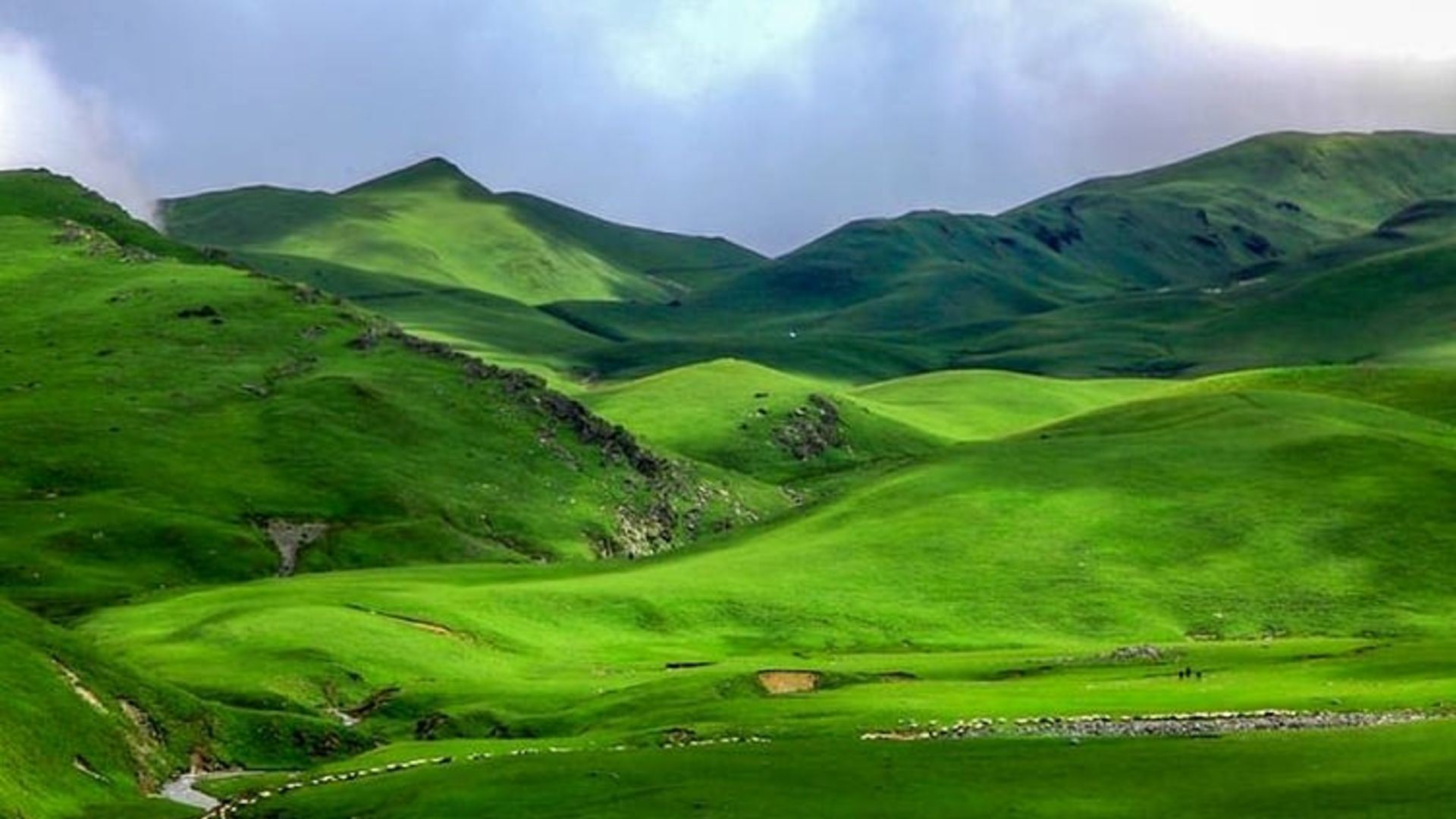
Badimalika trek is one of the best and most unexplored treks in west Nepal. Badimalika trek is one of the best treks in west Nepal providing an experience of high passes, ethnic villages, astonishing natural beauty, spiritual experience, the lifestyle of locals, green hills, white Himalayas, remote natural campsite, wilderness trail, and landscape of the pristine part of Nepal. Badimalika Temple, located in the Bajura district of Seti Zone, is dedicated to Bhagwati.
It is not only a religious trek but also there are many beautiful places with so much to explore in a natural and cultural sense. The major highlight of the trail is a visit to the temple of Badimalika which lies on a hillock. Meanwhile, the Api and Saipal mountain ranges add extra beauty to this trek. Badimalika Trek can also be done by combining with Khaptad National Park Trek. There are altogether 12 National Parks in Nepal and Badimalika lies in Khaptad National Park.
Badimalika Temple is one of the major temples of Nepal that is located at an elevation of 4,200 meters above sea level. Local tea houses and lodges are available on the lower parts of the trek. But during the upper part of the trek, there are no human settlement areas and trekkers have to carry their own food and tented camps for accommodation. With the help of our Badimalika Trek Itinerary and expert trekking leader, you will be exploring this untouched area with proper planning. In addition, marvelous views of the Api and Saipal can also be seen during the trek. If you wish to go for Api Saipai Trek we would be more than happy to arrange it for you.
Badimalika trekking itinerary is flexible and you can also add some other popular trekking destinations around the area if you wish to. The most popular trek that can be done by combining with the Badimalika Trek is Khaptad National Park Trek. Khaptad National Park is one of the smallest National Parks in Nepal. The total area of Khaptad National Park is 225 square kilometers. But about 567 species of flora, 23 mammals, 287 birds, and 23 species of amphibians and reptiles have been recorded inside the Khaptad National Park. Not only that, but Khaptad National Park is also the home of the renowned spiritual saint Khaptad Baba.
One can relax oneself while taking in the breathtaking views of mountains and greenery. Breathe in the crystal clear alpine air, and bask in the warm sunshine at the foot of inspiring mountains. The trail to Badimalika is open throughout the year. But only in winter heavy snowfall can affect trekking. Badimalika trek is one of the most difficult levels of a trek in the western part of Nepal.
Best Time to visit Badimalika Temple
BadiMalika Trek can be done all around the year but the Autumn season of the year is regarded as the best time. During the months of September, October, and November the sky is clear and the temperature is also warm during the days. Meanwhile, the mornings and the nights are chilled, and amazing views of the landscapes can be seen during the high visibility. This season of the year is also the best time for peak climbing in Nepal. Many adventure seekers from different parts of the globe visit Nepal during these months for trekking and mountaineering purposes mainly.
Spring is another best time for the Badimalika Trek in Nepal i.e. March, April, and May months. These months are also seen as the time for the flowers and you can witness mother nature spreading her wings and offering us amazing views throughout the trek. Blooming rhododendrons can be seen during the trek. Similarly, eye-appealing views of the blooming wildflowers can also be seen around the Khaptad National Park.
Summary of Badimalika Trek
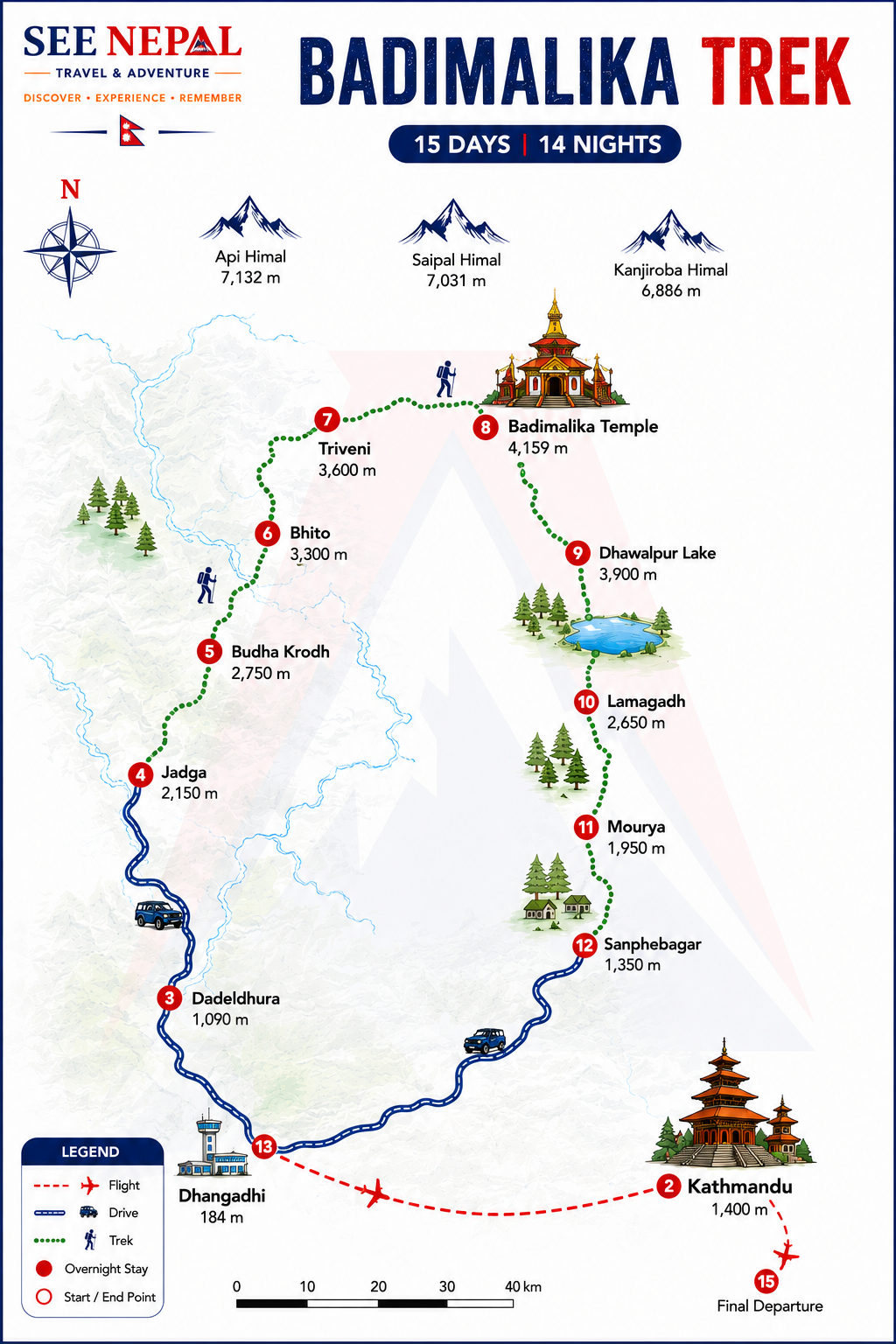
The journey begins with a flight to Dhangadhi, also known as the business and tourist center of the far-western region of Nepal. A drive of around 4 hours via Godavari will take you to Dadeldhura situated at an elevation of 2,000 meters. The famous Ugratara temple and historical places like Amargadhi Fort and Alital are the major tourist attractions in Dadeldhura. The place offers breathtaking views of the Api and Saipal mountains as well as surrounding hills. The second day of the drive will take you to Jadang situated at an elevation of 3,827 meters above sea level. It is also the trek starting point.
Budha Krodh is a beautiful place with attractive landscapes, waterfalls, green forests, and murmuring streams. The place is home to different species of flora and fauna. You will pass through a big grassland to reach Bhito. Marvelous views of the Api and Saipal can be seen from here. Triveni is a place of great religious significance. This small place is cramped with around 1,500 tents during major festivals like Janai Purnima. The people performing religious activity bathe in the nearby river and then head towards the temple to worship. It might be one of the best ways to preserve the culture of this place.
Dhawalpur Lake is a very beautiful lake located amidst a dense forest. Located at an elevation of 2,556 meters, Dhawalpur lake is spread over 500 sq meters. Lamagadh lies at an elevation of 2,195 meters above sea level and amazing views of the Bajura district can be seen from this place. Silgadhi is the district headquarter of the Bajura district. Shaileshwori Temple dedicated to Shiva and Parvati is the main highlight of this place. You will take a drive to reach Dhangadi and a flight back to Kathmandu from Dhangadhi.
Badimalika Temple
Every year, on the occasion of Janai Purnima and Ganga Dashara, the temple gets a large number of visitors. Devotees from both Nepal and India gathered here as there is a grand celebration. Badi Malika trek is a trek with some difficulties and adventures. Despite all the difficulties, many devotees still go to the temple with the hope to fulfil their wishes and seek blessings from the goddess. As the trail is new and there are no signposts or other infrastructure a local guide is a must to visit this trail filled with amazing views of the Api and Saipal mountain ranges.
Bajura district is rich in terms of the culture and traditions of the local people. They perform different dances like Deuda, Bhuwo, Hudkeuli, Thadi, and so on according to Hindu mythology, While lord Shiva wandered about frantically carrying his wife Sati’s dead body, her body parts started to decay and fall into different places and in this process, her left shoulder fell in Mallagiri Mountain. The maximum altitude climb along this route is 4200m.
If our trip itinerary doesn’t suit your holiday schedule or you wish to modify the itinerary then feel free to inbox us. We want our valuable guests to enjoy their travel according to their needs and wills. We provide a variety of packages for student groups/family groups/corporate teams and many more. Every travel package is different according to the group size and the demand of the guests. We are also more than happy if you combine it with any travel plans, please let us know and we’ll create a tailor-made itinerary, designed especially for your travel group.
Highlights
Historic sightseeing in Kathmandu listed as UNESCO World Heritage Site.
Historic Amargadhi Fort at Dadeldhura besides stunning nature.
Magnificent view of Mt. Api and Mt. Saipal.
Witnessing the delightful Dhawalpur Lake along with the valley view.
Sacred Badimalika, Natyeshwori, and Silgadhi Temple Visit.
Attractive landscapes, waterfalls, green forests, and murmuring streams.
Itinerary (15D, 14N)
Nepal Intrepid Treks will be your dedicated travel companion until you return to your home country. Once you arrive at Kathmandu airport, we will be there to pick you up and take you to your hotel. Accommodation for our valued customers includes room and breakfast in a three star hotel in Kathmandu. Take in the impressions of Nepal as we drive you from the airport to your hotel. We will assist you with the check-in and provide you with further information regarding your Everest Base Camp Trek. You may then have a rest or stroll through the bustling, colorful streets and alleys of Kathmandu.
Before starting your trekking journey, we have set aside a day in Kathmandu to help you learn about the unique art, culture, and architecture of Nepal. You will be guided to the UNESCO-listed heritage sites in Kathmandu. First, you will be escorted to Kathmandu Durbar Square, where you can visit the museum, palace, its premises, and the temples built around it. Next, you will be escorted to the monkey temple – Swayambhunath. We walk up the stairs to the stupa. From the height, we can get an excellent view of Kathmandu city. Then, we visit a popular Hindu temple – Pashupatinath temple and head towards the largest stupa in the world – Boudhanath stupa. In the evening, we return to our hotel for an overnight stay
You will start early in the morning and head to the airport for a flight to Dhangadhi, a city in the flat Terai plains of Nepal. As the plane descends, you will see the landscape change from hills to flat ground, and the view from the plane is beautiful. When you land, a vehicle will be waiting for the next part of the journey.
From here, you will continue on a long, winding drive up into the hills to Dadeldhura. The road passes through the mountains and offers lovely views, while the air grows cooler as you gain altitude. This drive reveals more of Nepal's varied landscapes, and you will pass small towns and farms along the way.
The journey continues with another full day of driving as you travel deeper into the far-western hills toward Jadga, near Sanphebagar, where your trek will begin. This drive is an adventure in itself. You will pass through small towns and remote settlements, while the landscape shifts through different natural zones.
It offers a close look at daily life and the rugged terrain of this less-traveled part of Nepal. Notice the small farms and local homes along the way. The roads can be dusty, but the views are always changing.
The walk begins today. You will leave the road behind as the trail climbs steadily upward. Along the way, you will pass farm fields lined with rows of crops, where locals grow grains and root crops, before entering thick forests of pine and rhododendron trees. The trail is often rough and can be steep in some sections.
This first day of trekking gives you a real sense of how remote the region is. You will walk to the small place called Budha Krodh, where you will spend the night in a tent or a simple local home. Listen to the sounds of nature around you, and enjoy the fresh, clean air.
Today's trek is demanding but rewarding. The trail continues steeply upward, taking you above the tree line. The dense forests gradually give way to low, hardy bushes, and then to wide, green, rolling fields known as patans. As the air gets thinner, you will feel the effort more strongly.
The reward is the ever-expanding view of the surrounding valleys, and you will truly feel that you are in the high mountains. Upon reaching the camp at Bhito, take a moment to look back at the path you have walked. The silence up here is deep and memorable.
Today's trail leads to the holy place of Triveni at 3,870 meters. The name "Triveni" means the meeting point of three rivers, and this area holds deep spiritual importance. People come here to bathe in the rivers, especially during the Janai Purnima festival.
The landscape is grand, with wide, open grasslands stretching beneath a vast sky, exposed to both wind and sun. The walking time is shorter today, helping your body adjust to the altitude before the final push to Badimalika. Take time to rest, breathe deeply, and enjoy the wide-open views.
This is the main day of the Badimalika tour. In the morning, you will climb a final steep section along a rough trail to the holy Badimalika Temple, perched on top of a hill at 4,200 meters. Reaching the summit feels like a major achievement.
The temple itself is small, but its spiritual significance and the amazing 360-degree views make it truly special. From here, you can see the Api and Saipal mountains all around. You will have time to explore the temple area, absorb the sacred atmosphere, and take in the grand scenery before setting up camp nearby. This is a moment to remember, and the wind can be strong here.
You may wake up to a stunning sunrise over the mountains and have more time to look around before beginning the descent. The return route is different, leading you down toward the lovely Dhawalpur Lake. The trail is long and downhill, so careful walking is important.
The day ends beside the calm, blue-green waters of the lake, a peaceful and beautiful place to camp for the night. Enjoy the quiet surroundings, as the water is often very still.
The descent continues as the trail winds down from the high country and back into thick forests of pine, fir, and rhododendron trees. Along the way, you may pass small shelters used by shepherds for their animals.
You will see the landscape from a fresh perspective, different from the one you experienced on the ascent days earlier. By the time you reach the village of Lamagadh, you will be back in places where people live year-round. Notice the change in the trees and plants, and enjoy the warmer air.
Today's trek takes you through the cultural heart of the region. The trail passes through several old villages where people from the Chhetri and Brahmin communities live. This is a wonderful chance to observe the area's distinctive local architecture, with houses built from stone and mud, and to glimpse a way of life that has remained much the same for centuries.
The walk includes gentle ups and downs as you move from one valley to the next toward Mourya. Greet the people you meet along the way - their smiles are warm.
This is the final day of walking as you complete the circuit back to Sanphebagar. The trail becomes wider and clearer as you descend toward the town. Reaching Sanphebagar marks the end of your demanding journey through the wilderness.
It is a time to feel proud and reflect on the remarkable places and experiences of the past week. You have accomplished something special. Your legs may feel tired, but your mind will be full of lasting memories.
A vehicle will be ready for the long drive from Sanphebagar back to Dhangadhi. This day is a chance to rest your legs while watching the rugged hills gradually give way to the flat, warm lands of the Terai.
When you arrive in Dhangadhi, a comfortable hotel awaits, along with the welcome comforts of a hot shower and a proper bed. Enjoy these simple pleasures after many days of basic living.
A morning flight takes you from Dhangadhi back to the busy capital city of Kathmandu. After checking in at your hotel, the rest of the day is free. You can use this time to shop for last-minute gifts in Thamel, revisit a favorite place, or simply relax.
In the evening, there will be a farewell dinner to celebrate the completion of your remarkable trek. Share stories from the journey and talk about your favorite moments.
We will thank you with a token of love from the departure section of Tribhuwan International Airport. Before your departure, as per your choice, we can have a group farewell dinner where you can taste Newari food items. At last, we will wish best of luck for your wonderful journey to the new chapter of your life
Trekking Map
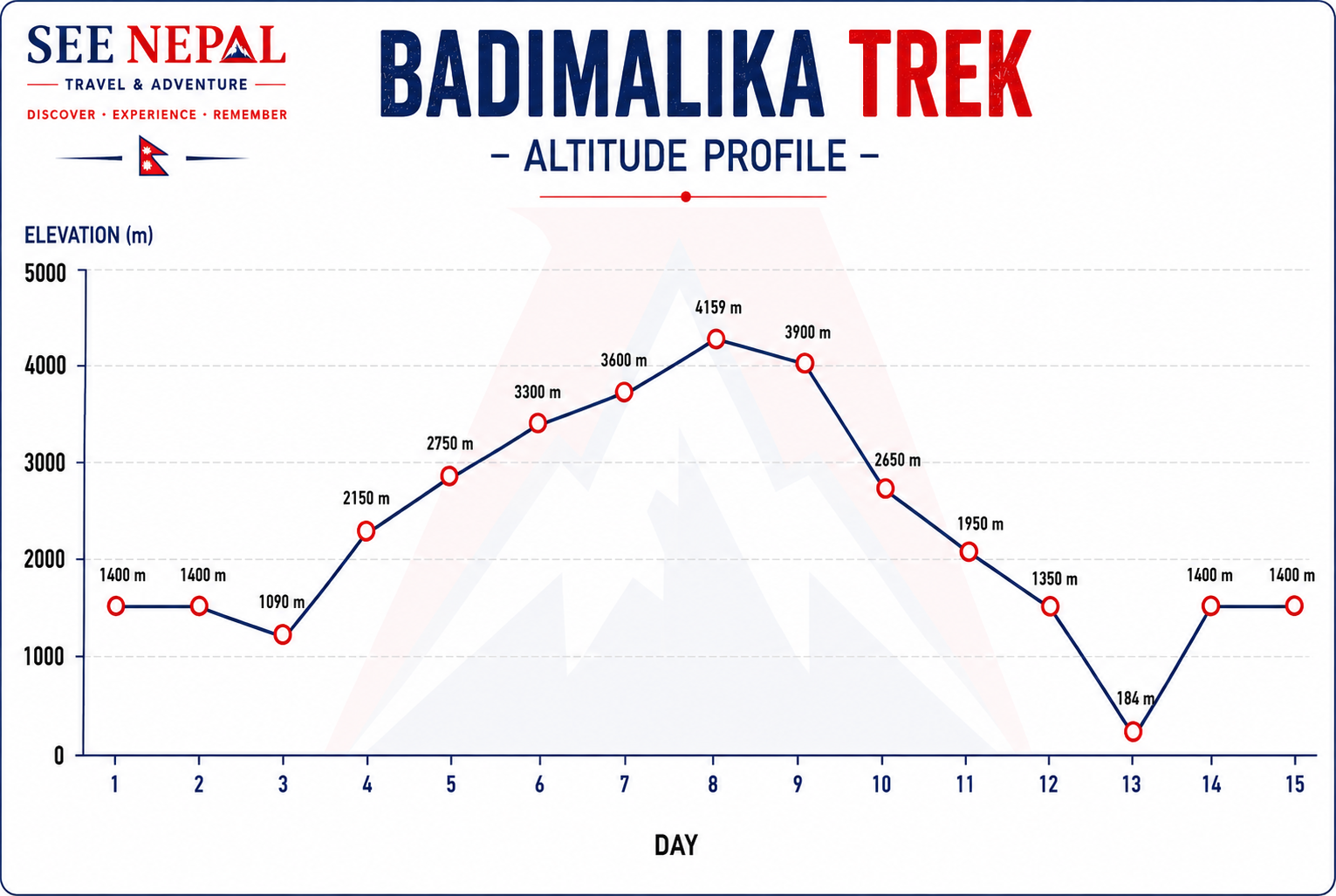
Altitude Profile
Inclusions & Exclusions
What's Included
Permits and Fees: All necessary permits for the Badimalika Trek, such as the TIMS (Trekkers’ Information Management System) card.
Accommodation: While you are in Kathmandu before and after the trek, you will stay in a standard tourist hotel (Bed and Breakfast) on a twin-sharing basis. But once we are on the trek, it’s all about camping. We will bring the tents, mattresses, and basic sleeping arrangements.
Meals: You will get three full meals a day (breakfast, lunch, and dinner) while we are trekking. We Also includes three times hot beverage in breakfast, lunch and dinner.
Domestic Flights: The return flights from Kathmandu to Dhangadhi are included in the cost. For the transport from Dhangadhi to the trekking trailhead, we will use jeeps or local transport, depending on the condition of the roads.
Guide and Porters: Services of an experienced English-speaking trekking guide and porters to carry luggage(one porter for two trekkers). This includes their salary, insurance, equipment, transportation, food, and accommodation.
First Aid Kit: A basic first aid kit is typically provided.
Trekking Map: A detailed map of the trekking route is usually included.
What's Excluded
International Flights: International airfare to and from Nepal is not included.
Travel Insurance: Travel insurance that covers emergency rescue, evacuation, and medical treatment is not included, and you’ll be expected to have your own.
Personal Expenses: Expenses for extra meals, drinks, snacks, charging devices, hot showers, Wi-Fi, laundry, and other personal costs are not included.
Nepal Visa Fees: Entry visa fees for Nepal are not included.
Additional Accommodation and Meals: If you choose to extend your stay in Nepal, or if you return from the trek earlier than scheduled, the cost of additional accommodation and meals will not be included.
Rescue and Evacuation: Any costs related to emergency evacuation or rescues are not covered.
Trekking Gear: Personal trekking equipment, such as hiking boots, down jackets, trekking poles, and other gear are not included.
Tips: Tips for guides and porters are not included and are left to your discretion.
Equipment List
Clothing
Footwear & Sleeping Gear
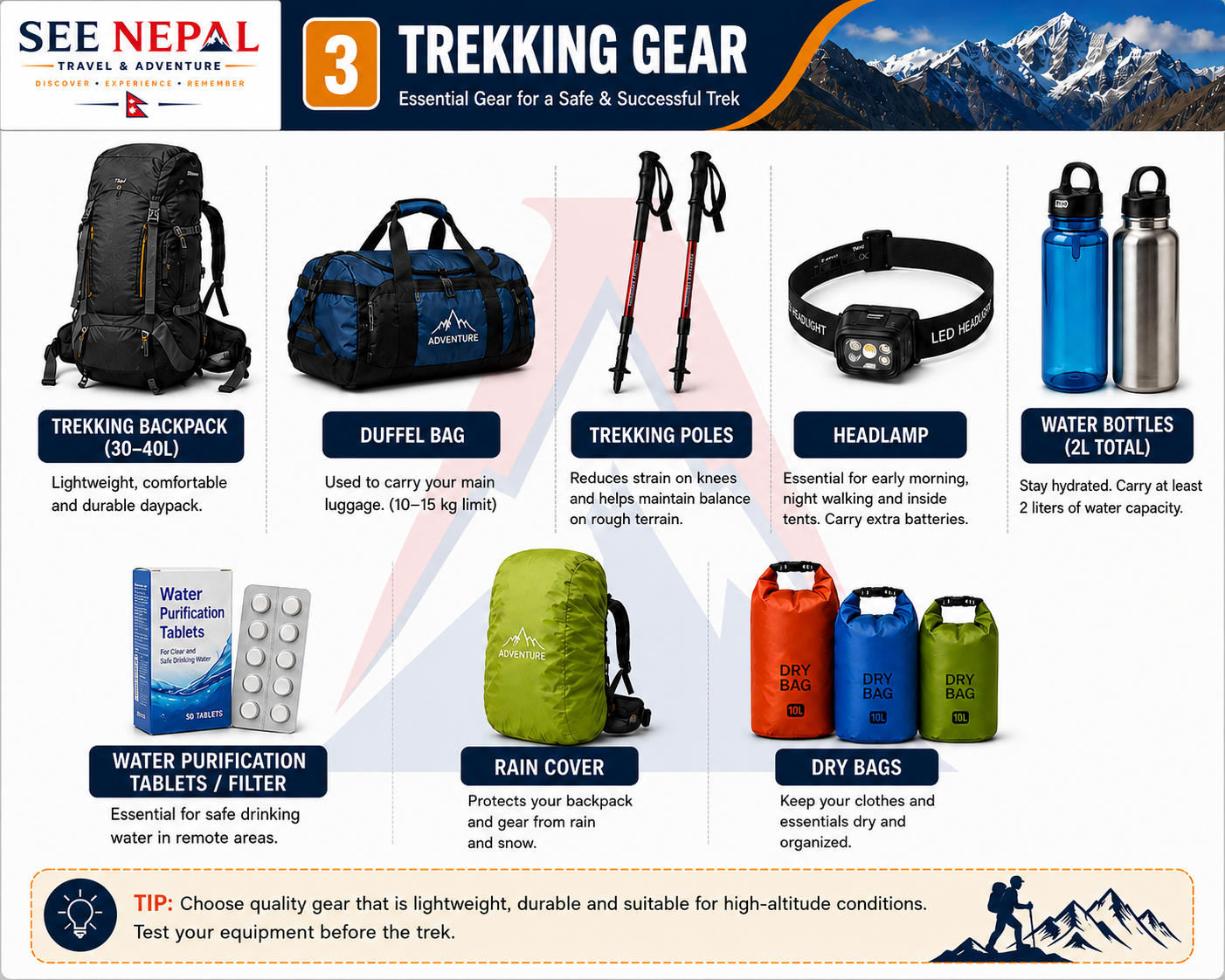
Trekking Gear
Personal Essentials
Electronics & Food
Frequently Asked Questions
Badimalika Trek is considered a moderate Trek. You don’t have to be some expert mountain climber or anything, but you do have to be in decent shape.
It is usually around anywhere from 12 to 16 days
Yes, it is very much suitable and doable for beginners if they are in decent shape and can walk for long hours.
Yes. The Badimalika trek is extremely remote, and the logistics, such as camping and finding water can be quite challenging. It is always best to hire a licensed guide and a reputable agency for safer and reliable trek.
Yes. There are no teahouses on this trek, as there are in the Annapurna region. So, camping is the only option available to you. It’s all part of the adventure!
The best time to do the Badimalika Trek is during Spring (March to May) and Autumn (September to November), when the weather is clear and stable.
The temple is located at an altitude of 4,200 meters. You will surely feel the effects of high altitude when you reach there.
Well, anytime you go above 4,000 meters, it’s always a concern. But we take it nice and slow, and we make sure to include acclimatization days. If you listen to your body, you’ll be just fine.