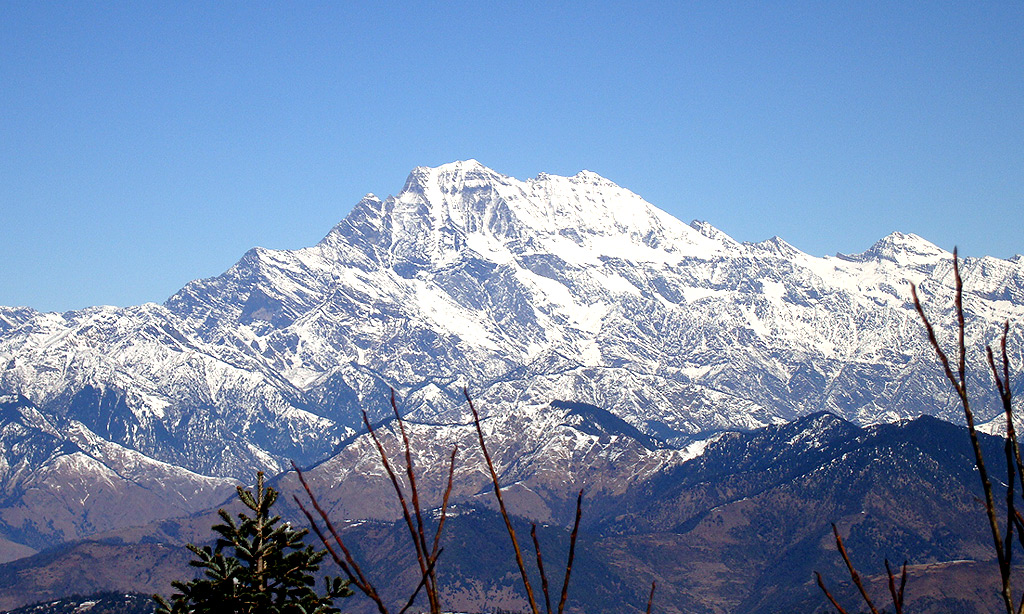
Jaljala trek offers sweeping views of Mt. Sisne, Mt. Putha, Mt. Dhaulagiri, Mt. Annapurna and other mountains. Mainly populated by Magar, one of the indigenous peoples of Nepal, it is a wonderful experience to have a close look at their way of life and culture. Jaljala (3193m) is also the main pilgrimage site of whole Rapti Zone and consists of three important temples: Kailu Baraha, Baju Baraha and Sahadey Barah.
Jaljala trek, located in Rolpa district, the cradle of Maoist revolution, is one of the newly opened trekking areas in Nepal. A visit to Jaljala in the spring time transports you to a magical land with a colorful carpet of wild blossoms, green meadows and Rhododendron forests. The presence of more than a hundred of species of birds and wild life such as leopard, bear, musk deer and wild boar is another attraction of Jaljala Trek.
Cultural Trek through Revolutionary Heartland: The Jaljala Trek takes you deep into the mid-western hills of Nepal, through the culturally rich and historically significant region of Rolpa and Rukum-often referred to as the "cradle of the people's movement." This trail offers a unique blend of natural beauty and living history, making it ideal for culturally curious and off-the-beaten-path trekkers.
Sacred Jaljala Meadows: The trek reaches the sacred alpine meadow of Jaljala, a revered pilgrimage site for both Hindus and Buddhists. During the full moon of Baisakh (April/May), thousands of pilgrims visit this high meadow to worship the deities believed to reside here, including Lord Baraha and other local deities
Ethnic Diversity & Living Traditions: Pass through traditional Magar and Kham villages like Jelbang, Thabang, and Lukum, where ancient customs,
shamanic rituals, and folk songs are still part of everyday life. Local homestays offer a warm welcome and a chance to experience traditional food, dance, and hospitality.
Biodiversity & Scenic Beauty: Trek through lush forests, blooming rhododendrons (in spring), alpine ridges, and pastures teeming with medicinal herbs and birdlife. The region is part of the Dhorpatan Hunting Reserve, Nepal's only hunting reserve and a biodiversity hotspot known for blue sheep, Himalayan tahr, and several bird species.
Transition from Mid-Hills to High Himalayas: As the trail continues westward toward Dhorpatan, Gurjaghat, and Takam, the landscape shifts dramatically-rising from terraced hills to high ridges with panoramic views of Dhaulagiri (8167m) and surrounding Himalayan peaks.
Highlights
Spectacular panoramic views of the Dhaulagiri, Annapurna, and Machapuchare ranges.
Experience authentic Magar and Gurung culture, traditional villages, and homestays.
Explore remote villages like Thabang, Majhibang, and Ajambari Commune.
Walk through terraced farmland, dense forests, and hilltop ridges.
Visit local monasteries, temples, and historical sites along the way.
Opportunity for cultural exchange and local interactions in rural communities.
Moderate trek suitable for first-time trekkers looking for cultural immersion.
Itinerary (12D, 11N)
Upon your arrival at Tribhuvan International Airport in Kathmandu, you will be warmly received and transferred to your hotel. Take this day to rest after your flight, hydrate, and acclimatize to the altitude. Kathmandu is a bustling city rich in culture and history, giving you your first taste of Nepalese life. In the evening, you may enjoy a leisurely stroll around Thamel to experience local cafes, shops, and vibrant streets. Overnight at hotel.
Before starting your trekking journey, we have set aside a day in Kathmandu to help you learn about the unique art, culture, and architecture of Nepal. You will be guided to the UNESCO-listed heritage sites in Kathmandu. First, you will be escorted to Kathmandu Durbar Square, where you can visit the museum, palace, its premises, and the temples built around it. Next, you will be escorted to the monkey temple – Swayambhunath. We walk up the stairs to the stupa. From the height, we can get an excellent view of Kathmandu city. Then, we visit a popular Hindu temple – Pashupatinath temple and head towards the largest stupa in the world – Boudhanath stupa. In the evening, we return to our hotel for an overnight stay.
Experience the long scenic drive from Kathmandu to Sulichaur. The route takes you through the winding roads of the mid-hills, crossing terraced landscapes, dense forests, and sparkling rivers. You’ll witness rural life as you pass small villages, local markets, and farmers tending their fields. The journey is long but rewarding, offering glimpses of traditional Nepalese culture and the untouched natural beauty of western Nepal. Overnight at lodge.
Drive to Fulibang, a quiet town that marks the beginning of your trekking journey. From here, the trail ascends gently through lush forests and terraced farmland. You will pass traditional stone houses and small villages, interacting with locals along the way. The trek is moderately challenging and gives a first taste of the diverse flora and fauna of the region. Reach Kotalbara in the evening, a small village with panoramic views of the surrounding hills. Overnight at lodge.
Today’s trek takes you deeper into rural Nepal. You will pass through verdant forests, clear streams, and terraced farmlands while ascending steadily toward Ajambari Commune. This area is inhabited by ethnic Magar communities, and you’ll have the opportunity to witness their unique lifestyle, traditional houses, and agricultural practices. The trail offers beautiful viewpoints of the surrounding hills and valleys. Overnight at Ajambari Commune, where the warmth of local hospitality is unforgettable.
Descend gently into the Thabang valley, trekking through small villages, farmlands, and forests. Thabang is a culturally significant Magar settlement, known for its ancient traditions and heritage. Walking through the village, you will see traditional stone houses, prayer flags, and local monasteries. The day is moderately challenging, with scenic views along the trail and a chance to experience authentic local life. Overnight at homestay in Thabang.
Take a rest day to explore Thabang and surrounding villages such as Dhakpa and Ghamchin. Walk through peaceful trails lined with forests and terraced fields, and observe daily village activities. Engage with local people, learn about their customs, traditional dances, and handicrafts. This day also allows for acclimatization and photography of the stunning valley landscapes. Overnight at homestay in Thabang.
Begin the ascent toward Jaljala, a ridge offering panoramic views of the Himalayas. The trail passes through dense forests of oak and rhododendron, open ridges, and small hamlets. As you approach Jaljala, the scenery opens up with breathtaking vistas of snow-capped peaks and surrounding valleys. The climb is moderately strenuous but rewarding with incredible viewpoints at sunset. Overnight at inns in Jaljala.
Descend gradually from Jaljala through pristine forests, farmland, and small rivers toward Dharampani. Continue trekking to Majhibang, passing through remote villages where traditional life continues unchanged. The trail offers a mix of gentle slopes and rolling hills, giving a chance to observe local agriculture, stone houses, and village rituals. The day is filled with scenic beauty and cultural encounters. Overnight at homestay in Majhibang.
A short morning trek takes you from Majhibang to Jailbang, where you can enjoy serene village life and surrounding landscapes. Later, drive back to Sulichaur along scenic mid-hill roads. This is a relatively easy day, allowing time to rest and reflect on the journey. Overnight at guest house in Sulichaur.
Drive back to Kathmandu through winding hills, terraced farmland, and rural settlements. Enjoy the changing landscapes as you transition from remote villages back to the bustling capital. Use this time to relax, reminisce about your trek, and prepare for your departure. Overnight at hotel in Kathmandu.
After breakfast, you will be transferred to Tribhuvan International Airport for your onward journey. Reflect on the memories, scenic landscapes, and cultural experiences from your Jaljala Trekking adventure.
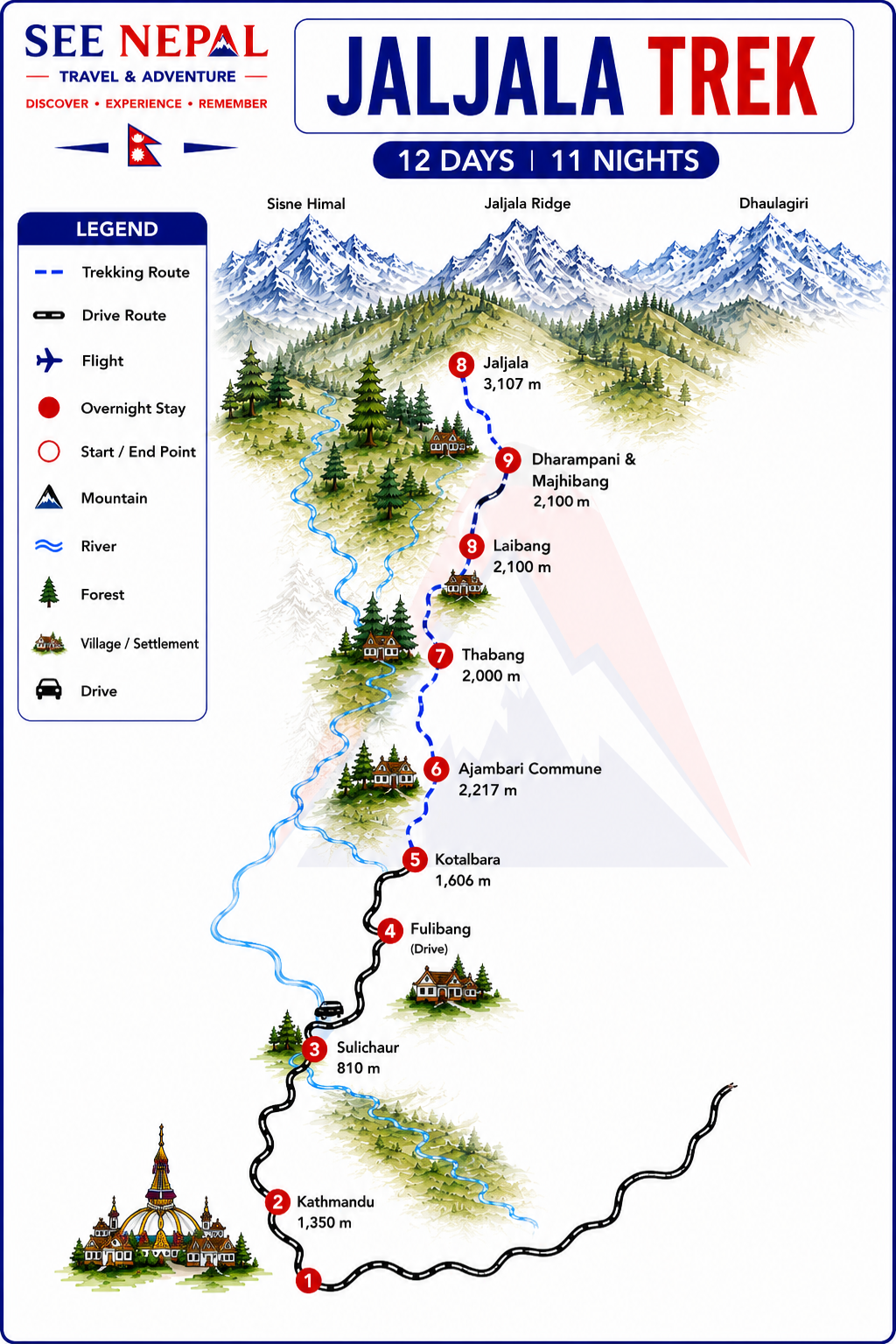
Trekking Map
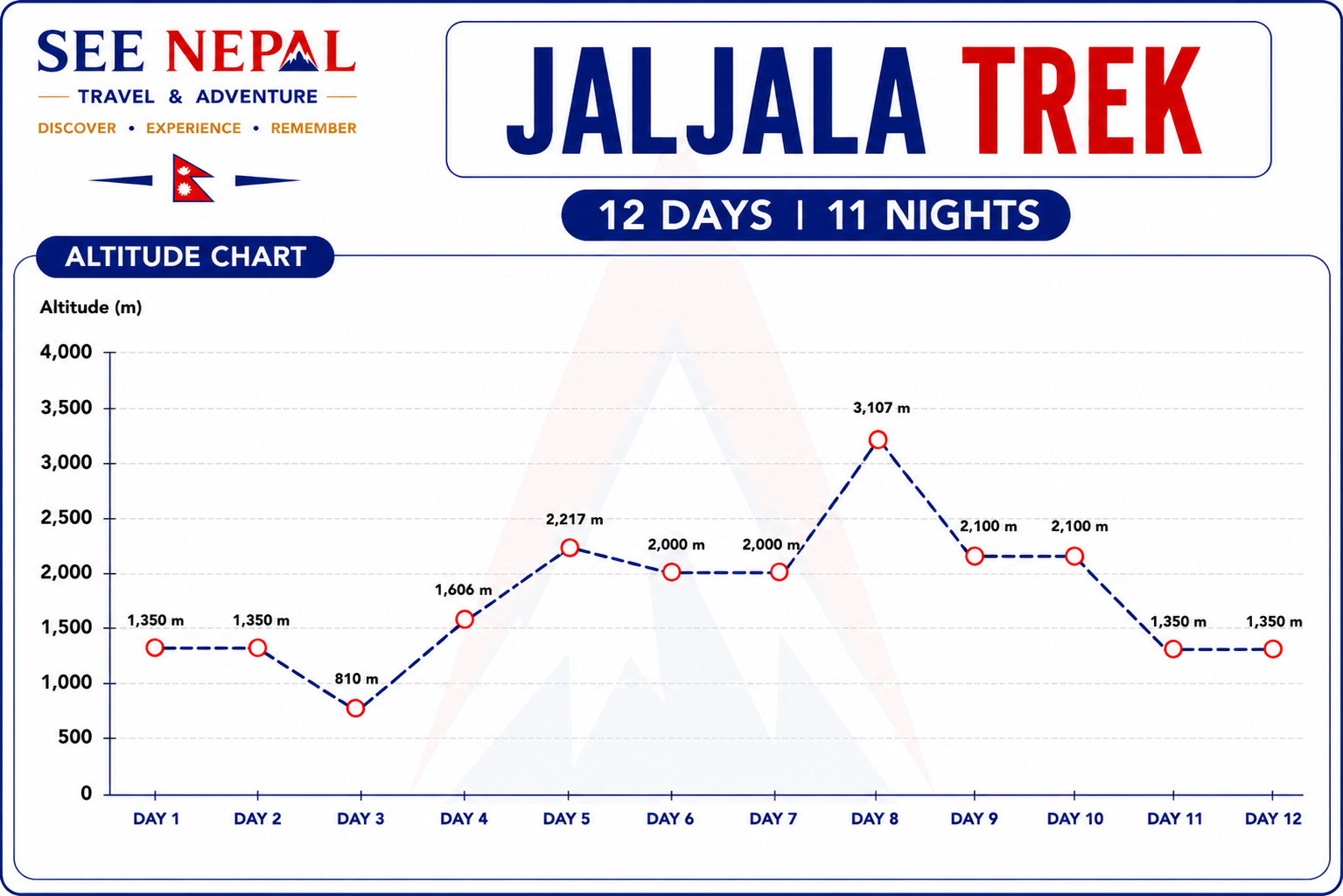
Altitude Profile
Inclusions & Exclusions
What's Included
Arrival and departure airport transfers in Kathmandu.
Accommodation in Kathmandu (hotels) and on trek (lodges, inns, homestays).
All meals on trek (breakfast, lunch, and dinner).
Experienced English-speaking trekking guide and porters.
Trekking permits and national park fees if applicable.
Transportation by private vehicle for Kathmandu-Sulichaur-Kathmandu route.
First-aid kit and oxygen cylinder available with the guide.
Cultural performances and village tours where applicable.
What's Excluded
International airfare to/from Nepal.
Meals in Kathmandu and drinks (alcoholic beverages, soft drinks).
Travel insurance (mandatory for trekking).
Personal expenses, tips for guides and porters.
Hot showers or battery charging fees at lodges (if applicable).
Any extra trekking equipment not listed in the checklist.
Equipment List
Clothing
Footwear & Sleeping Gear
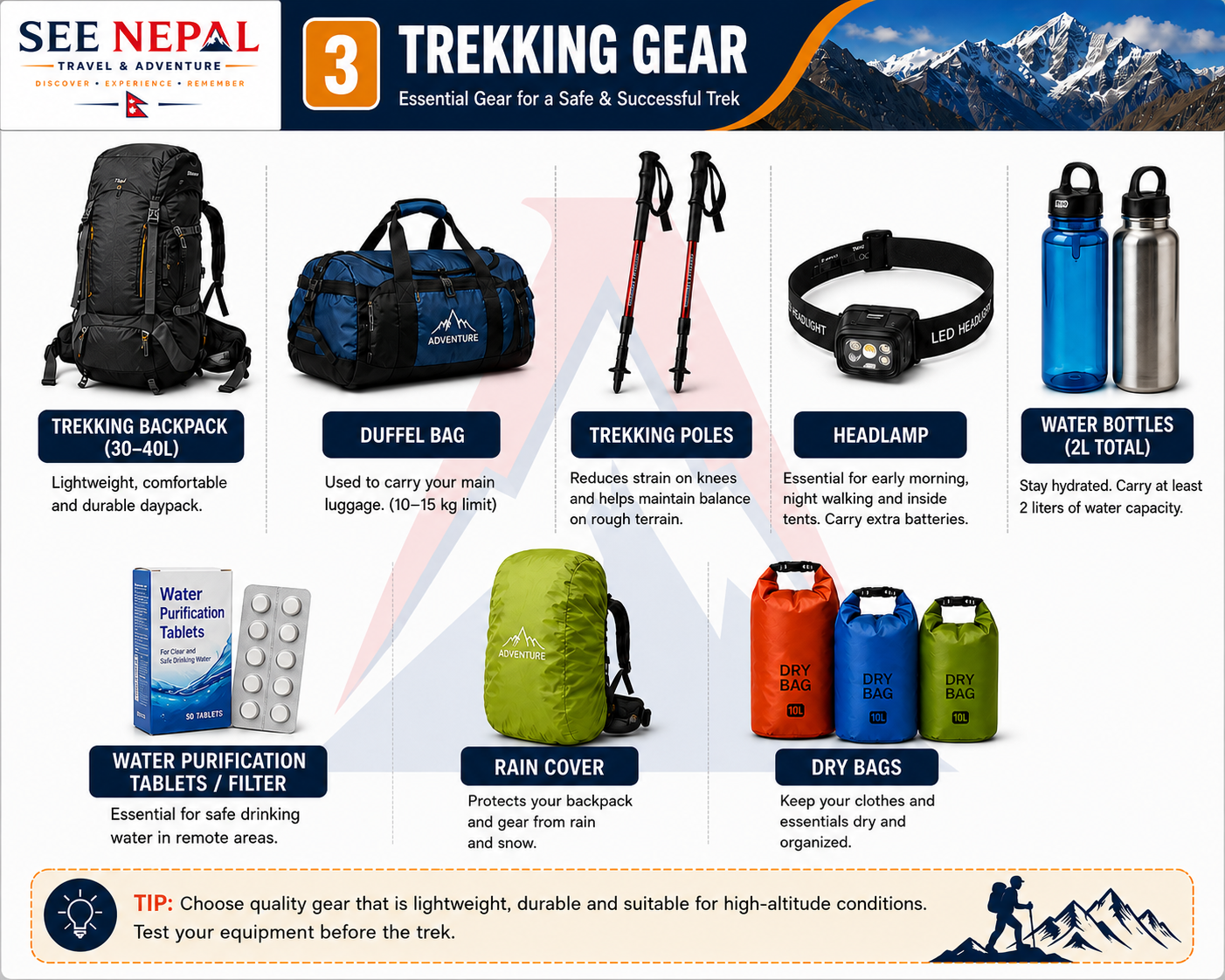
Trekking Gear
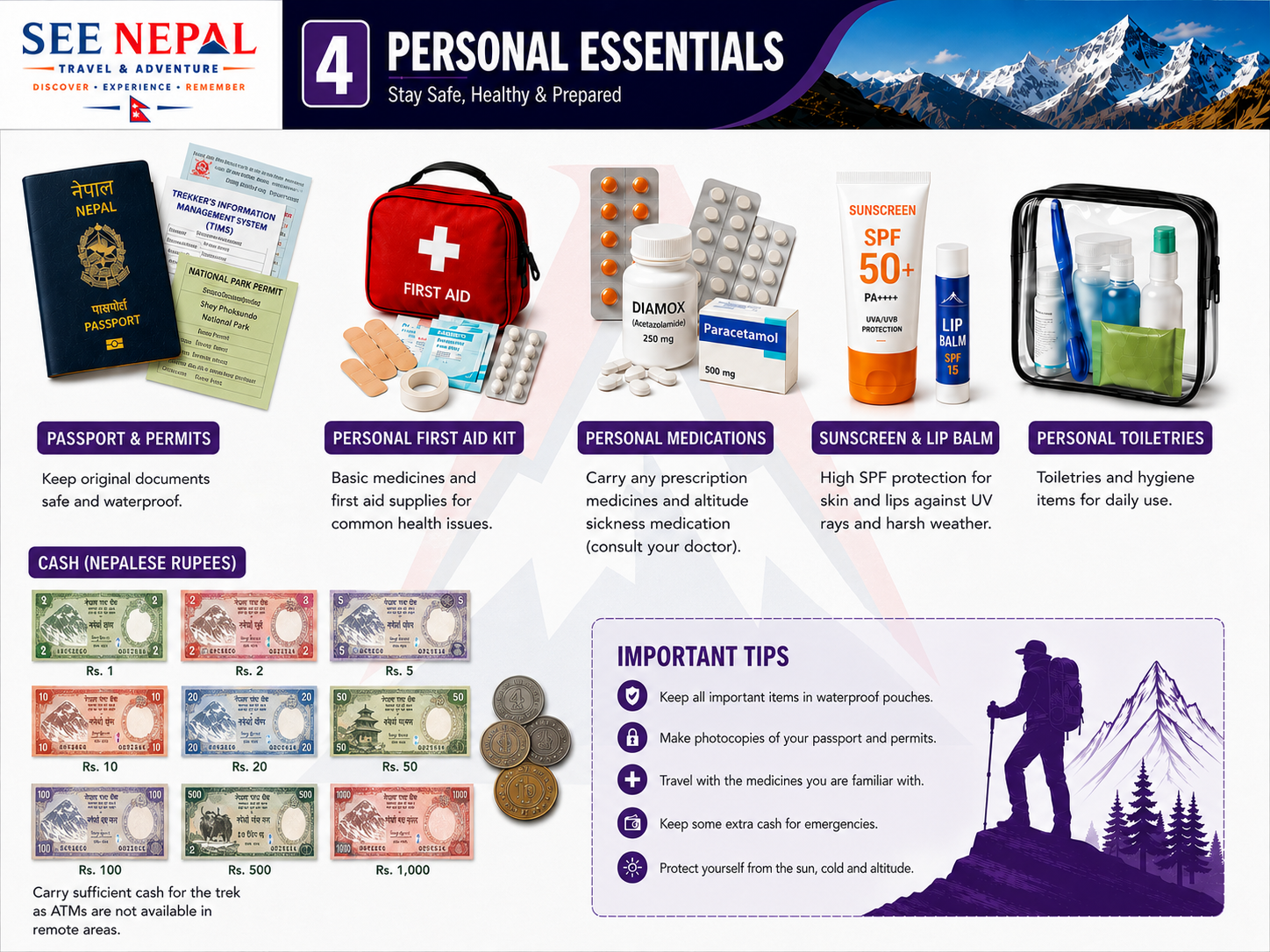
Personal Essentials
Electronics & Food
Frequently Asked Questions
The trek is considered moderate, suitable for beginners with a reasonable level of fitness. While there are uphill and downhill sections, the altitude is manageable. Prior trekking experience is helpful but not mandatory.
The best time for this trek is spring (March–May), when rhododendrons bloom, and autumn (September–November), when the skies are clear and mountain views are spectacular. Monsoon season (June–August) is not recommended due to heavy rainfall and possible landslides.
The trek reaches a maximum altitude of 3,107 meters at Jaljala Hill, offering stunning panoramic views of the Dhaulagiri and Annapurna ranges.
The Jaljala Trek is approximately 90–100 km over 12 days, including trekking and driving portions. Daily hikes range from 2 to 7 hours, depending on terrain and altitude.
Accommodation consists of homestays, lodges, and inns, with basic but clean facilities. Hot showers may be available in limited locations, often in a bucket style. Shared toilets are common in high-altitude regions.
Accommodation consists of homestays, lodges, and inns, with basic but clean facilities. Hot showers may be available in limited locations, often in a bucket style. Shared toilets are common in high-altitude regions.
Meals on the trek are simple but nutritious, including local dishes like dal bhat, noodles, soups, and occasional continental options. Food is freshly prepared, though options are limited in remote villages.
Yes, it is strongly recommended to have trekking and travel insurance covering medical emergencies, evacuation, and high-altitude trekking.
Yes, trekking permits and any local fees are required. These are typically arranged by the trekking organizer.
Essential items include trekking clothes, warm layers, waterproof jacket, trekking boots, sleeping bag, personal medications, sunglasses, sunscreen, water bottles, and a small daypack.
Respect local customs by dressing modestly, removing shoes before entering homes or temples, and seeking permission before photographing villagers. Some temples restrict entry for non-Hindus.
While the maximum altitude is moderate, mild altitude sickness can occur. Proper hydration, pacing, and acclimatization are recommended, and your guide will monitor for any symptoms.
The trek typically begins with a drive from Kathmandu to Sulichaur, passing scenic hills, terraced fields, and rivers. The drive takes approximately 10–12 hours, offering glimpses of rural life in western Nepal.