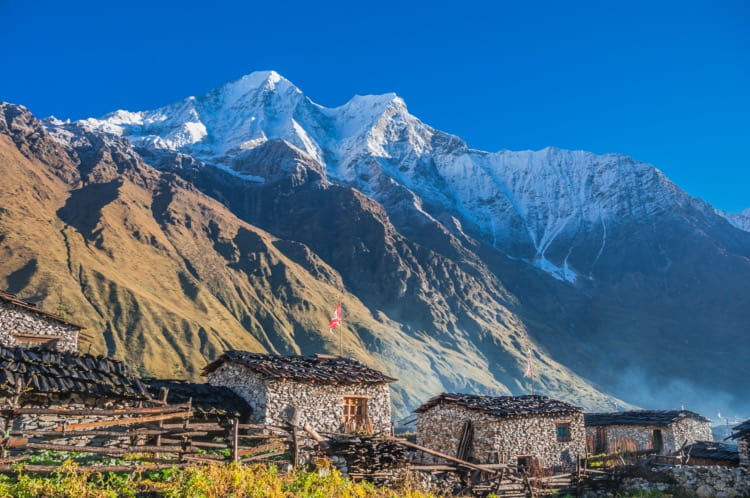
Tsum Valley (Hidden Valley) is located at an altitude of 1905 to 5093 meters and is rich in Tibetan culture, traditions, and ancient art and mostly untouched by modern civilization.
Tsum Valley is bounded by Boudha Himal and Himal Chuli in the west, Ganesh Himal in the south, and Siring Himal (7187m) in the north. The trail passes through two significant villages in the region, Chumling (Lower Tsum) and Chhaikampar (Upper Tsum). The valley is rich in Tibetan culture with numerous mani walls, chortens and prayer flags adorning the trail and is home to some of the holiest of Tibetan monasteries where the famous sages Guru Rinpoche and the Tibetan philosopher Milarepa once worshipped in nearby caves. It is a place where the trekker can discover oneself and discover peace through meditation.
A visit to this serene valley close to Tibet is alive with wildlife such as the famed blue sheep and Himalayan Thar and its pristine landscape is a sight to behold. The Tsum Valley is predominantly inhabited by Tibetans and even has its own dialect with most villagers dressed in traditional clothes and are devout practicing Buddhists. Their homes also reflect their unique Tibetan architecture.
Highlights
Stunning views of Mt. Manaslu, Himchuli, Ganesh Himal and other snow-capped mountains..
Visit ancient monasteries - Gompa Lungdang, Rachen Gompa and Mu Gompa.
eep gorges and pristine landscape of Tsum Valley.
Visit sacred caves and Buddhist monasteries rich in history and spiritual significance to Tibetans.
High altitude trek to Mu Gompa (3700m) and its monastery.
Trek to Ganesh Himal Base Camp. below Mt. Ganesh Himal (7422m).
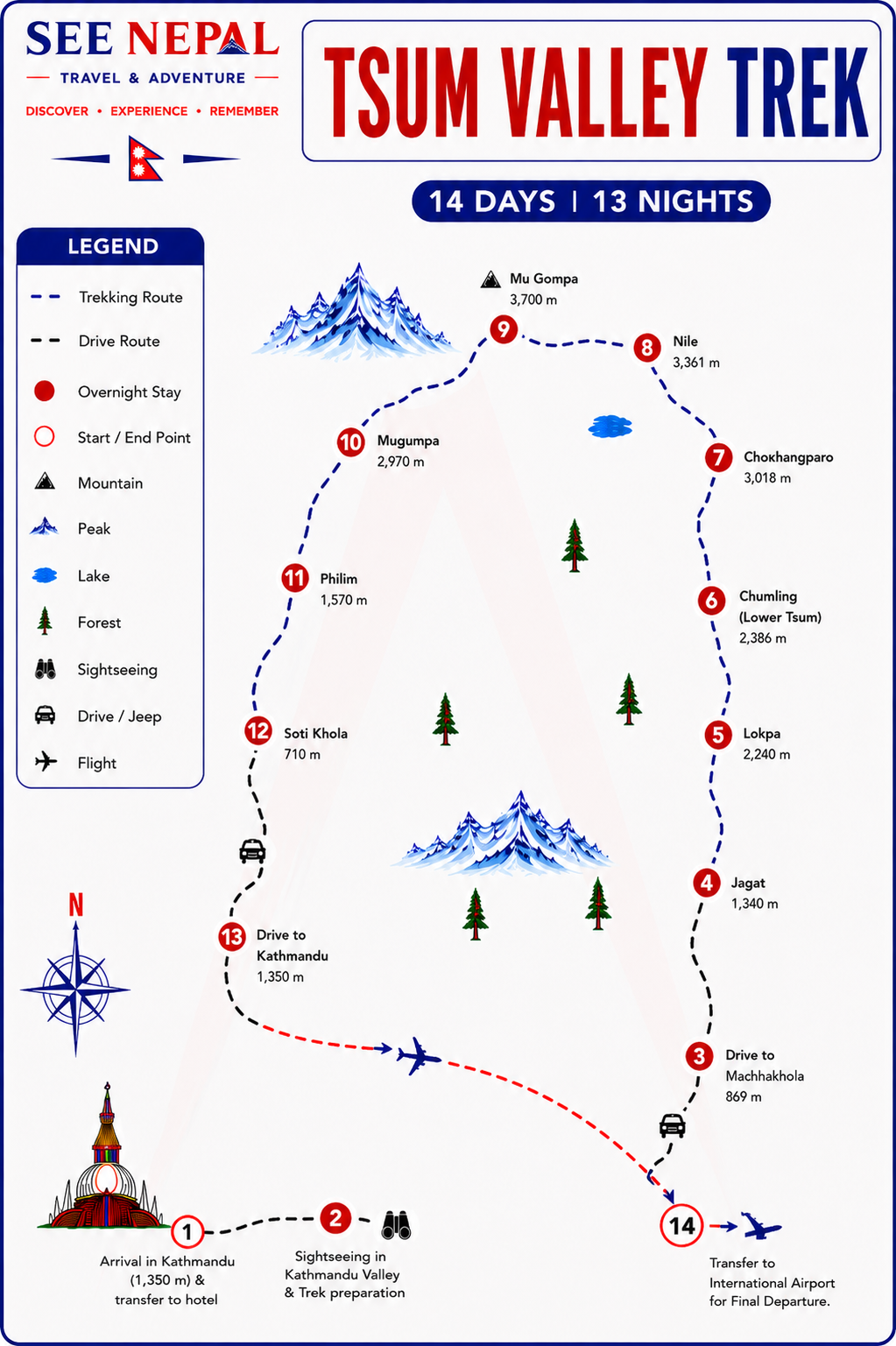
Itinerary (14D,13N)
On arrival at Kathmandu airport, you will be met by a representative from See Nepal Travel & Adventure who will take you to your 3-star hotel. You can rest at your hotel or stroll around Thamel and do some last-minute shopping and take in the sights.
Before starting your trekking journey, we have set aside a day in Kathmandu to help you learn about the unique art, culture, and architecture of Nepal. You will be guided to the UNESCO-listed heritage sites in Kathmandu. First, you will be escorted to Kathmandu Durbar Square, where you can visit the museum, palace, its premises, and the temples built around it. Next, you will be escorted to the monkey temple – Swayambhunath. We walk up the stairs to the stupa. From the height, we can get an excellent view of Kathmandu city. Then, we visit a popular Hindu temple – Pashupatinath temple and head towards the largest stupa in the world – Boudhanath stupa. In the evening, we return to our hotel for an overnight stay
Today we drive from Kathmandu to Soti Khola driving through Dhading Beshi and Arughat. The road deteriorates and is quite rough and bumpy from Dhading to Arughat. This afternoon we follow a trail through the woods heading upriver along the banks of the Budhi Gandaki River and then across the mountains from where we have frequent views down to the river far below. Tonight we will stay at a guesthouse at Machha Khola.
Ahead of us today is a 6 to 7-hour trek following the river to the original route follows the river to Khorla Besi and to the therapeutic hot springs at Tatopani (930m). After leaving Tatopani we follow the trail along the east bank of the continuing on the eastern bank of the Buri Gandaki to reach Doban, Thulo Dunga, and Yara Bagar (1370m). The trail frequently crosses back and forth over the river on suspension bridges before entering the main entrance to the Manaslu Conservation Area and finally Jagat (1410m). At this point, the office will check our area permits. Breakfast, lunch & dinner. included.
Today we head off on a 6-hour trek, first reaching Salleri where we have magnificent views of Mount Sringi before descending to Sirdibas, a traditional Buddhist village. The trail continues until we reach Lokpa Village, just north of Philim and then go through Ekle Bhatti and climb to a ridge along a trail through a pine forest. We come to a junction where we take the trail heading to Tsum Valley. We stay the night at Lokpa.
Today we have a 5-hour trek ahead of us to Tsum Valley. The first sights of Tsum Valley appear as we head down to along with mountain Chumling Village. We then climb up to Ripchet and a short time later reach the authentic Buddhist village of Chumling, well known for its ancient monastery, traditional Tibetan style houses, prayer flags, mani walls, and its stone-paved streets. We stay here overnight.
Today we start by crossing a suspension bridge where we have amazing views of the Ganesh Himal. The trail continues and takes us past Rainjam and across Seru Khola before arriving at Gho Village. After a total of 5 to 5 hours trekking, we reach Chokhangparo. A village from where we have views of Himalchuli (7893m) and Ganesh Himal (7140m). We stay here tonight. Breakfast, lunch & dinner included.
Today’s trek of 5 to 6 hours follows the trail to Rachen Gompa and to the Shir Khola (river). After leaving the river we pass by Phurbe, and Pangdun villages before arriving at the Nile where we stay the night. Breakfast, lunch & dinner included.
The trail today takes us close to the Tibetan border as we walk through the valley. We continue and climb up to the Dhepu Doma Gompa (monastery) and then on to today’s destination Mu Gompa where we stay the night. Breakfast. Lunch & dinner included.
Today we trek for 5 to 6 hours through greener countryside and descend to Chumling through the lower Tsum Valley. We spend the night at Chumling. Breakfast, lunch & dinner included.
The trial today heads in the direction of Lokpa and passes the beautiful Samba Falls. After 6 to 7 hours we reach today’s destination Philim Village where we will stay the night. Breakfast, lunch & dinner included.
Today we follow the trail along the ridge to the Budhi Gandaki River and on to Labubesi until we reach Soti Khola where we stay the night. Breakfast, lunch & dinner included.
Drive from Soti Khola to Kathmandu (1,350m) Duration: 7-8 hours.
Today marks the final leg of your journey, as you drive back to Kathmandu from Soti Khola. After a hearty breakfast, you'll set off on a scenic 7-8 hour drive, navigating a winding road through lush valleys, terraced fields, and charming villages. Along the way, you'll pass through rural landscapes, crossing rivers, and navigating uphill and downhill stretches. The drive offers a glimpse into the daily lives of locals and the beauty of the Nepali countryside. Upon arrival in Kathmandu, you'll be transferred to your hotel to rest and reflect on the unforgettable adventure you’ve experienced in the Himalayas.
you will be picked up from your hotel and transferred to the international airport for your final departure. Make sure to have your travel documents ready and arrive at the airport at least three hours before your flight. Therefore, this is the end of your trek and journey in Nepal. Safe travels, and hope to see you again.
Trekking Map
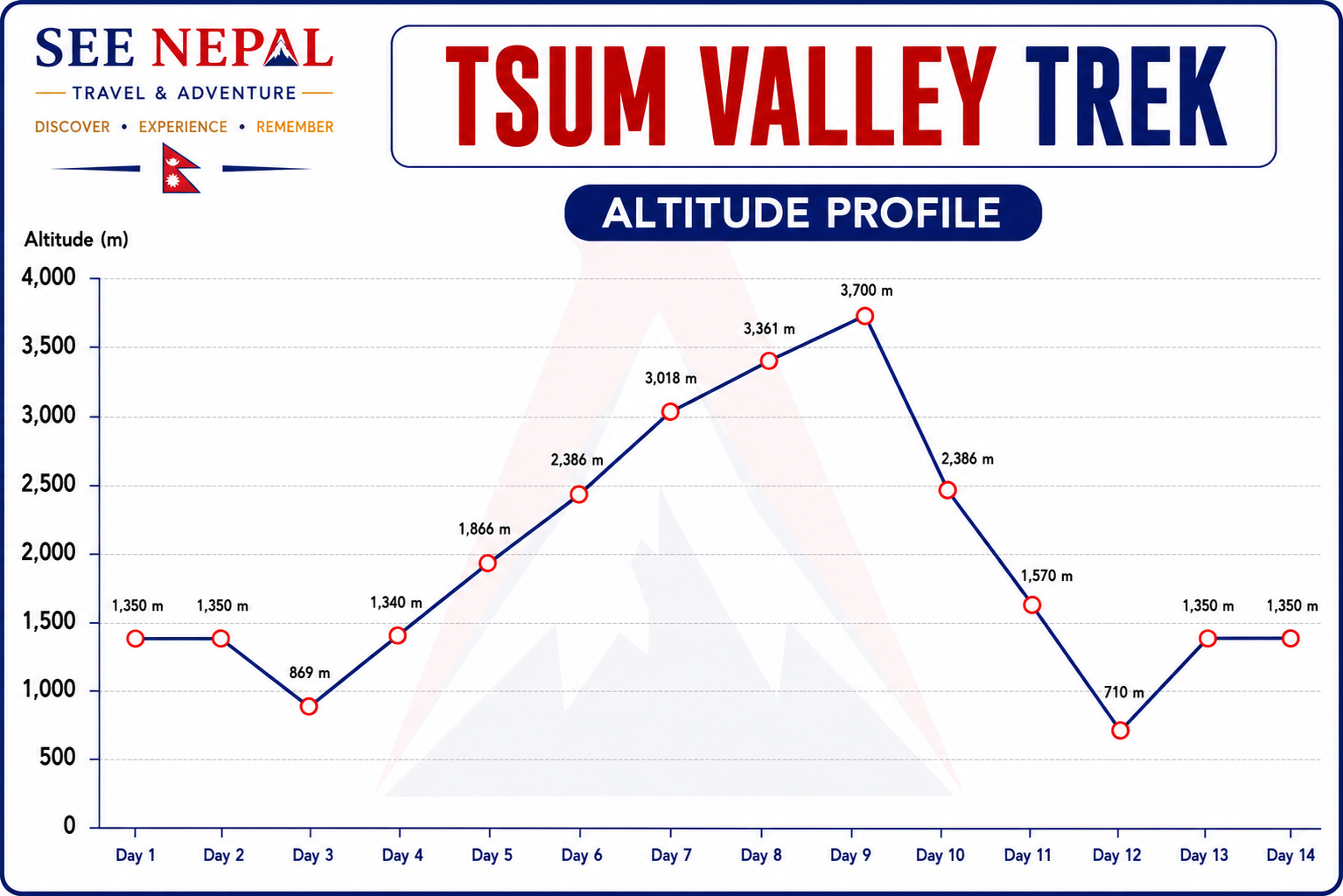
Altitude Profile
Inclusions & Exclusions
What's Included
Airport / Hotel / Airport transfer by car / Van.
Two Nights stander hotel in Kathmandu.
Meals (breakfast, lunch and dinner) with Tea & coffee during the trek.
All tented Camping accommodation
Trekking Guide: One highly experienced, helpful and friendly Guide,
Necessary Trekking porter
All the transport by Private Jeep
Trekking Permit: All the trekking permit and necessary company paperwork.
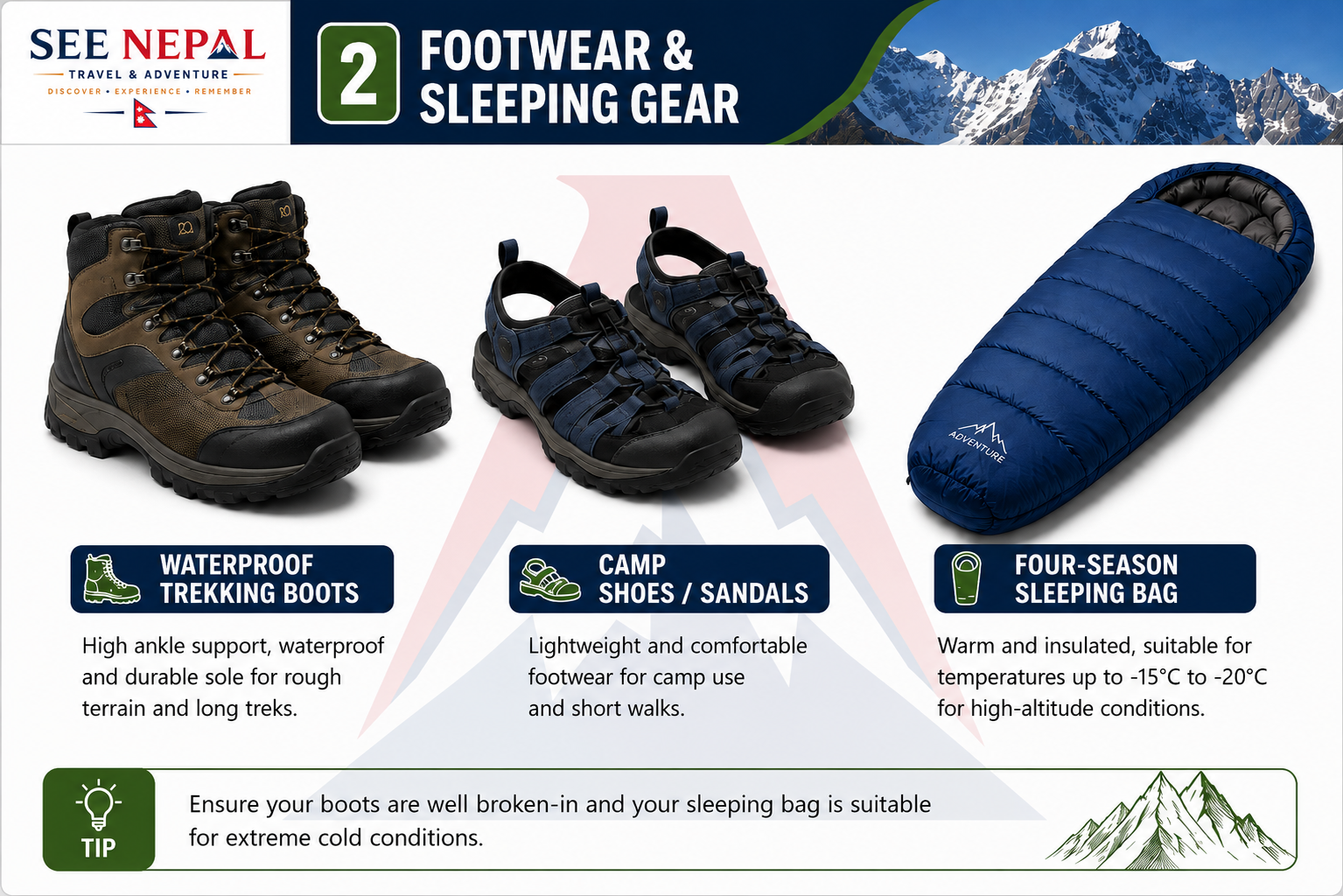
Trekking equipment: Sleeping bag, Down Jacket ( refundable after the trek )
Tourist service charge, Vat.
Office Service charge.
What's Excluded
International air fare to Nepal visa
Personal travel insurance and emergency rescue evacuation
Items of a personal nature and equipment
Tips for guide, porters, driver.
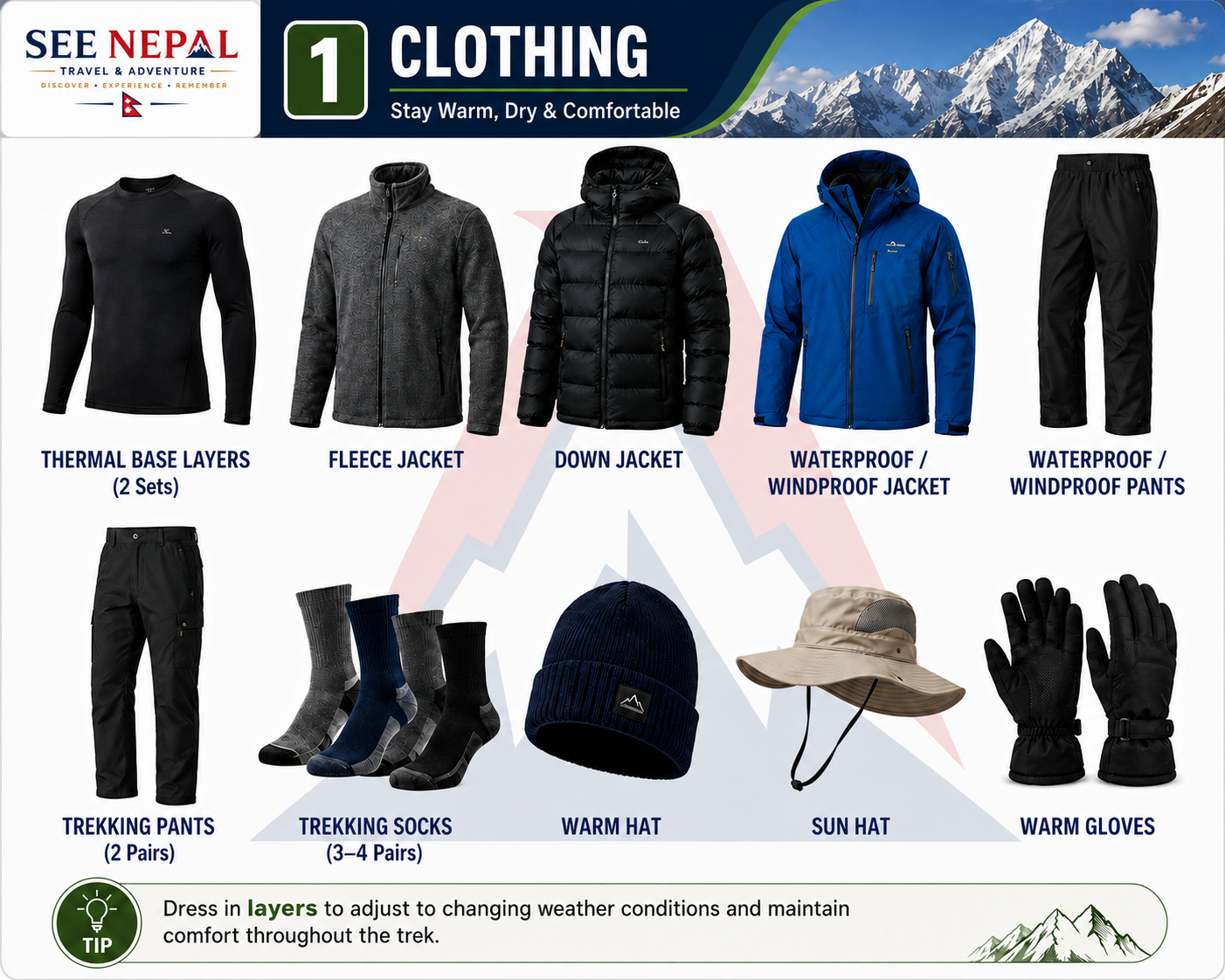
Equipment List
Clothing
Footwear & Sleeping Gear
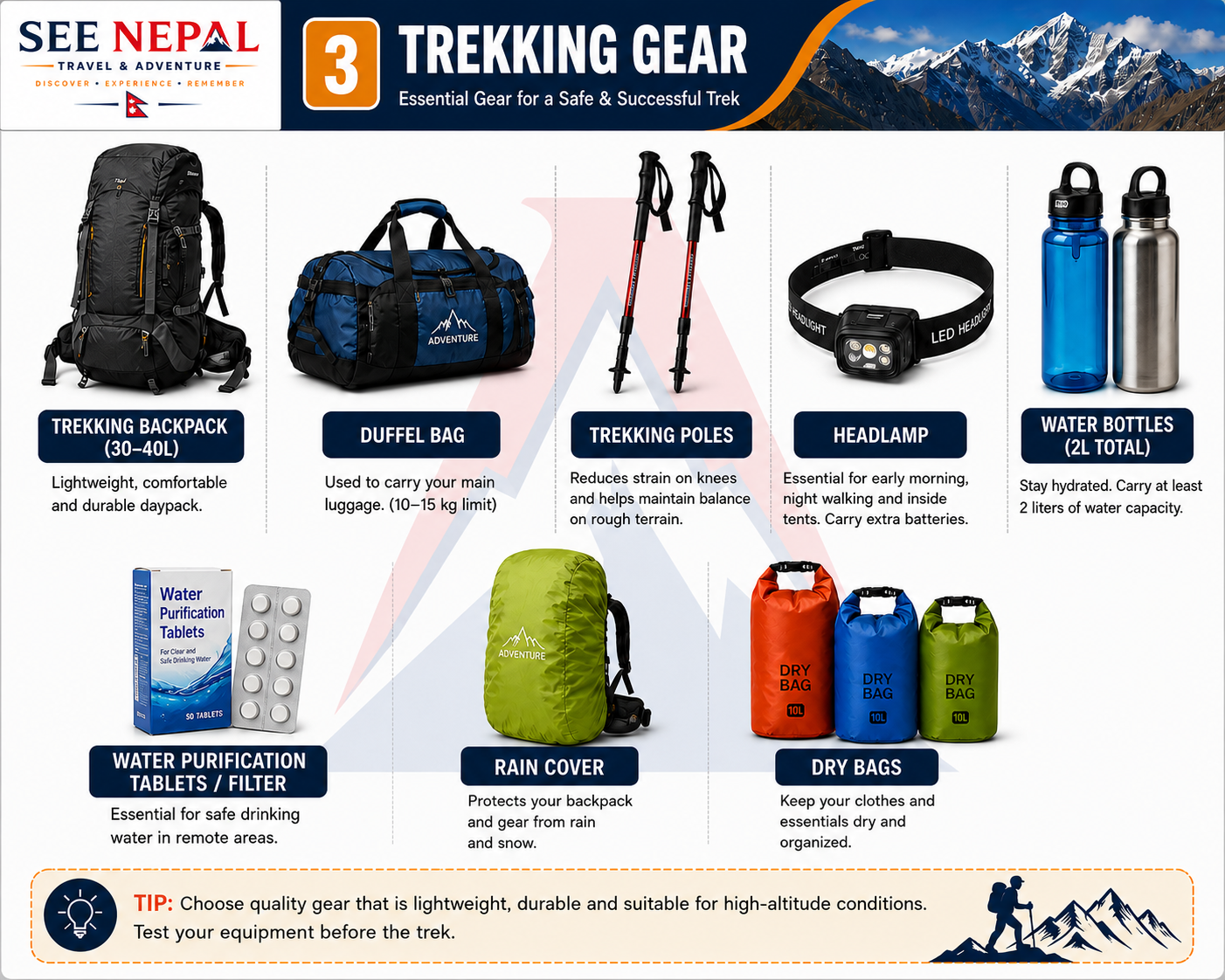
Trekking Gear
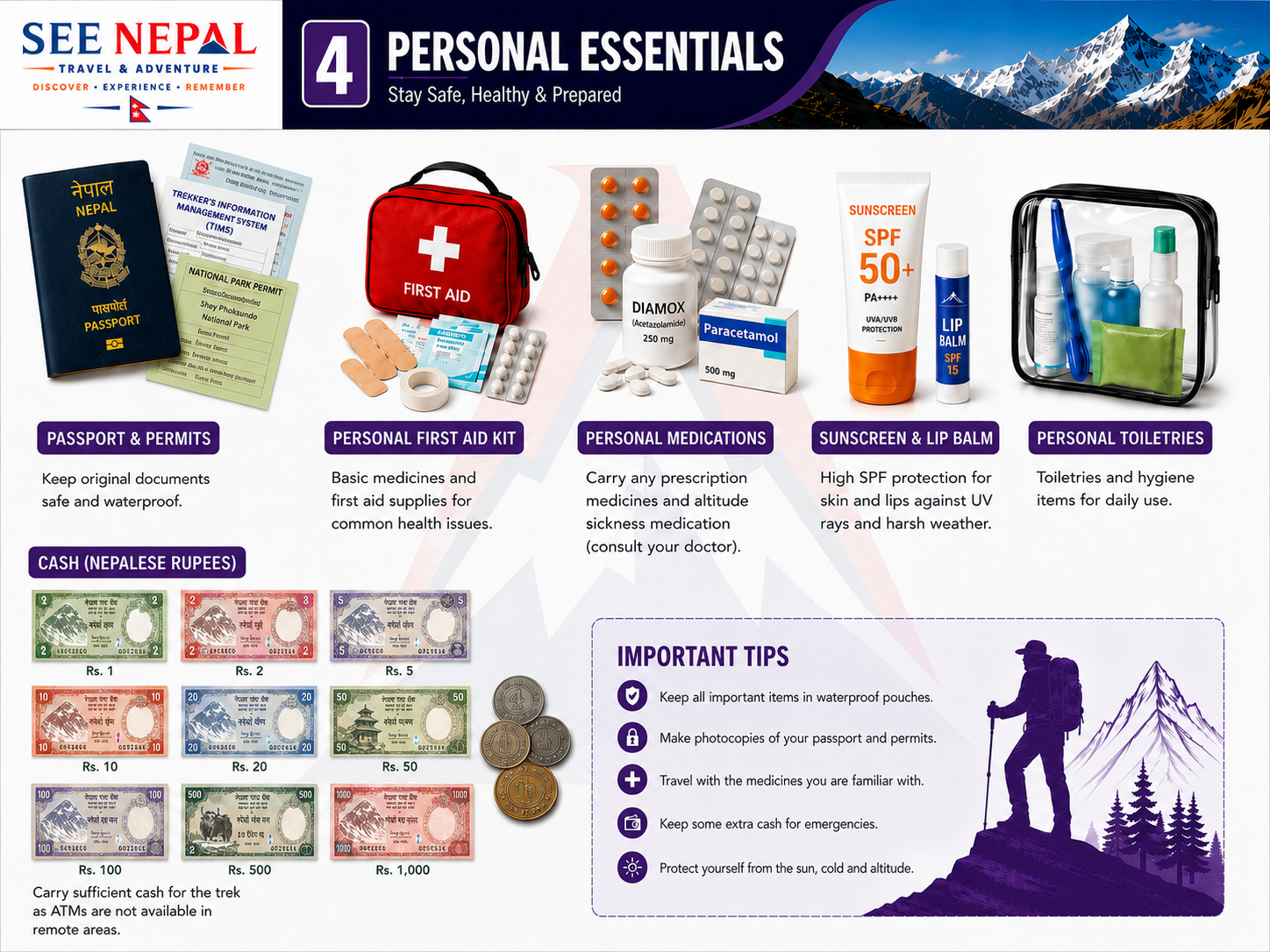
Personal Essentials
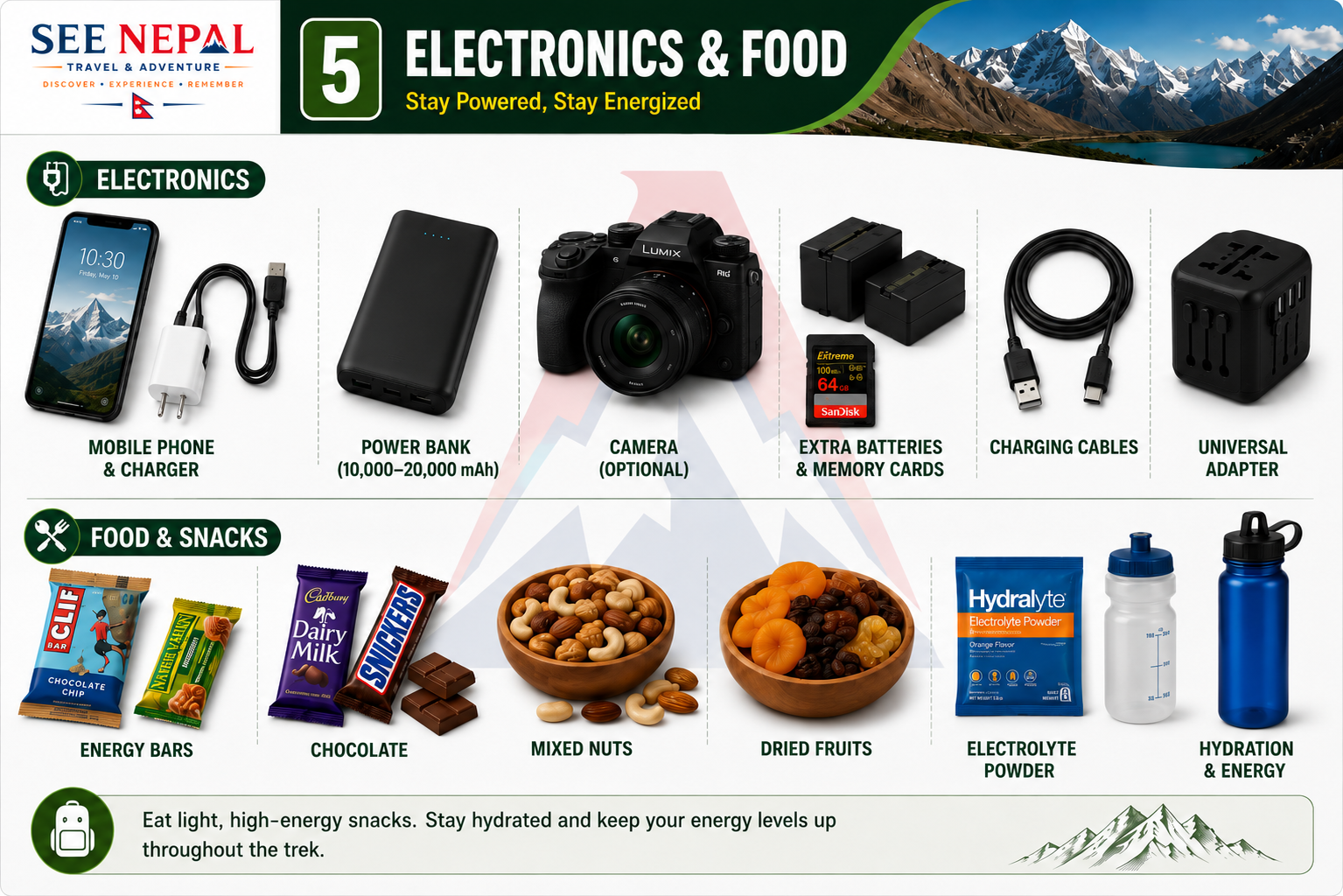
Electronics & Food
Frequently Asked Questions
Yes, you can. No matter who you are, as long as you are reasonably fit, can walk for 5-6 hours a day and trek/hike a few uphills, Sherpa Expedition and Trekking team will support you to the fullest to transform your dream into reality.
Spring and autumn are the best seasons for Tsum Valley Circuit trek. Spring (March, April, and May) and Autumn (September, October, and November) are the best months for trekking as the weather will be clear and calm. Also, you can get the opportunity to view High mountains including Tsum Valley with the full of Snow.
You will need three kinds of permits issued by the Government of Nepal. Tsum Valley Restricted Permit Tsum Valley trek permit costs USD 100.00 for the first seven days and USD 15.00 each additional day during September to November Tsum Valley trek permit costs USD 75.00 for first 7 days and USD 10.00 each extra day from December to August. Tsum Valley Conservation Area Permit (MCAP) Entry fee for SAARC Nationals is Nepali Currency 200 per person and for other Nationals is Nepali Currency 3,000 per person. Annapurna Conservation Area Permit (ACAP) Entry fee for SAARC Nationals is Nepali Currency 200 per person and for other Nationals is Nepali Currency 3,000 per person. Tsum Valley Restricted Permit (Optional: if you want to go to the Tsum Valley) If you choose the Tsum Valley trek, it costs USD 40 for each person per week.
No, there is no age limit for the trek to Tsum Valley Trekking but, you need to be in good physical shape and have a positive attitude. We also suggest you to prior to the excursion though we suggest you to please see your doctor and obtain necessary permission and advice, as well as medications for traveling in extreme altitude prior to the excursion.
During trekking, you will be served meals in the teahouses. Typical meals are noodles, rice, pasta or potato dishes along with vegetables and egg/chicken/meat dishes. Other items mostly served as breakfasts include egg, pancake, bread, porridge, muesli, and toasts with peanut butter and honey.
Accommodation is not an issue in Tsum Valley Trek as trails are usually less crowded and new and improved tea houses are opening up all the time. The tea houses and lodges are ready to serve trekkers.
Most of the teahouses on the Tsum Valley Trekking trail have squat toilet facilities but recently built lodges have western-style toilets as well. Nowadays, flush toilets are also being introduced with number of increasing trekkers each year. It is highly recommended to carry your own toilet paper and other required toiletries. Do not expect full bath or daily showers while on the Tsum Valley trek. If you insist on taking a hot shower daily, spare a lot of money for that. For hot water showers in the trek, you have to pay a few dollars at a time.
What you want to wear depends on you but we suggest you wear warm clothes during the Tsum Valley trekking. A down jacket, thermal longs and top, comfortable trekking trousers, t-shirts, fleece, windproof jacket, hat, scarf, and gloves might be useful. There are numerous trekking shops in the Thamel area of Kathmandu where you can get all of these items in both local and branded stores alike. Sherpa Expedition and Trekking may also accompany and assist you if required.
During the Tsum Valley trekking, you will be on a long journey for which you will need two bags to keep your belongings. A rucksack/duffle bag and a day bag for personal items. Sherpa Expedition and Trekking will provide you with a duffle bag (which is need to refund after the trek) that you can use throughout your entire journey and even afterward. These bags are durable and hence perfect for any kind of trekking journey. While the duffle bag will be carried by the potters, you will have to carry a day bag on your own. A day bag is a small backpack that has enough room for everything you will need on a day hike such as lunch, water, extra clothing and perhaps a few personnel items like camera, battery chargers, etc.
If possible, we suggest you bring your own equipment. However, sleeping bags and down jackets will be provided to you by Sherpa Expedition and Trekking. With regards to trekking poles, if you are used to walking with it then take them with you, as you will probably find them useful especially on the way down. They are not essential though and the walk is manageable without them. It is mostly a personal preference. If you prefer to take the trekking poles with you on the trekking then you can either bring your own pole or buy it from numerous options available in Kathmandu itself.
Yes, if you have a bag of extra clothing for when you return from the trekking, you will be able to store it safely in Kathmandu at Sherpa Expedition and Trekking office. Also, the storage facility is provided by most hotels and lodges in Kathmandu or you can also store it in our office for the duration of the trekking.
Our itinerary has been specially tailored to prevent any kind of AMS (Acute Mountain Sickness) while moving up to higher altitudes. Normally, altitude sickness starts from 3,600 meters and above. You will be trekking at a relatively slow and gradual pace as part of the acclimatization process. Cut off caffeinated, alcoholic and smoking items. Drink at least 4 liters of water a day. Trek slow. Don't skip the acclimatization days. Better to continue with Diamox (if any symptoms show up). Drink Garlic Soup. In the higher elevation, there is less oxygen in the air and this is more so while crossing high passes. Our expert guides will advise you on how to avoid AMS and treat it when/ if required.
Make sure to have both medical and evacuation insurance before coming to Nepal for Tsum Valley trekking. You should be careful in choosing a policy while traveling to a Himalayan country like Nepal as some insurance companies may make special exceptions for adventure travel. If you are confused about the insurance, please inform us and we will help you. It is usually better to arrange your insurance in your country before travel.
The trekking will be 5-7 hours a day depending upon the landscape and destination.
We always have the safety, comfort, and satisfaction of our valued customers as our foremost priority at all times, and we assure you a wonderful and unforgettable time with us in our beautiful country. Our team members will be carrying all the necessary gear, equipment, and first aid kits and they have extensive first aid training. If a trekker falls sick on high altitude, the leader will decide whether to continue the trek. In case of emergency, Sherpa Expedition and Trekking have a rescue helicopter to bring you back from the higher elevation. Moreover, We also provides oximeter to monitor the oxygen level at high altitude and offers regular health check-up facilities.
As Tsum Valley has recently gained popularity among trekkers, not many facilities are available on the trails. Due to its isolation and off-road trails, the region is not yet connected to the outer world via proper roads. So, you will need to take local buses or hire a private jeep to reach the starting point of the trek to Arughat or Sotikhola. A local bus would cost around US $10 per person whereas a jeep would cost between $150 and $200 each way but is worth the convenience than the packed buses. If you are traveling in a group, the cost can be shared by all and would be around $30 per person. The same rate would apply to your return trip from Tal or Besisahar to Kathmandu.
We will provide one porter for two trekkers to carry 20 kgs of luggage (maximum 10 kg for each trekker). Please be sure your porters are not overloaded because they do not carry only your equipment but also lift your spirit to reach new heights, and your love, affection, and generosity can be the reason for them to work hard to take you to your destination.
Garlic soup is a must while trekking. Sherpa Expedition and Trekking recommend trekkers to drink green tea, lemon tea, hot lemon ginger tea and drink at least 2-4 liters of water a day. However, it is better to avoid alcohol and alcoholic beverages, caffeinated items, and hot-chocolates at high altitude.
We encourage to avoid dairy and cheesy items and strongly suggest not to consume them during the trek. Our packages are suitable for both vegan and vegetarians.
Your guide and porters are a big reason why you got a chance to feel something very few can have. Apart from guiding and carrying your necessities and being mindful of your safety, they want to see you happily succeeded more than anyone like family and help you successfully complete the trek safely. So, your tips reflect gratitude towards them. So, tipping is a recommended culture for porters and guide in Nepal as a gesture of thankfulness.
We will introduce you to the dozens of shops selling knock-off gear in Kathmandu. You can also barter those gears at the knock-off places but be sure you keep the receipt safely. Moreover, you can rent the needed gears if you do not want to buy them.
There is no WiFi available during the trek.
ATM services are not available only during the trekking. SO be sure you carry enough cash with you.
Most of the tea houses/ lodges have electricity whereby you will be able to charge your iPod or camera batteries. Please note that lodges/tea houses will charge you some extra money for the services. The fee may vary from 1 USD to 3 USD per hour.