Mera Peak, Amphu Lapcha Pass & Island Peak Trek
Nepal, home to the world’s highest mountains, offers some of the most thrilling and challenging trekking experiences. Among them, the Mera Peak, Amphu Lapcha Pass, and Island Peak treks stand out as a unique combination of high-altitude trekking, technical climbing, and exploration of remote Himalayan wilderness. This trek, organized by Nepal Wilderness Trekking, is designed for experienced trekkers and mountaineers seeking an extraordinary journey across rugged valleys, glacial landscapes, and iconic Himalayan peaks.
The trek spans 19 days and combines two remarkable peak climbs—Mera Peak (6,461 meters) and Island Peak (6,189 meters)—with a crossing of the challenging Amphu Lapcha Pass (5,650 meters). The route navigates the Hinku Valley, the Imja Valley, and the upper Hongu region, offering breathtaking vistas of Everest, Lhotse, Makalu, Cho Oyu, Kanchenjunga, Ama Dablam, and other towering peaks. This trek is not just about reaching summits but also about experiencing the profound beauty and isolation of Nepal’s high Himalayas.
The Unique Appeal of Amphu Lapcha Pass
Amphu Lapcha Pass is one of the most technical and remote passes in the KHUMBU VALLEY. Sitting at an elevation of 5,650 meters, it connects the Hinku Valley to the Imja Valley and requires mountaineering skills to traverse safely. The pass features steep ascents, glacial crossings, and rocky ridges, often navigated with fixed ropes. Its remoteness makes it a challenging yet highly rewarding adventure for trekkers who are comfortable with high-altitude terrain and technical climbing.
The Amphu Lapcha Pass offers unparalleled views of the surrounding mountains and glacial valleys. From the pass, trekkers can witness panoramic landscapes including Mera Peak, Makalu, and the impressive ridges of the upper Hinku Valley. The area around Amphu Lapcha is largely untouched, providing a wilderness experience that few treks in the Everest region can match. Traversing this pass is considered a pinnacle achievement in high-altitude trekking and mountaineering.
Mera Peak – The Gateway to the High Himalayas
Mera Peak is the highest trekking peak in Nepal, standing at 6,461 meters. While technically classified as a trekking peak, the ascent of Mera Peak is challenging due to its high altitude and glacial terrain. It is often the first summit for climbers venturing into the higher Himalayas, offering a gateway to high-altitude mountaineering.
The climb to Mera Peak provides stunning 360-degree views of some of the highest mountains in the world, including Everest, Cho Oyu, Lhotse, Makalu, and Kanchenjunga. The summit rewards climbers with a sense of accomplishment and the rare opportunity to stand above 6,000 meters in one of the world’s most spectacular mountain ranges. Beyond the summit, Mera Peak offers insight into the rugged terrain of Nepal’s Khumbu region and the lifestyles of the highland Sherpas.
Highlights
Enjoying breathtaking panoramic views of Everest, Makalu, Lhotse, Cho Oyu, Kanchenjunga, and Ama Dablam.
Cross the Technical Amphu Lapcha Pass (5,650 m) – Experience one of Nepal's most challenging high-altitude passes, featuring glacier travel, fixed ropes, steep snow slopes, and spectacular alpine scen
Trek through untouched Himalayan wilderness, pristine glaciers, alpine lakes, yak pastures, and remote Sherpa settlements far from the popular trekking trails.
Itinerary (22D, 21N)
Arrival in Tribhuvan International Airport in Kathmandu, the capital city of Nepal. You will be received by one of our representatives upon your arrival and then transferred to your hotel. Check into the hotel and take your time and rest or explore the happening streets of Thamel yourself. Thamel is full of energy: lots of shops and traditional Nepali restaurants-just think of it. This day is for preparation and relaxing, thus getting ready for the actual adventure.
Before starting your trekking journey, we have set aside a day in Kathmandu to help you learn about the unique art, culture, and architecture of Nepal. You will be guided to the UNESCO-listed heritage sites in Kathmandu. First, you will be escorted to Kathmandu Durbar Square, where you can visit the museum, palace, its premises, and the temples built around it. Next, you will be escorted to the monkey temple – Swayambhunath. We walk up the stairs to the stupa. From the height, we can get an excellent view of Kathmandu city. Then, we visit a popular Hindu temple – Pashupatinath temple and head towards the largest stupa in the world – Boudhanath stupa. In the evening, we return to our hotel for an overnight stay
Leave Kathmandu and enjoy a scenic drive through rolling hills, terraced farmland, and traditional villages before reaching Silguri Danda. Take in the peaceful countryside as you prepare to enter the remote Hinku Valley.
Continue driving along winding mountain roads to the village of Jube. Experience the warm hospitality of the local communities while enjoying beautiful views of the surrounding hills.
Begin trekking through dense forests of rhododendron, pine, and oak while passing traditional Sherpa villages and cultivated fields. Arrive at Pangom, a charming mountain settlement with stunning Himalayan scenery.
Follow quiet forest trails and ridgelines with magnificent views of the Hinku Valley. Reach Nyuma, also known as Ramailo Danda, a peaceful campsite surrounded by lush forests.
Continue through beautiful alpine forests and high mountain ridges while enjoying panoramic views of the surrounding peaks. The trail gradually enters the remote wilderness of the Makalu Barun region.
Descend into the Hinku Valley and follow the Hinku River through pristine forests and yak grazing pastures. Reach the picturesque settlement of Kothe, surrounded by spectacular mountain scenery.
Ascend through alpine landscapes, crossing glacial streams and rocky moraines before reaching Thangnak. Enjoy breathtaking views of Mera Peak, Kusum Kanguru, and surrounding glaciers.
Continue climbing toward Khare, the main base for Mera Peak expeditions. The surrounding snow-covered peaks and glacial landscapes provide an unforgettable Himalayan experience.Continue climbing toward Khare, the main base for Mera Peak expeditions. The surrounding snow-covered peaks and glacial landscapes provide an unforgettable Himalayan experience.
Spend the day acclimatizing with a short hike to higher elevations while practicing basic climbing techniques and using mountaineering equipment. This important rest day prepares you for the challenging days ahead.
Cross the spectacular Mera La Pass while enjoying magnificent views of Everest, Makalu, Lhotse, Cho Oyu, and Kanchenjunga. Descend through rugged alpine terrain to Khongmading.
Follow remote glacial valleys and pristine alpine landscapes to the beautiful Seto Pokhari (White Lake). The peaceful surroundings offer stunning reflections of the surrounding Himalayan peaks.
Continue through rugged wilderness toward Amphu Lapcha Base Camp. Prepare for one of Nepal's most challenging high mountain passes while surrounded by glaciers and towering peaks.
Today's highlight is crossing the technical Amphu Lapcha Pass using fixed ropes where necessary. After enjoying breathtaking panoramic views of Everest, Makalu, Lhotse, Ama Dablam, and surrounding glaciers, descend into the Khumbu Valley and reach Chhukung.
Follow the classic Everest trail through the Khumbu Glacier to Lobuche before continuing to Gorakshep. Enjoy magnificent views of Nuptse, Pumori, and the Khumbu Icefall.
Hike to the legendary Everest Base Camp, where climbers begin their ascent of the world's highest mountain. Explore the famous Khumbu Glacier before returning to Lobuche for the overnight stay.
Descend through alpine landscapes and traditional Sherpa villages to Pangboche. Visit one of the oldest monasteries in the Khumbu region and experience the area's rich Buddhist heritage.
Continue descending through forests, suspension bridges, and picturesque villages before arriving at Namche Bazaar, the vibrant Sherpa trading center of the Everest region.
Complete your final day of trekking by returning to Lukla. Celebrate the successful completion of this extraordinary Himalayan expedition with your trekking and climbing team.
Enjoying the last view of Snowy Mountain we recently visited, we take 35 minutes of trans-Himalayan flight to Kathmandu. Our airport representative will be waiting you outside the domestic airport terminal hall and transfer you to the hotel. You spend sometimes in hotel to get relaxed and refreshed.
You can spend your spare day visiting the unexplored sites and catch last minute shopping in Thamel. In evening, Alpine Kailash will invite you to join the farewell dinner in typical Nepali restaurant to celebrate the successful completion of the trek.
you will be picked up from your hotel and transferred to the international airport for your final departure. Make sure to have your travel documents ready and arrive at the airport at least three hours before your flight. Therefore, this is the end of your trek and journey in Nepal. Safe travels, and hope to see you again.
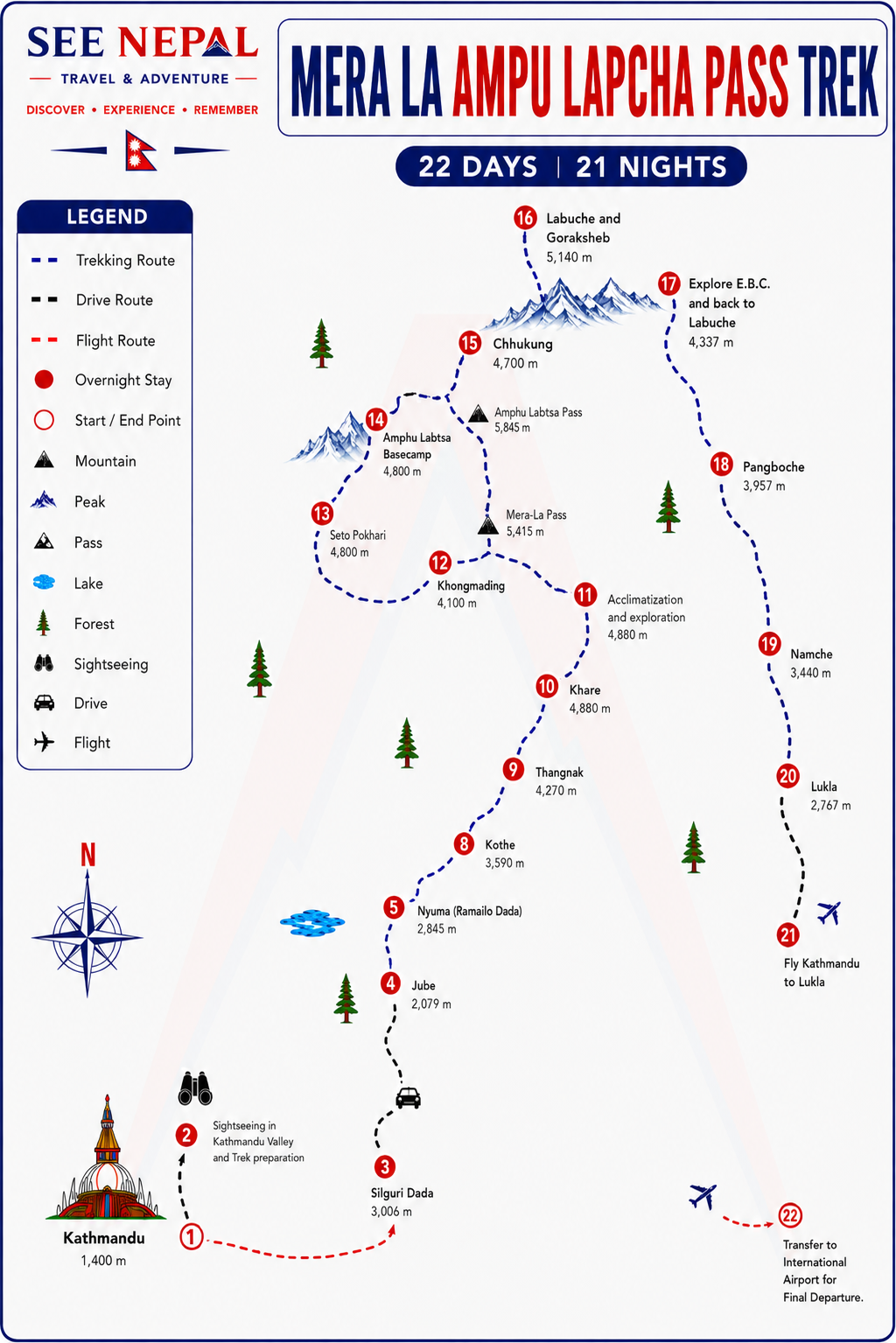
Trekking Map
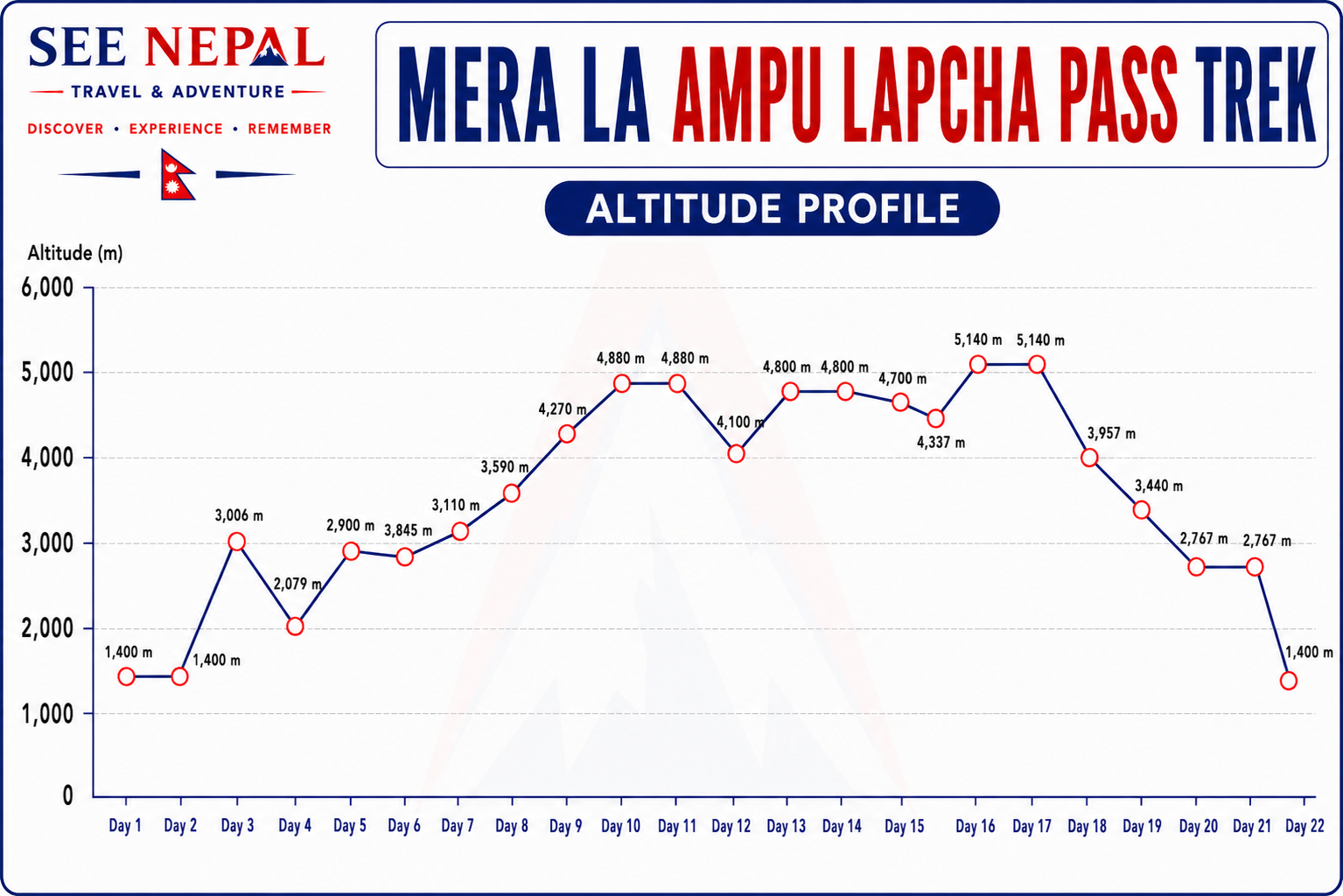
Altitude Profile
Inclusions & Exclusions
What's Included
ransportation from the hotel to the domestic airport in Kathmandu
Meals during the trek: Breakfast, lunch, and dinner with a variety of Italian, Chinese, Nepali, Indian, and European dishes. One main course is provided per meal.
Accommodation in tea houses as per the itinerary
Kitbag for storing personal belongings during the trek
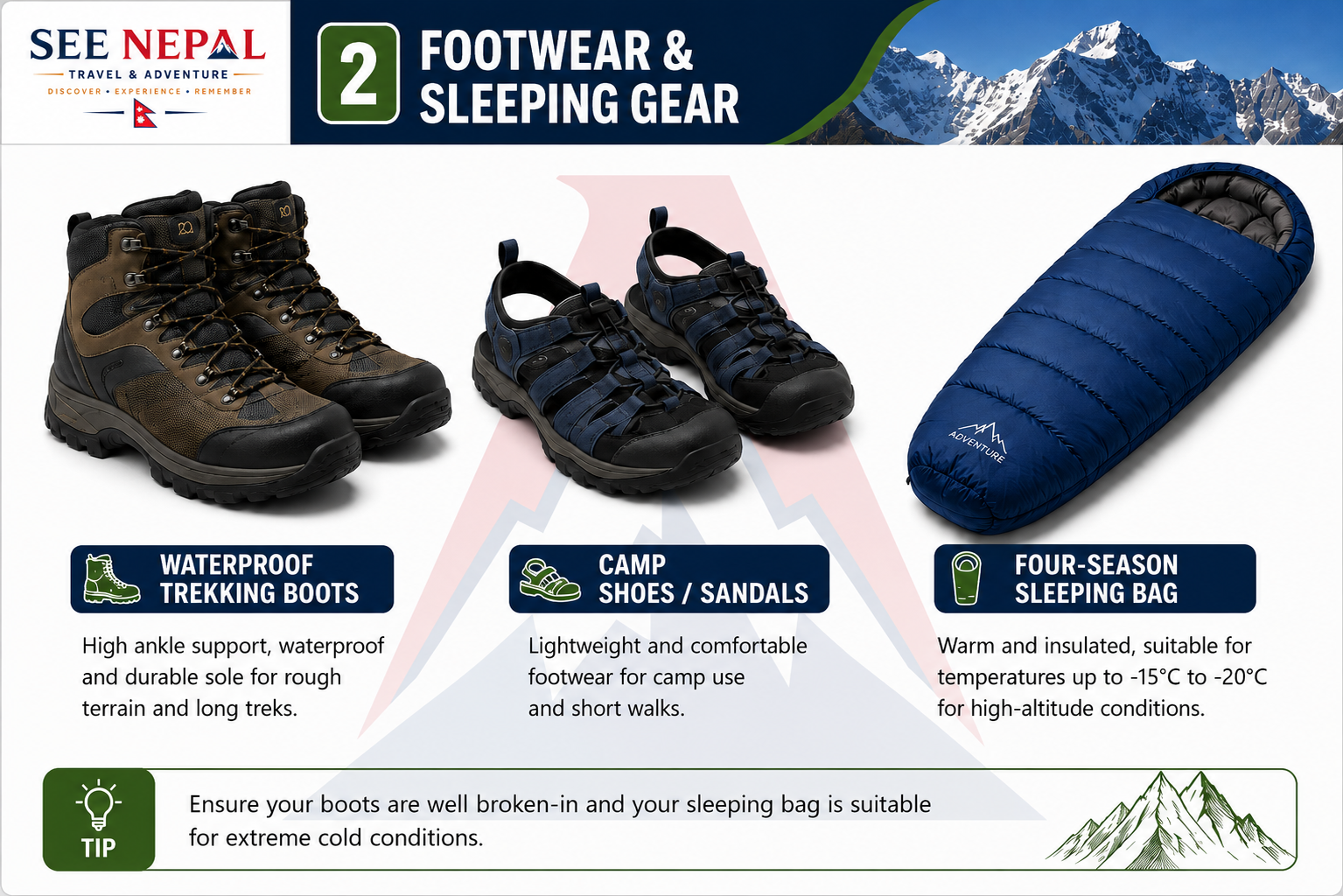
Sleeping bag suitable for temperatures as low as -25 °C
One porter for every 2–3 participants (additional cost applies for solo clients requiring a porter)
Guide and porter salary, meals, accommodation, and insurance
All necessary paperwork, government fees, and local taxes
Certificate of appreciation from Nepal Wilderness Trekking upon successful completion of the trek
Tents and mattresses during peak climbing and the Amphu Lapcha Pass sections
Climbing equipment, including ropes, ice screws, and snow bars
Insurance coverage for Nepalese staff
Service charge and administrative fees
Equipment fees for a climbing guide
Climbing peak permits
Essential climbing gear, such as ropes and snow bars
What's Excluded
International airfare to and from Nepal
Nepal entry visa fees at Tribhuvan International Airport (varies: 15 days – $25–30, 30 days – $40–50)
Accommodation and meals in Kathmandu before and after the trek
Personal high-altitude and cold-weather equipment
Emergency high-altitude rescue and evacuation (to be covered by personal travel insurance)
Beverages, soft drinks, mineral water, coffee, tea, beer, desserts, hot showers, and laundry services
Tips for guides, porters, and support staff
Any costs not explicitly mentioned under “Cost Includes”
Additional expenses or delays caused by factors beyond management control, such as landslides, extreme weather, itinerary modifications for safety, illness, government policy changes, strikes, or other unforeseen events
Equipment List
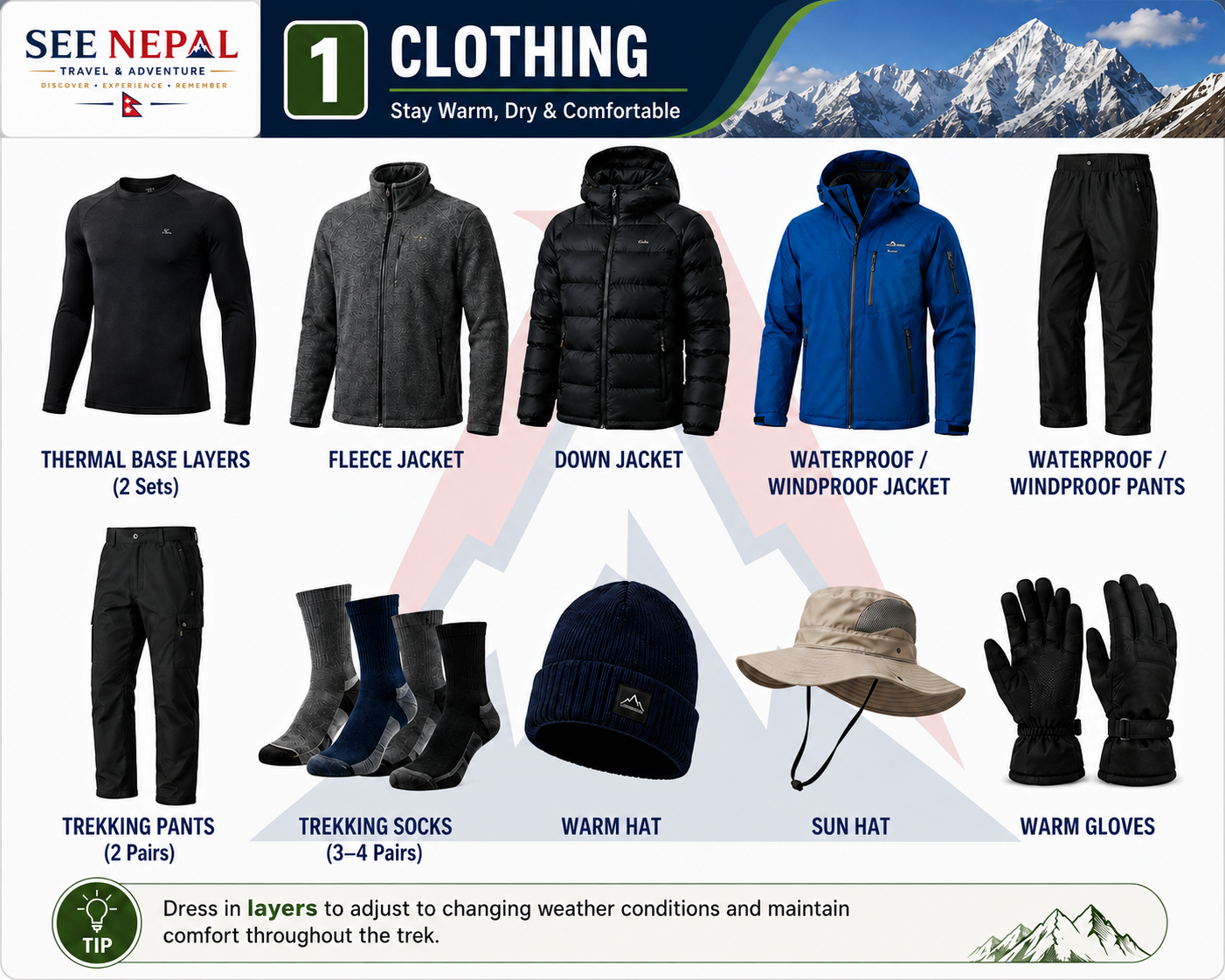
Clothing
Footwear & Sleeping Gear
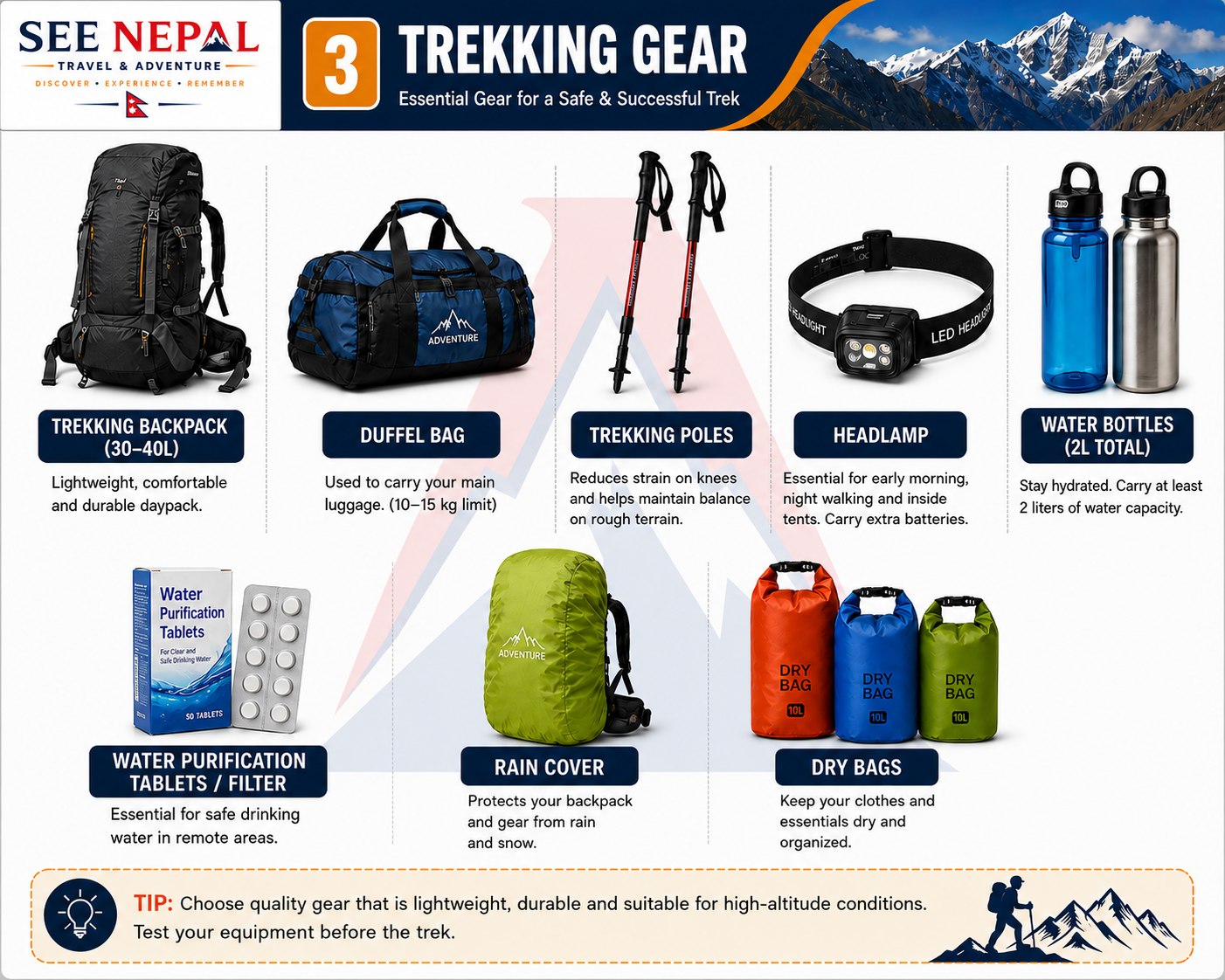
Trekking Gear
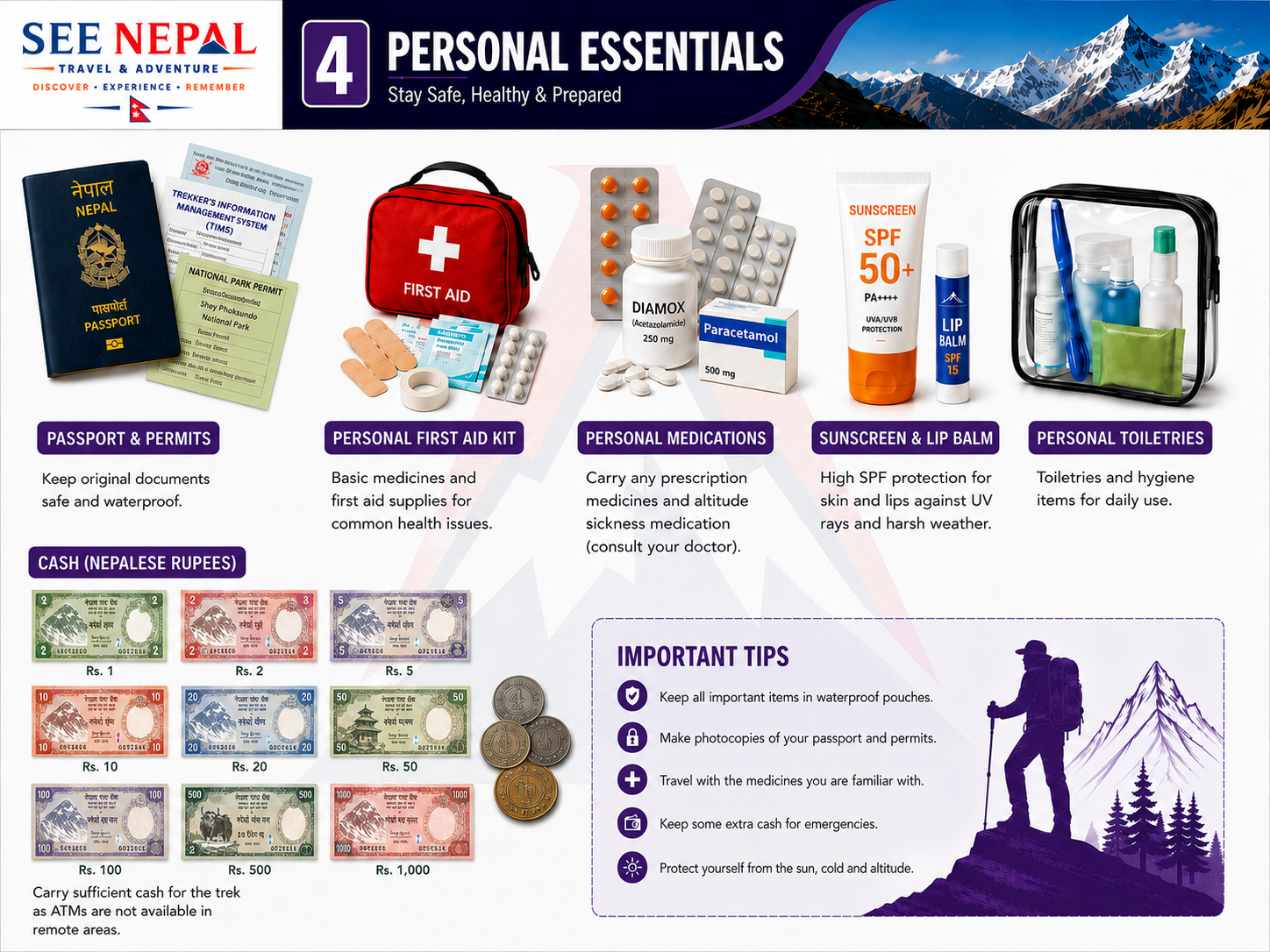
Personal Essentials
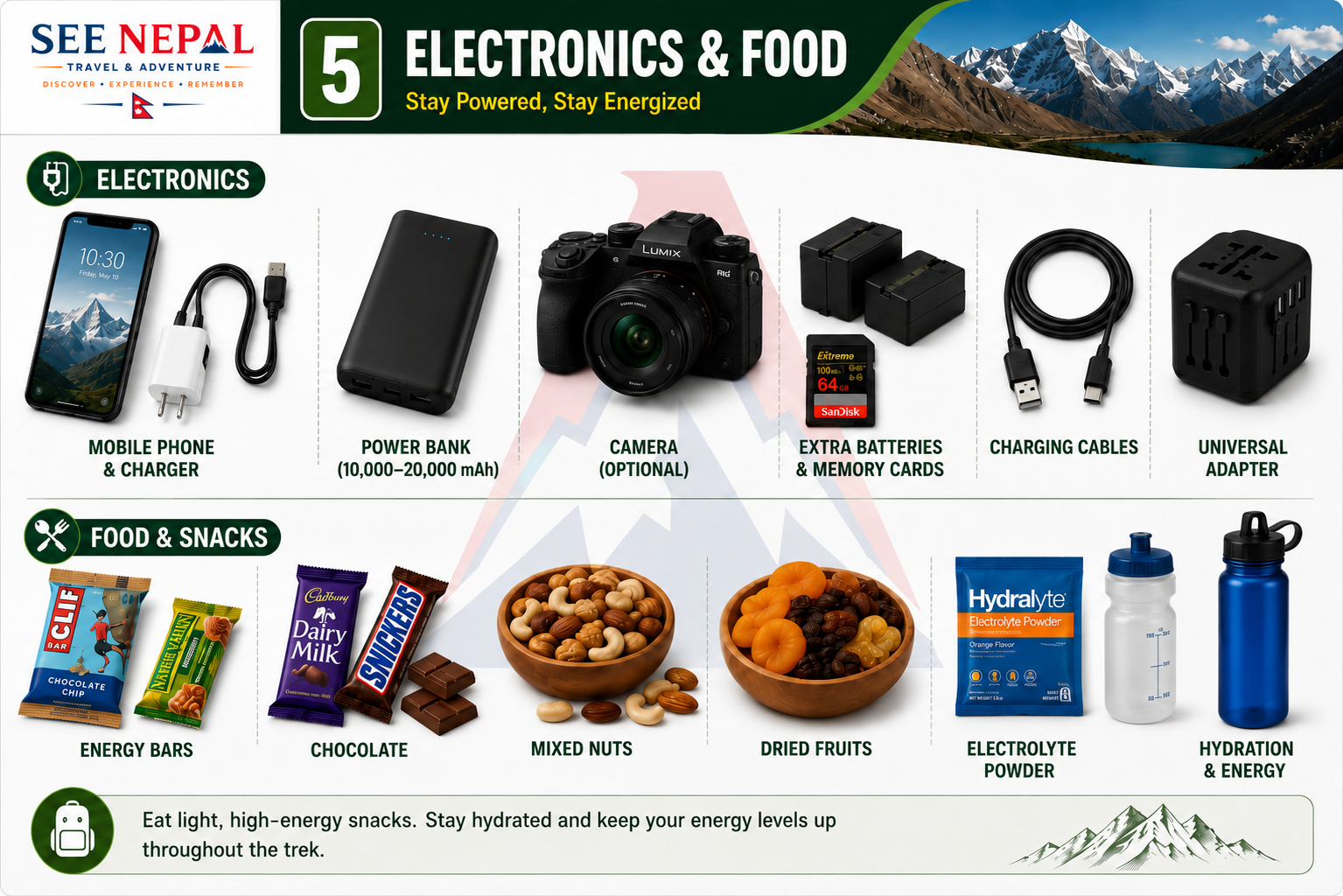
Electronics & Food
Frequently Asked Questions
Trek permits include:
• Sagarmatha National Park Permit (SNP)
• Makalu Barun National Park Permit (MBNP)
• TIMS Card (Trekkers’ Information Management System)
• And both peaks climbing permits
Nepal Wilderness Trekking assists with all required permits.
• Spring (April – early June): Stable weather, clear skies, and moderate temperatures.
• Autumn (September – December): Clear skies, minimal rainfall, and excellent mountain views.
Winter trekking is possible but recommended only for experienced high-altitude trekkers due to extreme cold.
Yes, prior experience with trekking peaks, glacier travel, and basic use of crampons, ropes, and ice axes is highly recommended for Amphu Lapcha Pass, Mera Peak, and Island Peak.
This trek is considered challenging to very challenging. It combines high-altitude trekking with technical climbing for Mera Peak, Island Peak, and the Amphu Lapcha Pass. A good level of fitness and some mountaineering experience is recommended.
The highest point is the summit of Mera Peak at 6,461 meters, followed by Island Peak at 6,189 meters and Amphu Lapcha Pass at 5,650 meters.
The full trek is 21 days, starting and ending in Kathmandu. It includes acclimatization days, summit attempts, and crossing the Amphu Lapcha Pass.
Yes, solo travelers can join, but a porter or guide is recommended for safety, especially for technical sections and high-altitude camps.
Yes, the trek reaches above 6,000 meters. Proper acclimatization days are included, and you should monitor symptoms of Acute Mountain Sickness (AMS). Guides are trained in high-altitude first aid.
Yes, high-altitude trekking and climbing insurance is strongly recommended. It should cover emergency evacuation, helicopter rescue, and medical treatment at high altitude.
A good level of fitness is essential. Training should focus on endurance, strength, and cardiovascular fitness. Prior trekking experience at high altitude is highly recommended.
Yes, Nepal Wilderness Trekking can customize itineraries if you wish to attempt only one of the peaks, but combining both with Amphu Lapcha Pass provides a complete high-altitude Himalayan experience