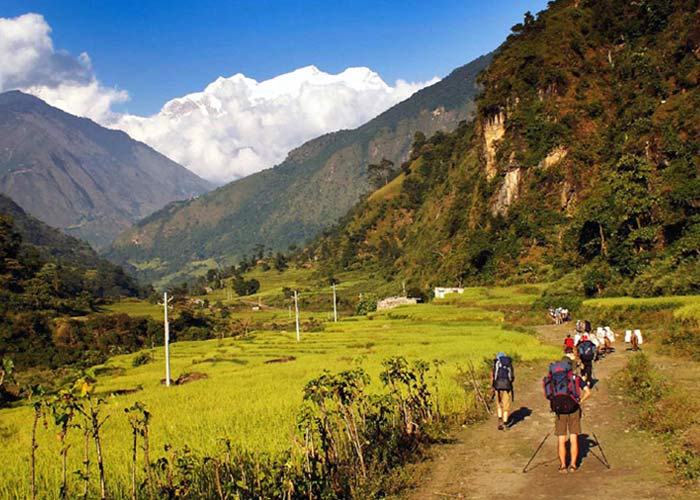
Arun Valley Trek, an off-the-beaten trail in Nepal, is probably one of the best trekking programs for those who prefer less-touristy areas but rich in cultural and biological diversity. Arun Valley is located in the eastern section of the Himalayan range right between Mt. Everest (world’s highest mountain) and Mt. Makalu (fifth highest). Because of this geographical variation, Arun Valley is often known as the world’s deepest valley. Sherpa and Rai are major inhabitants of this region where Bramin and Chhetri communities are also living harmoniously. The trek offers visits to ancient Buddhist monasteries and Hindu temples.
Trekking through Arun Valley requires great stamina and determination as you will walk following a classical route that passes through wild landscape, rivers & streams and dense jungle. In fact, much of the trail covers Makalu Barun National Park Area which is home to more than 315 butterfly species, 440 bird species, 88 species of mammals and 315 species of butterflies, 25 species of rhododendron, 47 types of orchids and 56 rare plants. The common wild animals found in the region are musk deer, wild boar, mountain goats, colorful pheasants, rare Red Pandas and even Snow Leopards. Pine, juniper and birch trees are common here, as well as colorful rhododendron flowers in spring. Arun Valley is also popular for beekeeping and wild honey hunting.
Arun valley trekking offers spectacular views of Mt. Everest, Mt. Makalu, Chamlang, Mt. Baruntse, Mera Peak, Kusum, Kanguru, Kangtega, Mt. Amadablam, Mt. Thamserku and so many other beautiful mountains. The spectacular view point of this trek is Salpa Bhanjyang which leads to the serene Salpa Lake (3414m). Trekkers will have the opportunity to visit Barun and Hinku Valleys by crossing Barun La (4110m) and Sherpani col as well as Khumbu Valley. Arun Valley trek is possible to end at Lukla or Salleri or can also be combined with Everest Base Camp trek or Gokyo Lake trek. One of the most beautiful aspects of this trek is that length can be determined according to the timeframe of trekkers.
Highlights
Take on a trek that takes you through a peaceful region located between the Everest and Makalu massifs.
Walk through traditional Rai and Sherpa villages, where you can enjoy their warm local hospitality.
Cross Salpa La Pass (3,360 m), one of the sacred mountain passes, offering you panoramic views of snow-covered peaks.
Witness a gradual change in the landscapes as you pass from the subtropical valley of Tumlingtar to the alpine forests of Guranse.
Pass alongside the Makalu Barun National Park, where you can see rare species like red panda, Himalayan monal, and a wide range of birds.
A less crowded trek in Nepal compared to the popular Everest Base Camp Trek.
Itinerary (15D, 14N)
Upon your arrival at the Tribhuvan International Airport, Kathmandu, one representative from our team will be there waiting for you. After that, the representative will greet you and provide a warm welcome, along with helping you be transferred to your hotel in Kathmandu, where you can relax and recover from your flight. As per your arrival time, you can explore the nearby area, try authentic Nepali cuisine, or take a short walk around Thamel, as this place is known for its shops, cafes, and modern atmosphere.
On Day 03, you will be taking a morning flight from Kathmandu to Tumlingtar, where you will be rewarded with the mesmerizing views of the Himalayas. After landing, you begin your trek through lush hills and smaller settlement areas. The trail then includes a gradual descent, passing through terraced fields and riverside paths. Along the way, you can enjoy the peaceful atmosphere as you make your way to Kartike, offering you the beautiful natural beauty of this region.
Take a scenic morning flight from Kathmandu to Tumlingtar, the gateway to the Arun Valley. After meeting your trekking crew and making final preparations, begin the trek through lush hillsides, terraced fields, and traditional villages to reach Kartike (523 m). The walk takes about 5–6 hours and offers a gentle introduction to the trek, with beautiful rural landscapes and opportunities to experience the local culture of eastern Nepal.
Trekking from Kartike to Gothe Bazaar, on Day 04, takes you through some of the most beautiful villages, lush forests, and terraced farmlands. At times, you may even need to pass through small streams, where you are rewarded by the peaceful atmosphere of this region. Reaching Gothe Bazaar, a charming village where you can rest for the night and enjoy the warm local hospitality of the locals.
Making your trek from Gothe Bazaar to Salpa Phedi includes a gradual climb through lush forests, small villages, and terraced farmlands. Along the way, you need to cross several small streams, where you can even enjoy the spectacular views of the nearby hills. The walk takes about 5 to 6 hours, offering a combination of uneven and uphill sections. Upon reaching Salpa Phedi, a peaceful stop at the base of the Salpa Pass, offers you an excellent stop to rest and appreciate the beauty of the snow-covered mountains.
On Day 06, the trek starts from Salpa Phedi to Guranse, taking around 4 hours and including a steady uphill climb through dense rhododendron and oak forests. As you gain altitude, the air starts to feel cool with mesmerizing views of the landscapes and fewer trekkers along the way. At this time, the atmosphere feels quiet due to fewer trekkers. Reaching Guranse, a perfect place surrounded by forests, and an excellent spot to rest before crossing the Salpa La Pass.
Starting your trek from Guranse to Sanam includes a gradual ascent towards Salpa La Pass, one of the high mountain passes in this region, which can be tough at times. As you reach Salpa La Pass, you then take a steady descent through dense forests and alpine landscapes, offering you a chance to experience a gradual shift in the surroundings. Throughout the trek, you can see the jaw-dropping views of snow-capped mountains. As you reach Sanam, a small and quiet village, you have enough time to interact with the Sherpa locals and enjoy the warm hospitality offered by them.
On Day 08, the trek from Sanam to Bung starts after a morning breakfast. The trail descends through forested paths, small villages, and terraced fields, offering breathtaking views of the valley below. The walk takes around 5 hours, so make sure to maintain a steady pace. Along the way, you pass through small settlements and experience the traditional lifestyle of this region. As you arrive in Bung, a picturesque village where you can rest and prepare for your next day’s trek.
Trekking from Bung to Gai Kharka starts with a gradual descent, where you cross a river, and then take a steep uphill climb through the lush forests of this region. Today’s hike is about 5 to 6 hours, where you are treated to some of the jaw-dropping views of the nearby hills and valleys. Reaching Gai Kharka, a quiet pastureland with few lodges, and an excellent place for resting after a long day of hiking through uneven trails.
On Day 10, the trek from Gai Kharka to Vasme includes a gradual climb through beautiful forests filled with rhododendron and pine, where you can see glimpses of snow-covered peaks from a distance. The walk is around 4 hours and takes you through remote settlement areas. Reaching Vasme, a small peaceful village where you can relax, enjoy the mountain atmosphere, and prepare for the next day’s trek.
Making your trek from Vasme to Pangma includes a mix of gentle ascents and descents through forested paths and traditional villages. During the walk, you are treated to some of the best scenic views of the surrounding hills and nearby mountains. As you arrive in Pangma, a culturally rich village where you can experience warm local hospitality and a peaceful atmosphere, this place is a perfect one for a night's rest.
Starting your trek from Pangma to Paiya on Day 12 is relatively short, passing through beautiful forests, small settlements, and impressive farmlands. Today’s walk includes some gradual climbs along with a chance to witness the beauty of the surrounding hills. Reaching Paiya, a quiet village where you can rest, relax, and enjoy the peaceful atmosphere before making your walk towards Lukla, the gateway to Everest.
Today’s trek from Paiya to Lukla takes around 4 to 5 hours, where you pass through gentle ascents and descents through forested paths, suspension bridges, and traditional villages. As you near Lukla, you can see the trail getting busier with many trekkers heading towards the Phadking. Once you reach Lukla, you have enough time to relax, enjoy a hot meal, and interact with the trekkers who are heading towards the Everest region.
Today, on Day 14, you will be taking a morning flight from Lukla to Kathmandu, which takes about 30 to 35 minutes. During the flight, you can enjoy the aerial views of the Himalayas, making the journey even more enriching. Upon arrival in Kathmandu, you will be transferred to your hotel, where you can relax, explore the city, or do some last-minute shopping. Overnight stay at the hotel in Kathmandu.
On Day 15, you will be picked up from your hotel and transferred to the international airport for your final departure. Make sure to have your travel documents ready and arrive at the airport at least three hours before your flight. Therefore, this is the end of your trek and journey in Nepal. Safe travels, and hope to see you again.
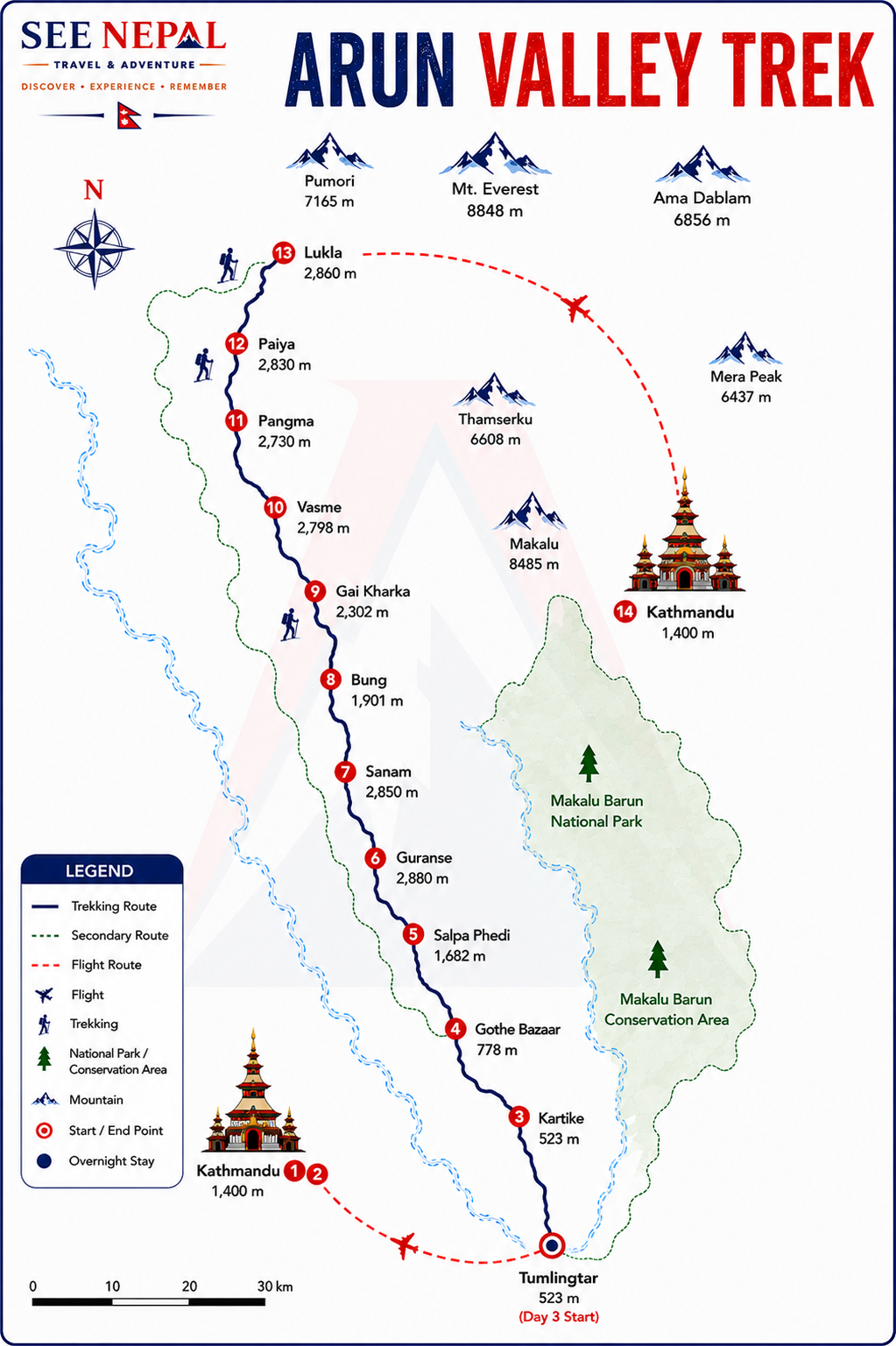
Trekking Map
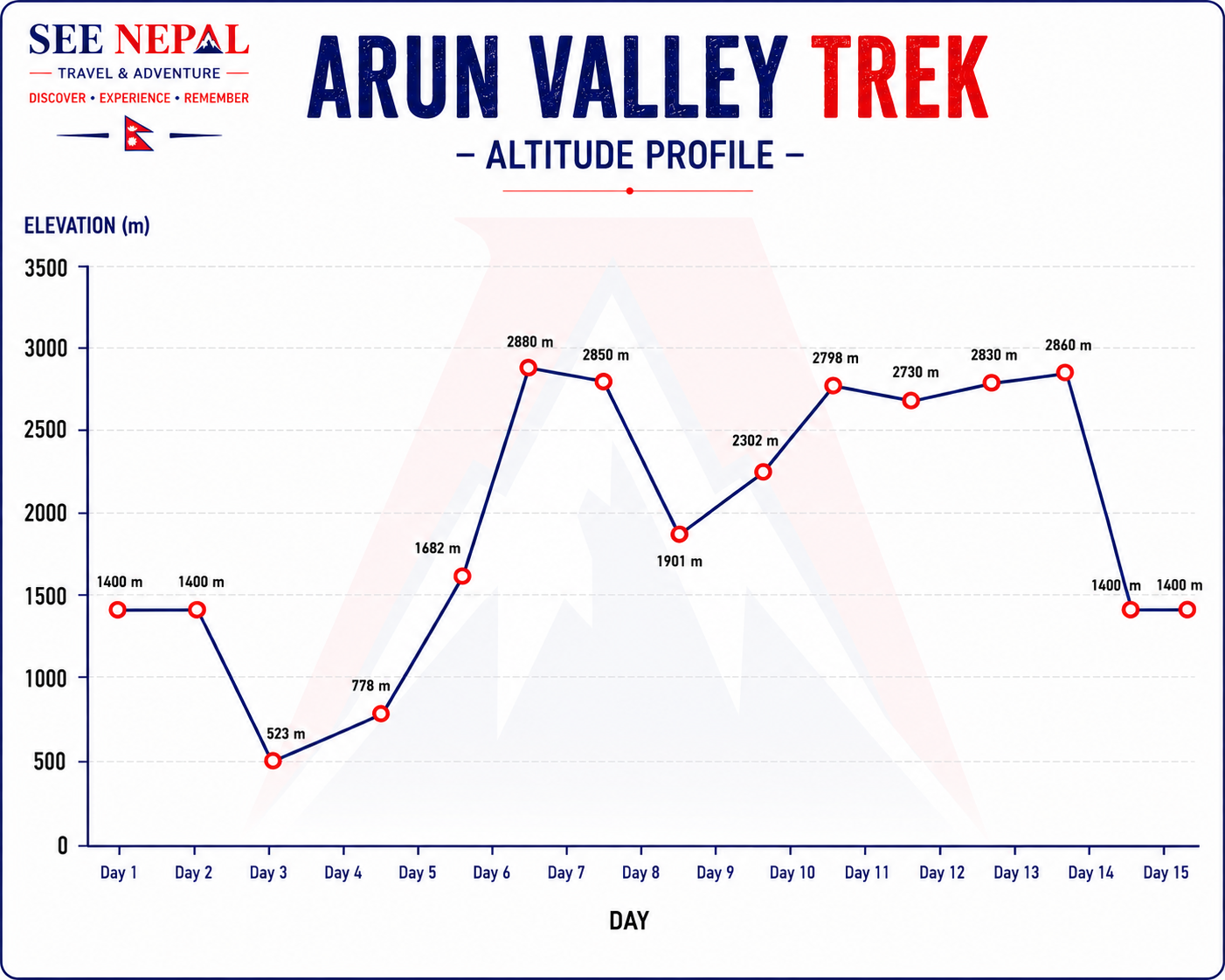
Altitude Profile
Inclusions & Exclusions
What's Included
Pick up & Transfer to and from Tribhuvan International Airport (TIA) to your hotel in Kathmandu.
Three nights accommodation at 3 star hotel in Kathmandu (breakfasts included).
Transportation as per the itinerary (including airfare).
Tea-house lodging during the journey.
Standard Meals during the journey (breakfast, lunch, dinner).
Expert Guide (registered and licensed by the government) with accompanying porters (generally, one porter for every two clients). (High Camp Adventure covers the staff's meals and accommodations as well as wages, transport,insurance, and essential gear.)
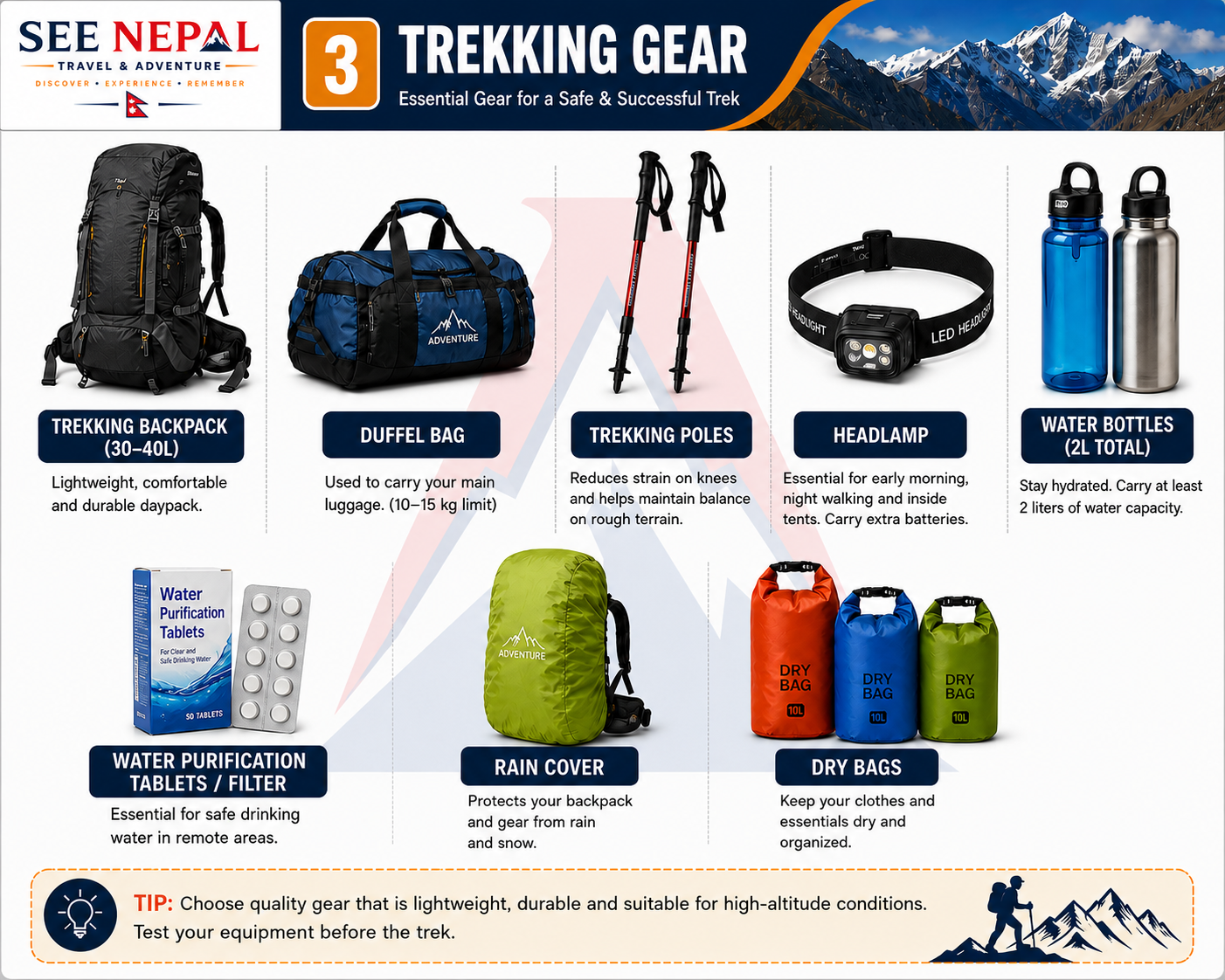
Equipment (Sleeping bag, Down jacket, Duffel Bag, Walking poles).
Conservation Area and National Park entry fees.
Trekker's Information Management System (TIMS) card.
Trekking Map.
Medical kit.
Government taxes.
Our service charge.
Farewell Dinner in Kathmandu the eve of your international departure.
What's Excluded
International plane ticket to and from Nepal.
Major meals in Kathmandu (other than breakfast).
Personal Expenses including laundry, telephone calls, bar bills, drinks and snacks.
Personal clothing and gear.
Travel Insurance.
Shower fees at lodges, fees for recharging electronic equipment, and personal expenses along the trail.
Tips for Guides, Porters and Staff.
Expenses incurred by cancellation and events beyond our control, for example, weather delays, trail detours, political unrest, illness and et cetera.
Equipment List
Clothing
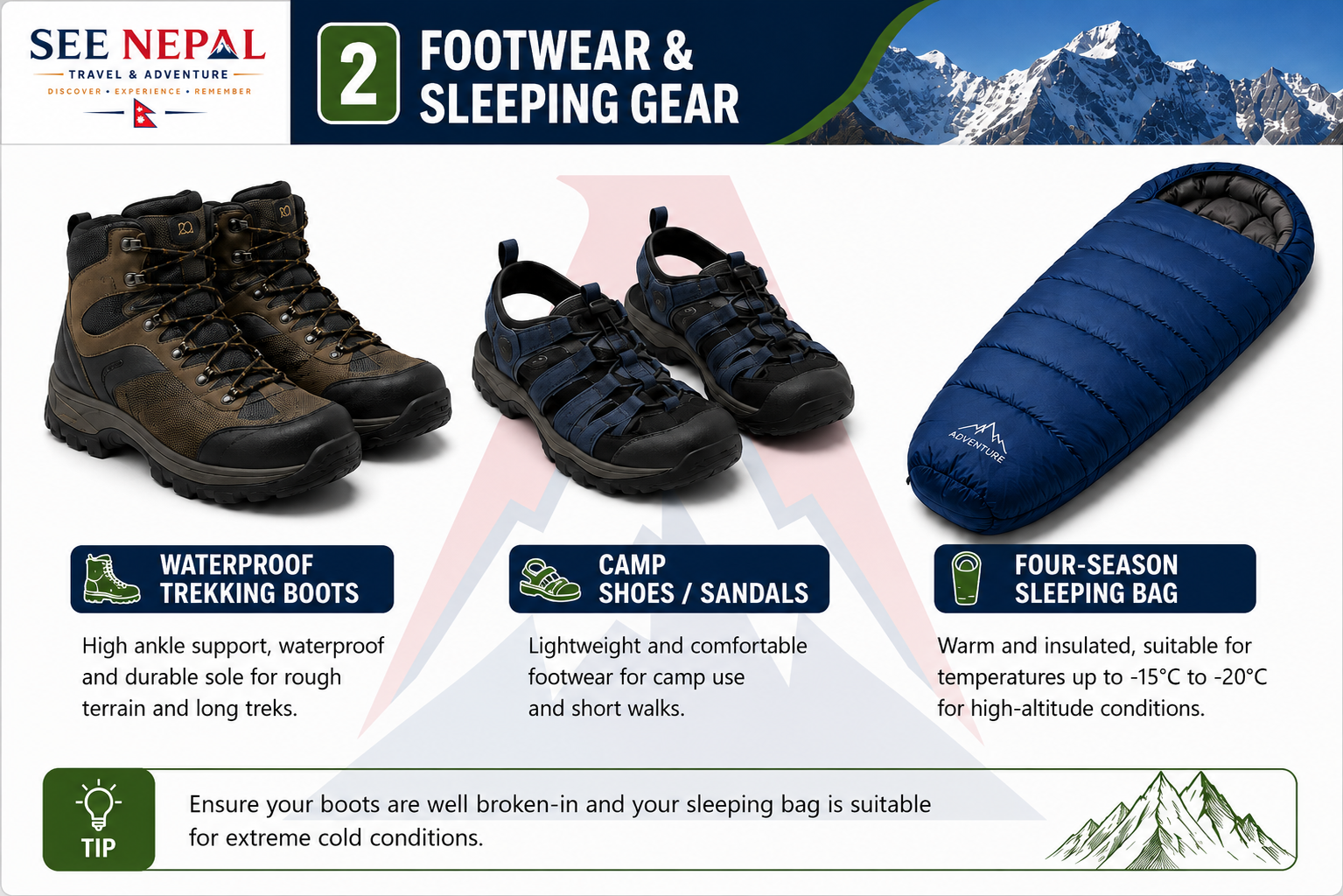
Footwear & Sleeping Gear
Trekking Gear
Personal Essentials
Electronics & Food
Frequently Asked Questions
The Arun Valley Trek is located in the Eastern part of Nepal, between the Everest to the west and Mount Makalu to the east. The trek takes you along the Arun River and passes through Makalu Barun National Park, one of the protected areas.
The Arun Valley Trek is considered to be a moderate to challenging trek with gradual uphill and downhill sections. This trek is perfect for someone who has good physical as well as mental strength.
The Arun Valley Trek takes about 13 to 16 days, depending on the route, pace of walking, and including your days of arrival and departure from and to Kathmandu.
The highest point to be reached during the Arun Valley Trek is around 3,360 meters near the Salpa La Pass.
Hiring a licensed guide is highly recommended for the Arun Valley Trek. As the journey includes remote areas, safe navigation is important. Similarly, a porter can help you carry your heavy bag, making the trek more comfortable.
For the Arun Valley Trek, you need to obtain a Trekkers Information Management System Card (TIMS) and the Makalu Barun National Park Entry Permit. Both of these permits can easily be obtained through a registered trekking agency in Kathmandu.
The peak times for the Arun Valley Trek are during spring (March to May) and autumn (September to November), offering you predictable weather conditions, clear skies, breathtaking mountain views, and moderate temperatures
Accommodation during the Arun Valley Trek includes a hotel in Kathmandu, whereas during the trek, you will be provided with lodges run by local families of this region. The lodges include twin beds with shared bathrooms, especially at higher altitudes.
Yes, you can charge your electronic devices during the trek, as the facilities are available at some lodges, usually for a small fee. So, it is highly recommended to carry a portable power bank as a backup
Phone signal or internet might be limited at higher altitudes. Some areas may have weak mobile signals, whereas some lodges do offer internet at a little extra cost, but it might not be reliable.
Yes, it is highly recommended to have travel insurance for the Arun Valley Trek, but make sure it covers high altitude trekking, helicopter evacuation, lost baggage, trip cancellations, and delays.