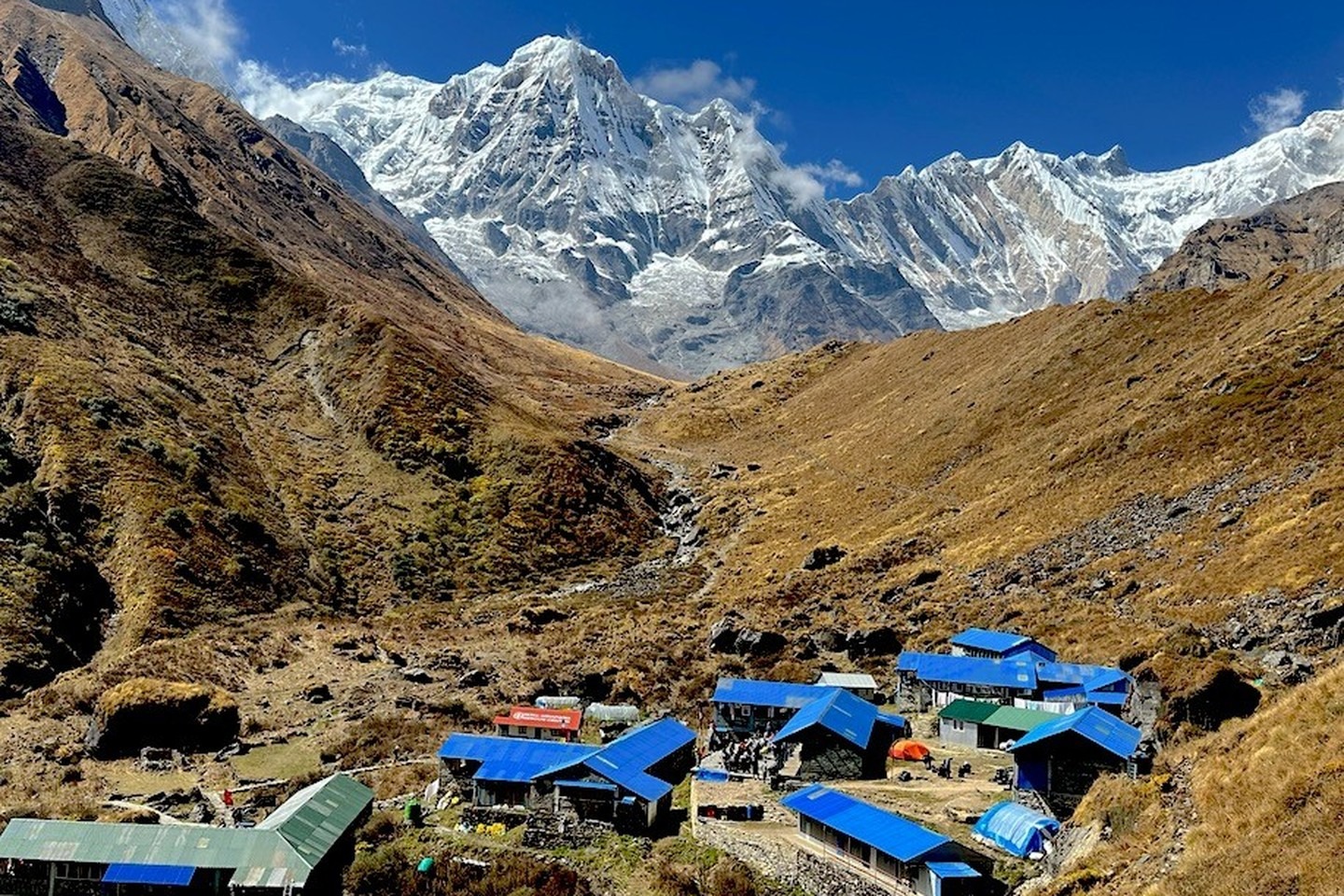
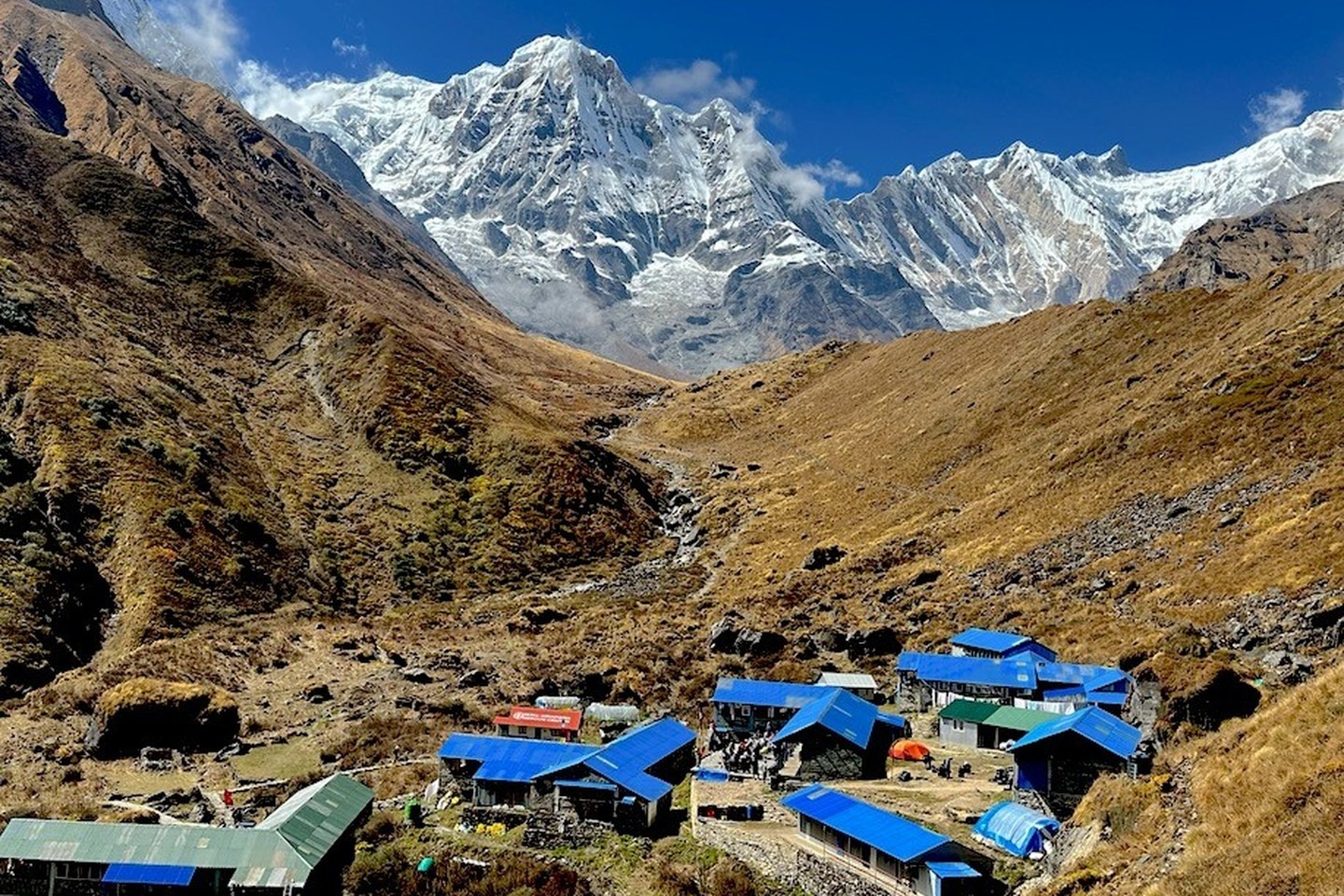
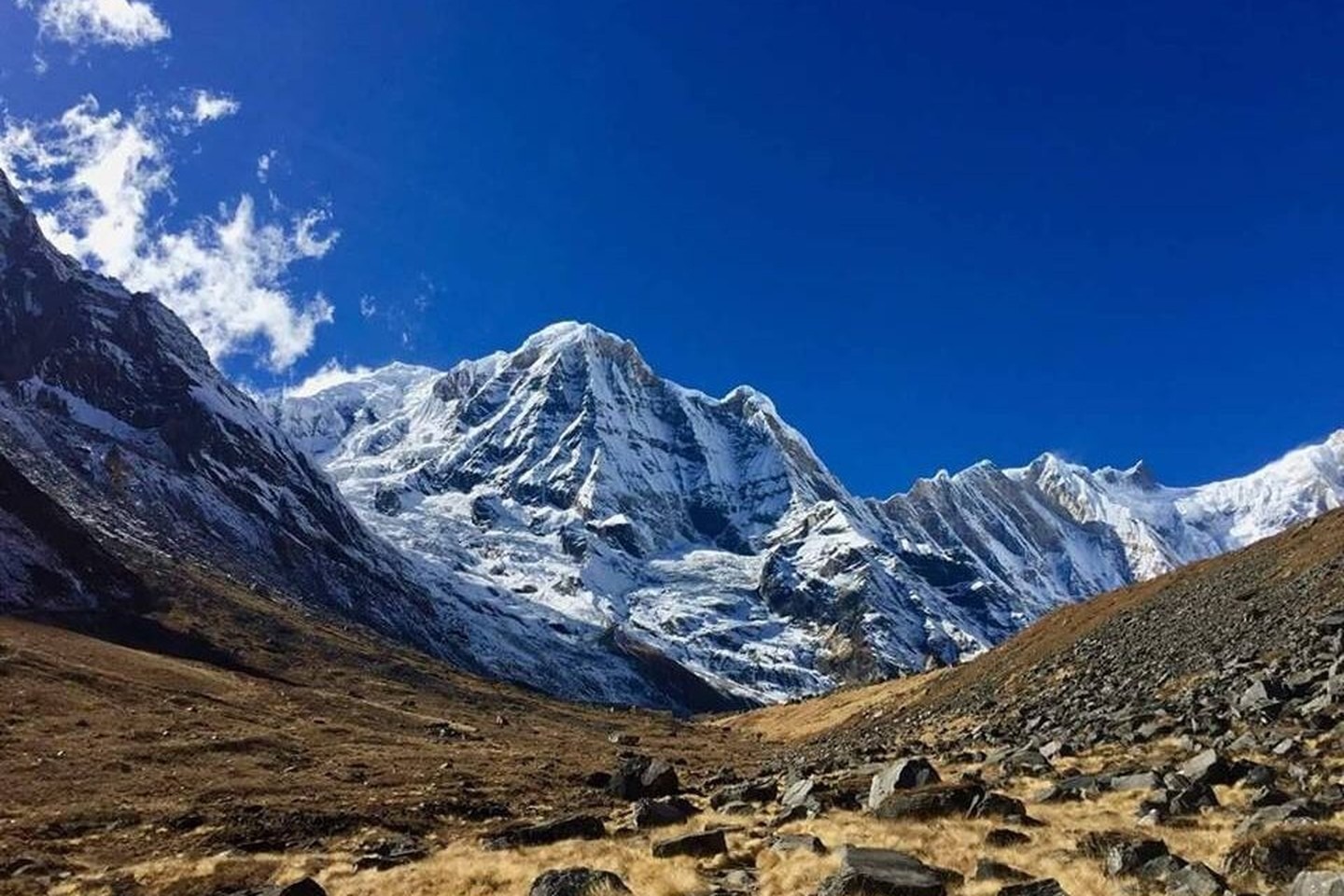
The Annapurna Base Camp Trek takes you to the heart of the Annapurna Sanctuary, a glacial amphitheatre ringed by some of the world's highest peaks including Annapurna I (8,091m), Machapuchare (6,993m) and Hiunchuli.
The trail passes through diverse landscapes — rice terraces, rhododendron forests, and alpine meadows — and through traditional Gurung and Magar villages. The base camp sits at 4,130m surrounded by an astonishing 360-degree panorama of mountains.
The Annapurna Base Camp (ABC) Trek is one of Nepal's most iconic and rewarding Himalayan adventures, combining breathtaking mountain scenery, rich cultural heritage, and diverse natural landscapes. This classic trek takes trekkers into the heart of the Annapurna Sanctuary, culminating at Annapurna Base Camp (4,130 m) beneath the towering Annapurna I (8,091 m), the world's tenth-highest mountain. Following part of the historic route pioneered by Maurice Herzog, the first climber to summit an 8,000-meter peak, the trek offers an unforgettable blend of adventure, history, and natural beauty. Along the journey, trekkers pass through picturesque Gurung villages such as Ghandruk, Ghorepani, Tadapani, and Chhomrong, where warm hospitality, traditional stone houses, and unique Himalayan culture create memorable experiences. A sunrise hike to Poon Hill (3,210 m) provides one of Nepal's finest panoramic viewpoints, revealing golden rays illuminating the snow-capped Annapurna and Dhaulagiri ranges.
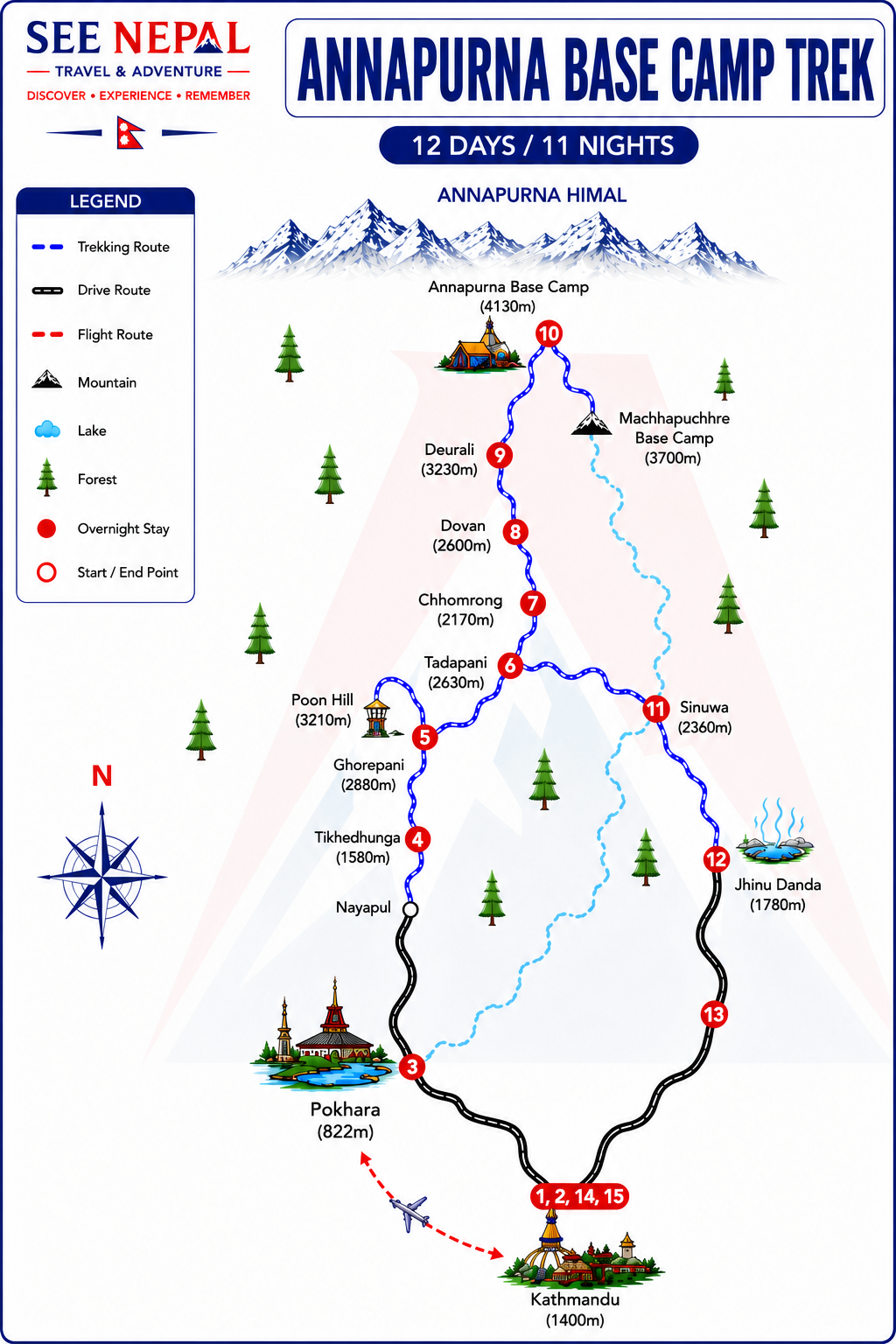
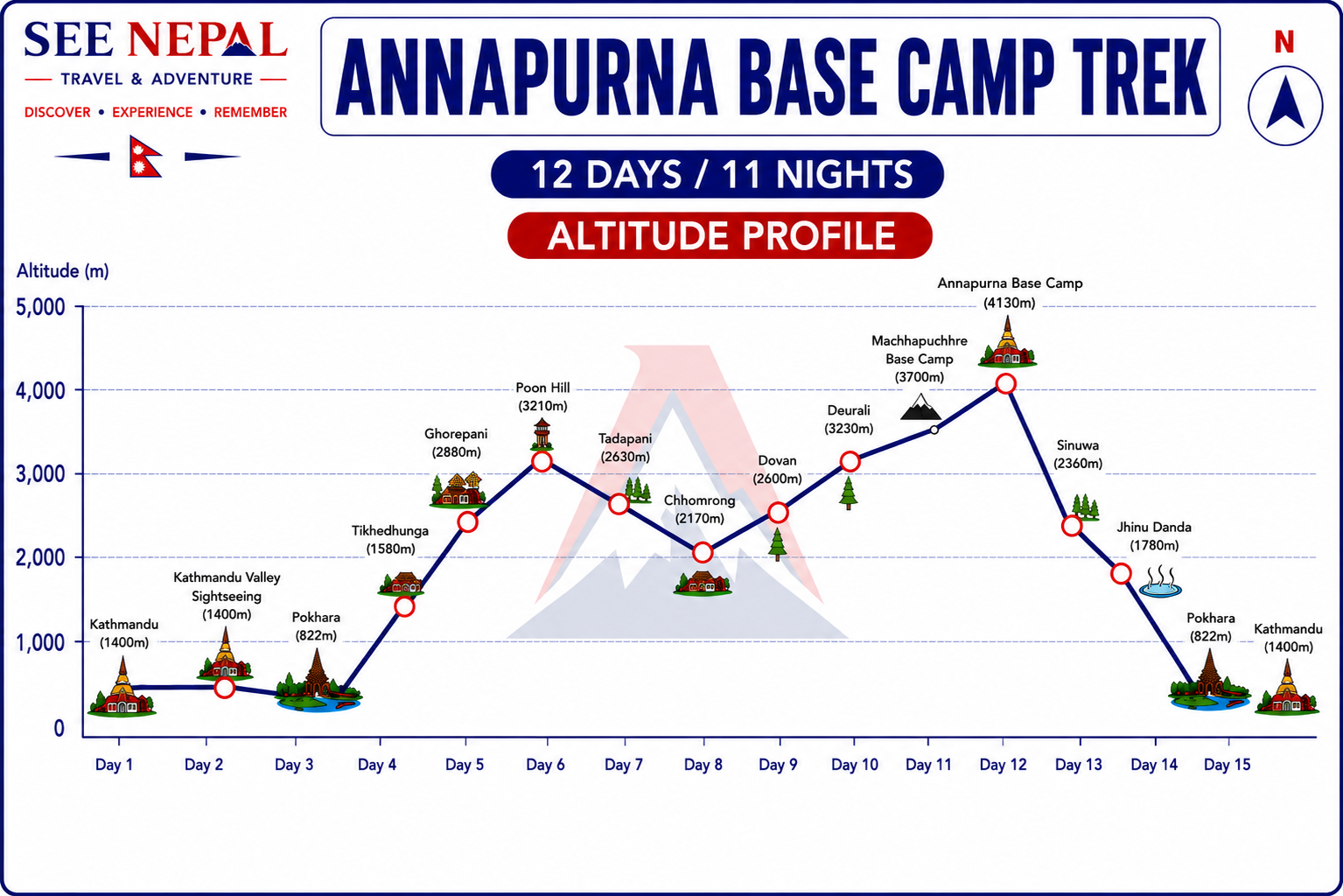
Beginning at Birethanti (1,025 m), the trail ascends through Sudame, Hille, Tikhedhunga (1,480 m), Ghorepani (2,850 m), Poon Hill, Tadapani (2,630 m), Chhomrong (2,150 m), Upper Sinuwa (2,340 m), Bamboo, Dovan, Deurali (3,230 m), and Machhapuchhre Base Camp (3,700 m) before finally reaching Annapurna Base Camp (4,130 m). Throughout the journey, trekkers witness a remarkable transition of landscapes—from terraced farmlands and cascading waterfalls to dense rhododendron, bamboo, and oak forests, followed by alpine meadows, glacial moraines, and snow-covered valleys. The route lies entirely within the Annapurna Conservation Area, Nepal's largest protected region, which supports rich biodiversity, including Himalayan tahr, musk deer, colorful pheasants, and hundreds of plant species. Every day offers spectacular scenery, with pristine rivers, deep gorges, and towering cliffs creating one of the Himalayas' most diverse trekking environments.
The highlight of the trek is undoubtedly the arrival at Annapurna Base Camp, where trekkers stand in the middle of a magnificent natural amphitheater surrounded by towering Himalayan giants. The base camp offers an uninterrupted 360-degree panorama of some of Nepal's most spectacular peaks, including Annapurna I, Annapurna South, Annapurna III, Gangapurna, Hiunchuli, Machhapuchhre (Fishtail), Mardi Himal, Singu Chuli, Tare Kang, and Khangsar Kang (Roc Noir). Watching sunrise and sunset over these snow-covered mountains is an unforgettable experience, as the changing light transforms the peaks into brilliant shades of gold, orange, and crimson. The peaceful atmosphere of the Annapurna Sanctuary, combined with the crisp mountain air and dramatic alpine scenery, creates a profound sense of accomplishment and connection with nature.
The return journey follows the same scenic trail to Chhomrong before descending to the relaxing Jhinu Danda Natural Hot Springs, where trekkers can soothe their muscles in naturally heated mineral pools beside the Modi Khola River. The trek concludes with a visit to the beautiful Gurung village of Ghandruk (2,090 m), renowned for its traditional culture, museums, and stunning mountain views, before driving to Pokhara and flying back to Kathmandu. Blending world-class mountain vistas, cultural immersion, rich biodiversity, comfortable tea-house accommodation, natural hot springs, and the unforgettable experience of standing beneath the mighty Annapurna massif, the Annapurna Base Camp Trek remains one of Nepal's finest trekking journeys and a lifetime achievement for trekkers from around the world
Highlights
Commence and conclude the trip in Kathmandu, the city of cultural richness and home to the ancient monument houses (Buddhist and Hindu Temples and Palaces)
Explore between Kathmandu and Pokhara while witnessing the beauty of the countryside. Soak in the beauty of the Pokhara Valley, the city known for its natural beauty.
Discover the profound inside the Gurung and Manage cultural villages and their way of life. Witness the rich flora and fauna of the Annapurna Conservation Area.
Enjoy the showcasing outfit of the gigantic waterfalls and rushing rivers. Capture the captivating mountain views from every step of the journey.
Visit and stay at the Annapurna Base Camp (4130m), Surrounded by soaring mountain views. Enjoy the breathtaking panoramic mountain views.
The highest point of the trek is ABC (4130m) the closed point of the world’s 10th highest Peak (Annapurna -I 8091m).
Enjoy the panoramic mountain views for the entire Annapurna massif. Cross the longest suspension bridges spanning over the rushing river.
Trip Gallery
Itinerary (15D,14N)
Arrival in Tribhuvan International Airport in Kathmandu, the capital city of Nepal. You will be received by one of our representatives upon your arrival and then transferred to your hotel. Check into the hotel and take your time and rest or explore the happening streets of Thamel yourself. Thamel is full of energy: lots of shops and traditional Nepali restaurants-just think of it. This day is for preparation and relaxing, thus getting ready for the actual adventure.
Before starting your trekking journey, we have set aside a day in Kathmandu to help you learn about the unique art, culture, and architecture of Nepal. You will be guided to the UNESCO-listed heritage sites in Kathmandu. First, you will be escorted to Kathmandu Durbar Square, where you can visit the museum, palace, its premises, and the temples built around it. Next, you will be escorted to the monkey temple – Swayambhunath. We walk up the stairs to the stupa. From the height, we can get an excellent view of Kathmandu city. Then, we visit a popular Hindu temple – Pashupatinath temple and head towards the largest stupa in the world – Boudhanath stupa. In the evening, we return to our hotel for an overnight stay
Your journey begins with a scenic drive to Pokhara, a sanctuary nestled in the embrace of the Himalayas. The road winds through lush valleys and quaint villages, leading you to the serene shores of Phewa Lake. The tranquil waters reflect the majestic peaks, and as you stroll along the lakeside promenade, you feel a gentle breeze whispering tales of the mountains ahead
The trek starts with a drive to Nayapul, where the adventure truly begins. The trail meanders through terraced fields and charming villages, each step bringing you closer to the heart of the Annapurnas. Tikhedhunga, with its stone-paved streets and welcoming lodges, offers a cozy respite under the star-studded sky.
As dawn breaks, the trail ascends through dense rhododendron forests, their blossoms painting the path in vibrant hues. The climb to Ghorepani is invigorating, and the promise of panoramic views of the Annapurna and Dhaulagiri ranges awaits. The village, perched at an elevation, offers a breathtaking sunrise view over the snowy peaks.
At dawn, you will hike up to Poon Hill for the sunrise over the Himalayas. You will also be able to see the mountain ranges of Annapurna and Dhaulagiri, as well as the Nilgiri and Machhapuchhre mountains, from Poon Hill. Soon, you will make your way down to your lodge, have breakfast, and then proceed with your Annapurna Base Camp Trek as the path will climb steeply to Deurali.
Along the easy forest path from Deurali to Banthani, you can see the playful antics of langurs and monkeys. Taking a leisurely downward walk with great views will lead you to Tadapani, where you will be staying overnight.
After breakfast in Tadapani, your ABC Trekking Journey will move on to Chomrong. To reach the Gurung village of Ghandruk, you will descend little by little in a rhododendron forest and cross the Kimrong River.
From Ghandruk by a direct climb, Chomrong is reached. Along the way, you will be witnessing beautiful views of Annapurna South and Fishtail. Chomrong village, which is a favorite spot among trekkers to Annapurna Base Camp, lies on the slope of the great Annapurna Mountain. When you come to your room in Chomrong, a big hillside community, you will meet many warm and friendly Gurung people.
After having a tasty breakfast in Chomrong, you will go down a stone stairway to get to Chomrong Khola. After the suspension bridge, you will climb up through terraces and greenery towards the tiny settlement of Sinuwa. Sinuwa is a small settlement on a ridge that offers a close-up and breathtaking view of Mt. Fishtail as well as an amazing landscape.
It takes a few hours to go to the village of Khuldighar from Sinuwa. Going down a stone stairway from Khuldighar to a bamboo region, rhododendron, and oak forests near the Modi River will lead you to the village of Bamboo. After a less steep climb in the forest's cool shade, following the Modi Khola path, you will finally reach Dovan.
Today you will start to walk from Dovan and finish in Deurali. The ABC trek route will take you through rhododendron and bamboo groves and is also known for many waterfalls. When you reach the Himalaya, the jungle will open up to the sun, and you will be given an amazing view of the glacier river.
You will continue down the Modi Khola through a narrow gorge from the Himalaya. Before Hinku Cave, you will have to climb steeply through a drier forest. To get to Deurali, the most scenic part of the day, the trail goes down and then up again. Since there is less vegetation, you can even see the valley, the river below, and the vertical granite cliffs above with bands of thin waterfalls. Deurali is an excellent place to stay for the night.
After leaving Deurali by a strenuous climb, you will arrive at Machhapuchhre Base Camp, where the Annapurna Base Camp Trek Route follows a riverbed. From Machhapuchhre Base Camp, a stunning panoramic view of the surrounding mountains, including Annapurna, Machhapuchhre, Gangapurna, Himchuli, and others, is possible. To get to Annapurna Base Camp, you must keep going northwest.
The trail to ABC is wider, has less vegetation, and is prone to avalanches; so extra care should be taken to avoid any possible risks. Hiunchuli, from Annapurna South to Annapurna I, Khangsar Kang, Gangapurna, Annapurna III, and Machhapuchhare can all be seen from ABC. The sheer beauty of the surrounding snow-capped mountains will make this day one that you will always remember. You will sleep at Base Camp.
After an unforgettable sunrise at ABC, you will explore around the Annapurna Sanctuary, and then the journey heads down to Sinuwa. To return to Sinuwa, you will have to follow the same way, passing MBC, Deurali Himalaya, Bamboo, and Khuldighar. The route down from the base camp's high elevation will be a little bit easier. At Sinuwa, you will check in at a warm trekking lodge and spend the rest of your day as you prefer.
Today you will trek to Jhinu Danda via Chhomrong, where your Annapurna Base Camp Trek gradually comes to an end. The trail first descends to Kimrong Khola, then climbs through peaceful forests filled with rhododendron, bamboo, and oak trees before reaching Jhinu Danda.
One of the highlights of this stop is the natural hot spring located about a 30-minute steep walk downhill from the guesthouse. After days of trekking, you can relax in the warm water and soothe your tired muscles. While enjoying the hot spring, you will be surrounded by lush greenery and beautiful rhododendron forests, creating a peaceful and refreshing atmosphere.
Your last trekking day of the 14-day Annapurna Base Camp Trek . After a short hike of about 10-15 minutes, you will take a local Jeep or bus to Pokhara. This last part of the journey takes about two to three hours. You will be bidding goodbye to the trail and heading towards Pokhara through the beautiful countryside. After completing your trek, you will drive back to the beautiful lakeside city of Pokhara, where you will have plenty of time to check in to your hotel and relax. If you still have some energy, you can explore the lively town center around Lakeside Pokhara or enjoy a peaceful boating experience on Phewa Lake, one of the most scenic lakes in Nepal.
After a delightful sleep in Pokhara, you fly to Kathmandu this morning. Along the way from Pokhara to Kathmandu, you will offers stunning sights of hills, rivers, and snow-capped mountains.
When you reach the Kathmandu valley, our team member will be standing there to receive you, and escort you to your hotel, where you can rest and freshen up before your final evening in Nepal, which will be spent either shopping or touring in Thamel, which is the successful end of your Annapurna Base Camp Trek.
you will be picked up from your hotel and transferred to the international airport for your final departure. Make sure to have your travel documents ready and arrive at the airport at least three hours before your flight. Therefore, this is the end of your trek and journey in Nepal. Safe travels, and hope to see you again.
Trekking Map
Altitude Profile
Inclusions & Exclusions
What's Included
Airport/hotel pick-up and drop
All meals during the trek
Tea house accommodation
Annapurna Conservation Area entry permit
TIMS card
English-speaking licensed guide
Required porters
Guide and porter expenses
First-aid kit
All government taxes
What's Excluded
Nepal visa fee
International airfare
Personal travel and medical insurance
Personal trekking gear
Hot showers and battery charging
Alcoholic and soft drinks
Tips for guide and porter
Equipment List
Clothing
Clothing & Footwear
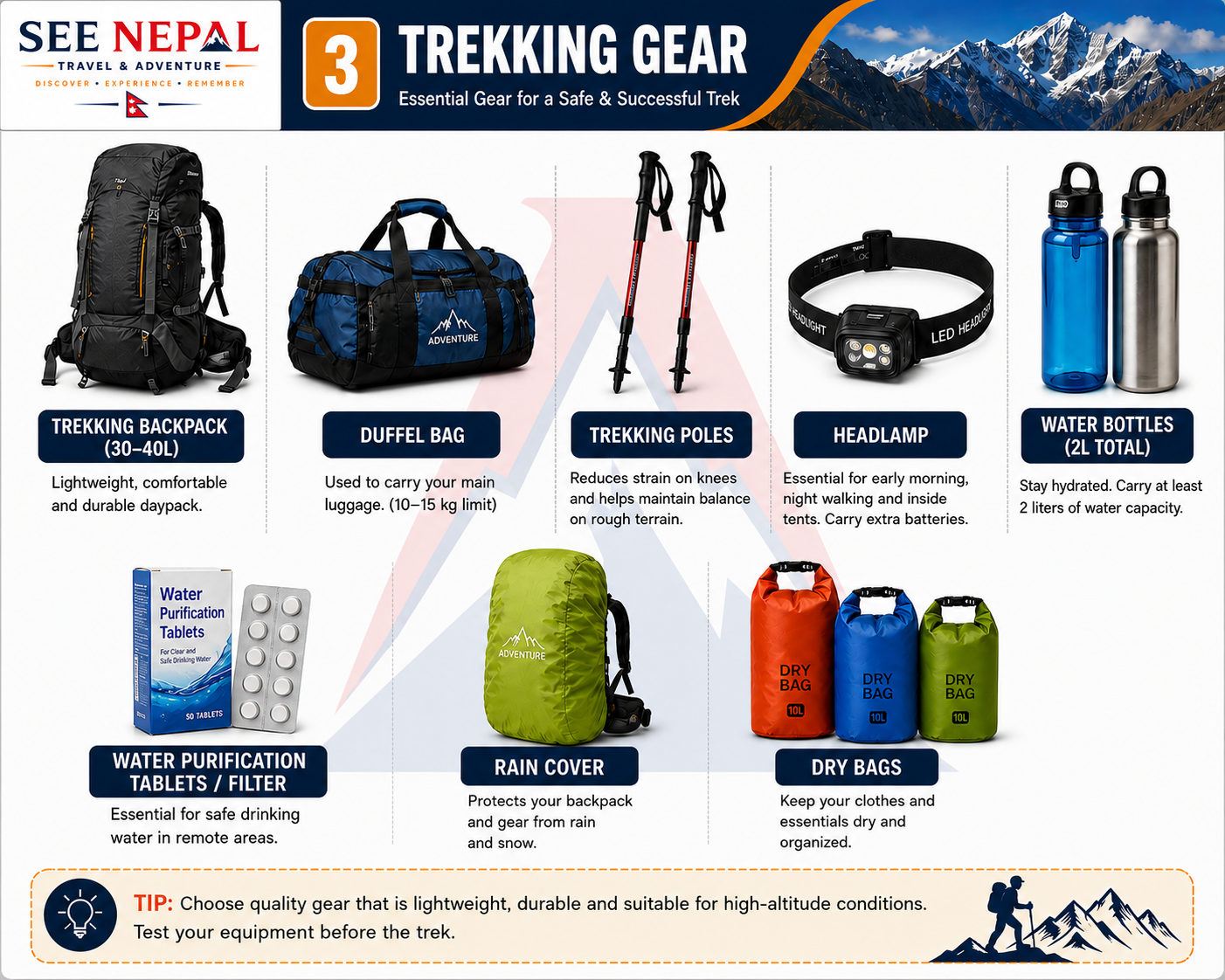
Trekking Gear
Personal Essentials
Electronics & Food
Frequently Asked Questions
Yes, absolutely possible, trekking to Annapurna Base Camp (ABC) in April and May is highly feasible and is actually one of the best times to do so. These months fall within the spring season in Nepal, which is considered one of the prime trekking seasons for the Annapurna region. Here are some reasons why April and May are excellent months for the ABC trek:
Weather: April and May offer some of the most stable and pleasant weather conditions in the Annapurna region. The skies are generally clear, temperatures are mild to warm, and there is minimal rainfall compared to other times of the year. This makes for comfortable trekking conditions and excellent visibility of the surrounding mountain peaks.
Blooming Rhododendrons: April and May coincide with the blooming season of rhododendrons, Nepal's national flower. Trekking through rhododendron forests in full bloom adds vibrant colors to the landscape, enhancing the overall trekking experience.
Moderate Crowds: While April and May are popular months for trekking in Nepal, the Annapurna region is not as crowded as some other popular trekking destinations like the Everest region. Trekkers can expect moderate crowds along the trail, allowing for a more peaceful and enjoyable trekking experience compared to peak seasons.
Teahouse Availability: Teahouses and lodges along the Annapurna Base Camp trekking route are fully operational during April and May, offering comfortable accommodation and meals for trekkers. This eliminates the need for carrying camping gear or food supplies, making the trek more convenient and accessible.
Overall, April and May provide optimal trekking conditions for the Annapurna Base Camp trek, with mild weather, stunning scenery, and fewer crowds compared to peak seasons. It's essential to plan and book accommodations in advance, especially during popular travel periods, to ensure a smooth and enjoyable trekking experience
The difficulty level of the Annapurna Base Camp (ABC) Trek can vary depending on factors such as individual fitness, prior hiking experience, and weather conditions. However, compared to some other treks in the region, the ABC Trek is generally considered to be of moderate difficulty. Here are some factors to consider:
Altitude: While Annapurna Base Camp sits at an elevation of 4,130 meters (13,550 feet), which is relatively high, the altitude gain is gradual over the course of the trek. This helps in acclimatization and reduces the risk of altitude sickness compared to treks with rapid ascents to higher altitudes.
Duration and Distance: The typical Annapurna Base Camp Trek takes about 7 to 12 days to complete, covering a distance of approximately 115 kilometers (71 miles) round trip. Daily hiking distances are manageable for most fit trekkers, with moderate elevation gains each day.
Terrain: The trail to Annapurna Base Camp includes a variety of terrain, including forested paths, stone steps, and some steep ascents and descents. While some sections of the trail can be challenging, especially in adverse weather conditions, it is generally well-maintained and does not require technical climbing skills.
Weather Conditions: Weather in the Annapurna region can be unpredictable, particularly during the monsoon season (June to August), when heavy rain and fog may affect visibility and trail conditions. Trekkers should be prepared for varying weather conditions and ensure they have appropriate clothing and gear.
Teahouse Accommodation: Along the Annapurna Base Camp Trek, there are teahouses and lodges available for accommodation and meals. This makes the trek more accessible as trekkers do not need to carry camping gear or food supplies, but facilities can be basic in some areas.
Overall, while the Annapurna Base Camp Trek requires a reasonable level of fitness and preparation, it is suitable for most people with a sense of adventure and determination. With proper planning, pacing, and attention to safety, the trek can be a rewarding experience, offering stunning views of the Annapurna mountain range and opportunities to immerse oneself in the natural beauty and culture of the region.
Yes, the Annapurna Base Camp (ABC) Trek can be suitable for beginners with some preparation and the right mindset. Here are a few reasons why it can be a good option for novice trekkers:
Moderate Difficulty: While the trek involves some uphill climbs and challenging terrain, it is generally considered to be of moderate difficulty compared to other treks in the region. The gradual ascent and well-defined trail make it accessible to beginners who are willing to take on a physical challenge.
Acclimatization: The altitude gain on the Annapurna Base Camp trek is gradual, allowing trekkers to acclimatize more easily compared to treks with rapid ascents to higher altitudes. Proper acclimatization is essential for avoiding altitude sickness, and the ABC trek provides ample opportunities for this.
Teahouse Accommodation: Along the trail to Annapurna Base Camp, there are teahouses and lodges where trekkers can stay overnight and enjoy meals. This eliminates the need for carrying camping gear or food supplies, making the trek more accessible to beginners who may not have much experience with multi-day trekking.
Guided Options: Many trekking agencies offer guided tours for the Annapurna Base Camp trek, providing novice trekkers with support, guidance, and assistance throughout the journey. A knowledgeable guide can offer valuable information about the trail, help with navigation, and ensure a safer and more enjoyable experience.
Stunning Scenery: Despite its accessibility, the Annapurna Base Camp trek offers breathtaking views of the Annapurna mountain range, including peaks like Annapurna South, Hiunchuli, Machhapuchhre (Fishtail), and others. The stunning natural beauty of the region makes the trek a memorable experience for beginners and experienced trekkers alike.
While the Annapurna Base Camp trek is suitable for beginners, it's essential to prepare adequately, both physically and mentally, for the challenges of trekking at altitude and in varying weather conditions. Beginners should consider starting with shorter day hikes or lower-altitude treks to build up their fitness and confidence before attempting longer and more demanding treks like the ABC trek. Additionally, consulting with a healthcare professional and obtaining travel insurance are important steps to ensure a safe and enjoyable trekking experience.
While the Annapurna Base Camp (ABC) Trek is feasible for many people, including families, it's essential to carefully consider whether it's suitable for children. Here are some factors to keep in mind when deciding if kids can do the ABC Trek:
Physical Fitness: The ABC Trek involves several days of hiking with varying terrain and altitudes. Children should be in good physical health and have the stamina to walk for several hours each day. It's essential to gauge whether your child has the physical fitness required for the trek.
Altitude Considerations: Altitude sickness can affect anyone, regardless of age. While the altitude gain on the ABC Trek is gradual, it's still important to monitor children for symptoms of altitude sickness, such as headaches, nausea, and fatigue. Children may be more susceptible to altitude-related issues, so it's crucial to acclimatize properly and ascend gradually.
Trail Conditions: The trail to Annapurna Base Camp includes some steep sections, rocky paths, and potentially slippery terrain, especially during adverse weather conditions. Parents should assess whether their children are comfortable with hiking on such terrain and whether they have the necessary footwear and gear.
Safety Precautions: Safety should always be a priority when trekking with children. Parents should closely supervise their children on the trail, especially near steep drops or river crossings. It's essential to teach children about trail safety and ensure they understand the importance of staying on the designated path.
Health and Hygiene: Children may be more susceptible to illnesses and infections while trekking. Parents should ensure that their children practice good hygiene, including washing hands regularly and purifying drinking water. Carrying a basic first aid kit and any necessary medications is also important.
Experience and Expectations: Consider your child's previous hiking experience and their expectations for the trek. While some children may thrive on the adventure and challenge of trekking to Annapurna Base Camp, others may find it overwhelming or tiring. It's important to communicate with your child and ensure they are enthusiastic about the trek.
Ultimately, whether children can do the Annapurna Base Camp Trek depends on their individual abilities, preparation, and willingness to undertake the journey. Parents should carefully assess these factors and make an informed decision based on their child's health, fitness, and interests. Additionally, hiring a knowledgeable guide or trekking with a reputable tour company can provide added support and assistance, making the trek safer and more enjoyable for the whole family.
The best time to trek to Annapurna Base Camp (ABC) is during the spring and autumn seasons, which offer the most favorable weather and trail conditions. The two primary months that are often considered the best for the ABC Trek are:
March-April (Spring):
Spring in Nepal, particularly March and April, is one of the most popular times for trekking to Annapurna Base Camp.
During this time, the weather is generally mild and stable, with clear skies, warmer temperatures, and blooming rhododendron forests adding color to the landscape.
Spring offers excellent visibility of the surrounding mountain peaks, providing stunning views throughout the trek.
The trails are usually less crowded compared to the peak trekking season in autumn, making it a more peaceful and enjoyable experience.
October-November (Autumn):
Autumn is another fantastic time to trek to Annapurna Base Camp, with October and November being the prime months.
The weather is cool and dry, with clear skies and minimal rainfall, making it ideal for trekking.
Autumn offers stunning views of the Annapurna mountain range, with crisp air and vibrant colors adding to the beauty of the landscape.
The trails are well-defined, and the teahouses along the route are fully operational, providing comfortable accommodation and meals for trekkers.
Both spring and autumn offer excellent trekking conditions, and the choice between them depends on personal preferences and availability. Some trekkers prefer the warmer temperatures and blooming flowers of spring, while others enjoy the cooler, crisp air and clear skies of autumn. Regardless of the season, proper preparation, including packing appropriate clothing and gear, is crucial for a successful and enjoyable trek to Annapurna Base Camp.
Yes, having a reasonable level of fitness is important for trekking to Annapurna Base Camp (ABC). While the trek is considered to be of moderate difficulty compared to other treks in the region, it still involves several days of hiking with varying terrain and altitudes. Here are some reasons why fitness is essential for the ABC Trek:
Physical Demands: Trekking to Annapurna Base Camp requires walking for several hours each day, often uphill and downhill on uneven terrain. Having good cardiovascular endurance, leg strength, and overall stamina will make the trek more enjoyable and manageable.
Altitude Gain: While the highest point on the ABC Trek is Annapurna Base Camp itself at 4,130 meters (13,550 feet), the altitude gain is gradual over the course of the trek. However, even moderate altitudes can affect individuals differently, and being physically fit can help with acclimatization and reduce the risk of altitude sickness.
Length of Trek: The typical duration of the Annapurna Base Camp trek is around 7 to 12 days, covering approximately 115 kilometers (71 miles) round trip. Trekking for an extended period requires endurance and stamina, which can be developed through regular exercise and training.
Terrain: The trail to Annapurna Base Camp includes various types of terrain, including forested paths, stone steps, and some steep ascents and descents. Having good balance, agility, and lower body strength will help navigate the trail more safely and comfortably.
While it's not necessary to be an elite athlete to trek to Annapurna Base Camp, it's advisable to engage in regular physical activity and cardio exercises in the months leading up to the trek. Activities such as hiking, walking, jogging, cycling, and stair climbing can help improve cardiovascular fitness and build endurance.
Additionally, it's essential to listen to your body during the trek, take breaks when needed, and stay hydrated and well-nourished. If you have any underlying health conditions or concerns, it's advisable to consult with a healthcare professional before undertaking the trek. With proper preparation and a reasonable level of fitness, many people of varying ages and abilities successfully complete the Annapurna Base Camp trek and enjoy the stunning natural beauty of the Himalayas.
Trekking to Annapurna Base Camp (ABC) during the monsoon season (June to August) is possible, but it comes with some challenges and considerations:
Weather: The monsoon season brings heavy rainfall to the Annapurna region, which can lead to slippery and muddy trails, landslides, and reduced visibility. Trekking during this time can be challenging and less enjoyable due to the wet and unpredictable weather conditions.
Trail Conditions: The trails to Annapurna Base Camp can become quite muddy and slippery during the monsoon season, making hiking more difficult and potentially hazardous, especially on steep sections. Additionally, landslides are more common during heavy rainfall, posing risks to trekkers.
Landslides and Avalanches: The monsoon season increases the risk of landslides and avalanches in mountainous regions. Trekkers should be cautious and stay informed about trail conditions, especially in areas prone to such natural hazards.
Visibility: Cloud cover and fog are common during the monsoon season, which can obscure the stunning mountain views that are one of the highlights of the ABC trek. Trekkers may miss out on panoramic vistas of the Annapurna range due to poor visibility.
Accommodation and Facilities: While teahouses along the ABC trekking route generally remain open during the monsoon season, some may close or have limited services due to fewer trekkers. Trekkers should be prepared for the possibility of fewer accommodation and dining options along the trail.
Despite these challenges, some trekkers still choose to trek to Annapurna Base Camp during the monsoon season, often for a quieter and less crowded experience on the trail. However, it's important to be well-prepared and aware of the risks involved. Trekkers should have appropriate clothing and gear for wet and muddy conditions, as well as a flexible itinerary that allows for potential delays due to weather-related issues.
If you're considering trekking to Annapurna Base Camp during the monsoon season, it's advisable to consult with local trekking agencies or guides for up-to-date information on trail conditions and weather forecasts. Additionally, trekking with a knowledgeable guide or joining a guided tour can enhance safety and provide valuable support and assistance during the journey.
The Annapurna Base Camp (ABC) is located in Nepal. Nepal is a landlocked country in South Asia, situated mainly in the Himalayas. The Annapurna Base Camp trek is one of the most popular trekking routes in Nepal, offering stunning views of the Annapurna mountain range, including peaks like Annapurna South, Hiunchuli, Machhapuchhre (Fishtail), and others. The trek begins from various starting points, such as Nayapul or Phedi, and leads trekkers through picturesque villages, terraced farmland, lush forests, and eventually to the base camp itself, nestled at the foot of the towering Annapurna massif
Stunning Scenery:
The trek to Annapurna Base Camp offers breathtaking views of some of the world's highest peaks, including Annapurna I, the tenth highest mountain in the world, as well as Machapuchare (Fishtail), Gangapurna, and other surrounding peaks.
Diverse Landscapes:
Trekkers experience a variety of landscapes during the journey, including lush forests, terraced fields, alpine meadows, and high mountain passes. This diversity adds to the appeal of the trek.
Cultural Experience:
The trek passes through many traditional villages inhabited by different ethnic groups, such as Gurungs and Magars, providing trekkers with an opportunity to experience the local culture, traditions, and lifestyle of the Himalayan people.
Accessibility:
Compared to some other high-altitude treks in the Himalayas, Annapurna Base Camp is relatively accessible. The trailhead can be reached from the city of Pokhara, which is a popular tourist destination in Nepal.
Infrastructure:
The Annapurna region has well-established trekking infrastructure, including teahouses and lodges along the trail, making it suitable for trekkers of various experience levels.
Adventure and Challenge:
While Annapurna Base Camp trek is considered moderate in difficulty, it still offers a sense of adventure and challenge, making it an attractive option for adventure seekers and nature enthusiasts.
Overall, the combination of stunning natural beauty, cultural richness, accessibility, and adventure makes Annapurna Base Camp a renowned trekking destination in the world.
The duration of the Annapurna Base Camp (ABC) trek can vary depending on several factors, including the starting point, the chosen itinerary, and individual trekking pace. On average, the trek to Annapurna Base Camp takes around 7 to 12 days to complete, covering a distance of approximately 115 kilometers (71 miles) round trip.
Here's a general breakdown of the typical itinerary for the Annapurna Base Camp trek:
Day 1: Start from Nayapul or Phedi (depending on the route chosen) and trek to Tikhedhunga or Ulleri.
Day 2: Trek from Tikhedhunga or Ulleri to Ghorepani.
Day 3: Early morning hike to Poon Hill for sunrise views, then trek from Ghorepani to Tadapani or Dobato.
Day 4: Trek from Tadapani or Dobato to Chhomrong.
Day 5: Trek from Chhomrong to Bamboo or Dovan.
Day 6: Trek from Bamboo or Dovan to Machhapuchhre Base Camp (MBC).
Day 7: Trek from Machhapuchhre Base Camp (MBC) to Annapurna Base Camp (ABC).
Day 8: Trek back from Annapurna Base Camp to Bamboo or Dovan.
Day 9: Trek from Bamboo or Dovan to Jhinu Danda (optional hot springs visit).
Day 10: Trek from Jhinu Danda to Nayapul, then drive back to Pokhara.
This is just a sample itinerary, and variations are possible depending on individual preferences and available time. Some trekkers choose to complete the trek in fewer days by combining longer hiking days, while others prefer a more leisurely pace with additional rest days or side trips.
It's essential to factor in acclimatization days and allow for adjustments in the itinerary based on weather conditions, trail conditions, and personal fitness levels. Additionally, hiring a local guide or porter can enhance the trekking experience and provide valuable assistance along the way.
The Annapurna Base Camp (ABC) trek is considered to be moderately challenging overall, suitable for trekkers with a reasonable level of fitness and hiking experience. Here are some factors that contribute to its difficulty:
Altitude: While the maximum altitude reached at Annapurna Base Camp (ABC) is 4,130 meters (13,550 feet), altitude-related issues can still occur, especially for those who are not properly acclimatized. It's essential to ascend gradually, stay hydrated, and be aware of symptoms of altitude sickness.
Terrain: The trek involves hiking through various types of terrain, including forested trails, steep ascents and descents, stone steps, and sometimes narrow paths along cliffsides. Some sections of the trail can be rocky or slippery, particularly during the monsoon season.
Length and Elevation Gain: The Annapurna Base Camp trek typically takes 7 to 12 days to complete, covering a round-trip distance of approximately 115 kilometers (71 miles). Trekkers can expect to hike for several hours each day, with elevation gains of around 1,000 meters (3,280 feet) or more on some days.
Weather Conditions: Weather in the Annapurna region can be unpredictable, with the possibility of rain, snow, or fog, particularly during the monsoon season (June to August). Trekkers should be prepared for varying weather conditions and ensure they have appropriate clothing and gear.
Teahouse Accommodation: While teahouses along the Annapurna Base Camp trek provide basic lodging and meals, facilities can be simple, and amenities such as hot showers and electricity may be limited or unavailable in some areas.
Despite these challenges, many trekkers of varying experience levels successfully complete the Annapurna Base Camp trek each year. With proper preparation, including physical conditioning, acclimatization, and adequate gear, the trek can be a rewarding and memorable experience, offering stunning views of the Annapurna mountain range and opportunities to immerse oneself in the natural beauty and culture of the region.
Comparing the difficulty of the Annapurna Base Camp (ABC) trek with trekking to Everest Base Camp (EBC) is subjective and depends on various factors, including individual fitness levels, altitude tolerance, weather conditions, and personal preferences. Here are some key differences between the two treks:
Altitude: Everest Base Camp trek reaches a higher altitude than Annapurna Base Camp trek. The highest point on the Everest Base Camp trek is Kala Patthar, at approximately 5,550 meters (18,208 feet), while Annapurna Base Camp sits at 4,130 meters (13,550 feet). The higher altitude of the Everest Base Camp trek may pose additional challenges related to altitude sickness and acclimatization.
Length and Elevation Gain: The Everest Base Camp trek is longer in terms of distance and typically takes around 12 to 14 days to complete, covering approximately 130 kilometers (81 miles) round trip. The elevation gain is also higher on the Everest Base Camp trek compared to the Annapurna Base Camp trek, especially considering the trek to Kala Patthar for the best views of Everest.
Terrain: Both treks involve hiking through various types of terrain, including forested trails, rocky paths, and steep ascents and descents. However, the Annapurna Base Camp trek is generally considered to have more varied terrain, including lush forests and terraced farmland in the lower elevations, while the Everest Base Camp trek is known for its rugged and remote mountain landscapes.
Crowds and Infrastructure: The Everest Base Camp trek tends to be more crowded and developed in terms of infrastructure, with more teahouses, lodges, and amenities along the trail. In contrast, the Annapurna Base Camp trek offers a quieter and more remote experience, particularly in the off-peak seasons.
Ultimately, both treks have their own challenges and rewards, and what may be considered "harder" can vary depending on individual preferences and experiences. Some trekkers may find the higher altitude and longer duration of the Everest Base Camp trek more challenging, while others may prefer the quieter trails and diverse landscapes of the Annapurna Base Camp trek.
It's essential to research both treks thoroughly, assess your own abilities and preferences, and choose the one that best suits your interests and goals. Additionally, proper preparation, including physical conditioning, acclimatization, and adequate gear, is crucial for a successful trekking experience regardless of the route chosen.
Trekking to Annapurna Base Camp (ABC) is generally considered safe for travelers who are adequately prepared, follow safety guidelines, and make informed decisions throughout their journey. However, as with any outdoor activity, there are risks associated with trekking in the Annapurna region. Here are some safety considerations:
Altitude Sickness: Altitude sickness, also known as acute mountain sickness (AMS), can occur when ascending to high altitudes too quickly. Symptoms may include headaches, nausea, dizziness, and fatigue. It's essential to acclimatize properly, ascend gradually, and stay hydrated to reduce the risk of altitude-related illnesses.
Weather Conditions: Weather in the Annapurna region can be unpredictable, with the potential for rain, snow, and fog, particularly during the monsoon season (June to August). Trekkers should be prepared for varying weather conditions and ensure they have appropriate clothing, gear, and footwear.
Trail Conditions: The Annapurna Base Camp trek involves hiking through various types of terrain, including forested trails, rocky paths, and steep ascents and descents. Some sections of the trail may be slippery or challenging, particularly during adverse weather conditions. It's essential to tread carefully and use trekking poles if necessary.
River Crossings: The trek may involve crossing several rivers and streams, either via bridges or stepping stones. Trekkers should exercise caution when crossing rivers, especially during periods of heavy rainfall when water levels may rise.
Health and Hygiene: Basic hygiene practices, such as washing hands regularly and purifying drinking water, are essential to prevent gastrointestinal illnesses. Trekkers should also carry a basic first aid kit and any necessary medications.
Wildlife: While encounters with wildlife are rare, trekkers should be aware of the possibility of encountering animals such as monkeys or leeches along the trail. Taking precautions to avoid interactions with wildlife can help minimize risks.
Travel Insurance: It's highly recommended to purchase comprehensive travel insurance that covers trekking activities, including medical evacuation and emergency assistance, in case of unforeseen emergencies or accidents.
Despite these potential risks, thousands of trekkers successfully complete the Annapurna Base Camp trek each year. With proper preparation, including physical conditioning, acclimatization, and adequate gear, and by following safety guidelines, the trek can be a rewarding and memorable experience amidst the stunning landscapes of the Annapurna region. Additionally, hiring a local guide or porter can provide valuable support and assistance throughout the journey.
There are several reputable trekking companies that offer guided Annapurna Base Camp (ABC) treks in Nepal. Here are a few well-known trekking companies that are highly regarded for their professionalism, safety standards, and quality of service:
Adventure Nepal Eco Treks:Adventure Nepal Eco treks is a highly rated trekking company based in Kathmandu, Nepal. They offer a variety of trekking packages, including guided treks to Annapurna Base Camp. Their experienced guides and staff prioritize safety and sustainability while providing personalized service to their clients.
People undertake the Annapurna Base Camp (ABC) trekking in Nepal for several compelling reasons:
Spectacular Scenery: The Annapurna region is renowned for its stunning landscapes, including lush forests, terraced fields, alpine meadows, and towering Himalayan peaks. The trek offers breathtaking views of peaks like Annapurna I, Machapuchare (Fishtail), Annapurna South, and Hiunchuli, among others.
Cultural Immersion: Along the trail, trekkers pass through diverse ethnic villages inhabited by Gurung, Magar, Thakali, and other indigenous communities. This provides an opportunity to experience local cultures, traditions, and hospitality firsthand.
Varied Terrain: The ABC trek encompasses a variety of terrain, from lowland villages to high mountain passes. Trekkers encounter suspension bridges, rhododendron forests, cascading waterfalls, and glacial moraines, offering a rich and varied trekking experience.
Accessible Route: The Annapurna Base Camp trek is considered more accessible compared to some other treks in Nepal, making it suitable for trekkers of various experience levels. The trail is well-established, with teahouses and lodges providing accommodation and meals along the route.
Moderate Difficulty: While the trek involves some challenging sections, it is generally considered to be of moderate difficulty. This makes it appealing to a wide range of trekkers, including beginners and those seeking a less strenuous trekking experience.
Annapurna Sanctuary: The trek culminates at Annapurna Base Camp, located in a natural amphitheater surrounded by towering peaks. Trekkers experience a sense of awe and tranquility in this remote mountain sanctuary, far from the distractions of modern life.
Adventure and Exploration: Trekking in the Annapurna region offers a sense of adventure and exploration as trekkers journey through remote mountain landscapes and immerse themselves in the natural beauty of the Himalayas.
Overall, the Annapurna Base Camp trek is popular for its stunning scenery, cultural richness, accessibility, and the sense of adventure it provides to trekkers. It's an unforgettable trekking experience that attracts thousands of visitors to Nepal each year.
The Annapurna Base Camp (ABC) trekking route is a renowned trekking trail in Nepal that leads to the base camp of Annapurna I, the tenth highest mountain in the world. Also known as the Annapurna Sanctuary trek, it offers trekkers a unique blend of cultural immersion, diverse landscapes, and spectacular mountain scenery.
The typical Annapurna Base Camp trek itinerary spans around 7 to 12 days, depending on the starting point and pace of the trek. Here's a general overview of the route:
Starting Point: The trek usually begins from Nayapul or Phedi, accessible by road from Pokhara, a popular tourist city in Nepal.
Ghorepani and Poon Hill: Many ABC trekkers choose to include a detour to Ghorepani and Poon Hill in their itinerary. Poon Hill offers panoramic views of the Annapurna and Dhaulagiri mountain ranges, as well as stunning sunrise vistas.
Charming Villages: Along the way, trekkers pass through picturesque Gurung and Magar villages such as Ghandruk, Chhomrong, and Sinuwa. These villages provide opportunities to experience local culture, hospitality, and traditional lifestyles.
Natural Landscapes: The trail traverses diverse landscapes, including terraced fields, subtropical forests filled with rhododendron and bamboo, cascading waterfalls, and rugged gorges.
Himalayan Views: As trekkers ascend higher into the Himalayas, they are treated to magnificent views of towering peaks such as Annapurna South, Machapuchare (Fishtail), Hiunchuli, and Gangapurna.
Annapurna Base Camp: The climax of the trek is reaching Annapurna Base Camp, situated at an altitude of around 4,130 meters (13,550 feet). Nestled amidst towering peaks, the base camp offers a stunning amphitheater-like setting with panoramic views of the surrounding mountains, including Annapurna I.
Return Journey: After spending time at the base camp, trekkers retrace their steps back to the starting point, enjoying the scenery once again from a different perspective.
The Annapurna Base Camp trek is renowned for its accessibility, diverse landscapes, cultural encounters, and breathtaking mountain vistas, making it a popular choice for trekkers seeking an unforgettable Himalayan adventure.
Whether the Annapurna Base Camp trek is worth it depends on your preferences, fitness level, and what you're seeking from your trekking experience. Here are some factors to consider:
Scenery: The Annapurna region is renowned for its stunning landscapes, including terraced fields, lush forests, and towering Himalayan peaks. If you're drawn to breathtaking mountain vistas and diverse natural beauty, the ABC trek is definitely worth considering.
Cultural Experience: The trek offers opportunities to immerse yourself in the local culture and traditions of the Gurung and Magar ethnic groups. Visiting charming villages along the way allows you to interact with locals, experience their hospitality, and learn about their way of life.
Accessibility: The Annapurna Base Camp trek is considered more accessible compared to some other treks in Nepal, making it suitable for trekkers of various fitness levels and experience. The trail is well-established, with teahouses and lodges providing accommodation and meals along the route.
Moderate Difficulty: While the trek does involve some challenging sections, it is generally considered to be of moderate difficulty. If you're looking for a challenging but achievable trekking experience, the ABC trek could be a good fit.
Adventure: Trekking in the Annapurna region offers a sense of adventure and exploration as you journey through remote mountain landscapes and immerse yourself in the natural beauty of the Himalayas. If you're seeking adventure and a break from the hustle and bustle of everyday life, the ABC trek could be just what you're looking for.
Overall, many trekkers find the Annapurna Base Camp trek to be a rewarding and unforgettable experience. However, it's essential to assess your own preferences, fitness level, and expectations before deciding if it's worth it for you. If you're passionate about mountain scenery, cultural immersion, and adventure, the ABC trek could be a perfect choice.
In the grand theater of Nepal's Himalayas, the Annapurna Base Camp Trek is perhaps the most scenic of all. This trek is a symphony of landscapes, where every step brings a new revelation. Verdant terraced fields give way to dense bamboo forests, and the towering peaks of Machapuchare and Annapurna loom ever closer, like sentinels guarding the secrets of the mountains. As you ascend, the world transforms into a glacial amphitheater, where the majesty of the Annapurna massif surrounds you in a breathtaking embrace. This journey, rich in natural beauty, offers vistas that linger long in the soul, a testament to the unrivaled splendor of Nepal's mountains.