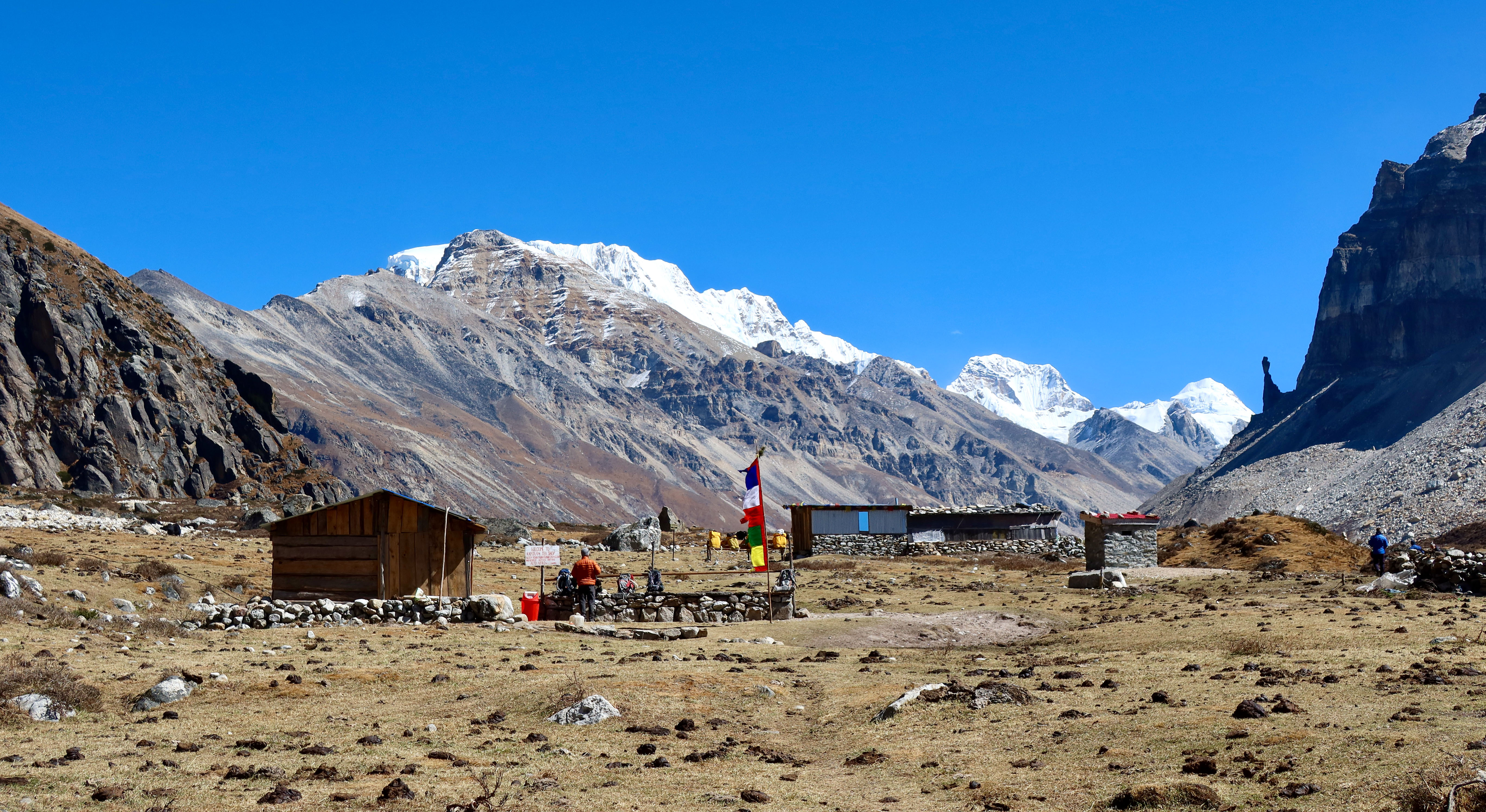
Kanchenjunga (8,586 m) is the third highest mountain in the world. The location of this mountain is really unique as the mountain lies in 3 countries- Nepal, India, and Tibet. Much like its location, the trek to the Base Camp of Mt. Kanchenjunga is also a unique and thrilling experience.
The word “Kanchenjunga” refers to ‘five great treasures of snow’ in the Tibetan language. This is a referral to the great mountains that form a part of the Kanchenjunga.
The Kanchenjunga Base Camp trek goes through the Kanchenjunga Conservation Area. This protected area is managed by the World Wildlife Fund (WWF) as well as the International Center for Integrated Mountain Development in partnership with the locals of this region.
The Kanchenjunga Conservation Area comprises various types of vegetation including cultivated lands, forests and, pastures. So during the Kanchenjunga Base Camp trek by Mount Mania, you will walk past diverse vegetation as well as rivers, high altitude lakes, and glaciers.
You can encounter various animal species like leopard, Asian black bear, and red panda in Kanchenjunga Base Camp trek. The conservation area is also home to various birds like golden-breasted fulvetta, snow cock, blood pheasant, and red-billed chough making the Kanchenjunga Base Camp trek a delight for bird watchers and lovers.
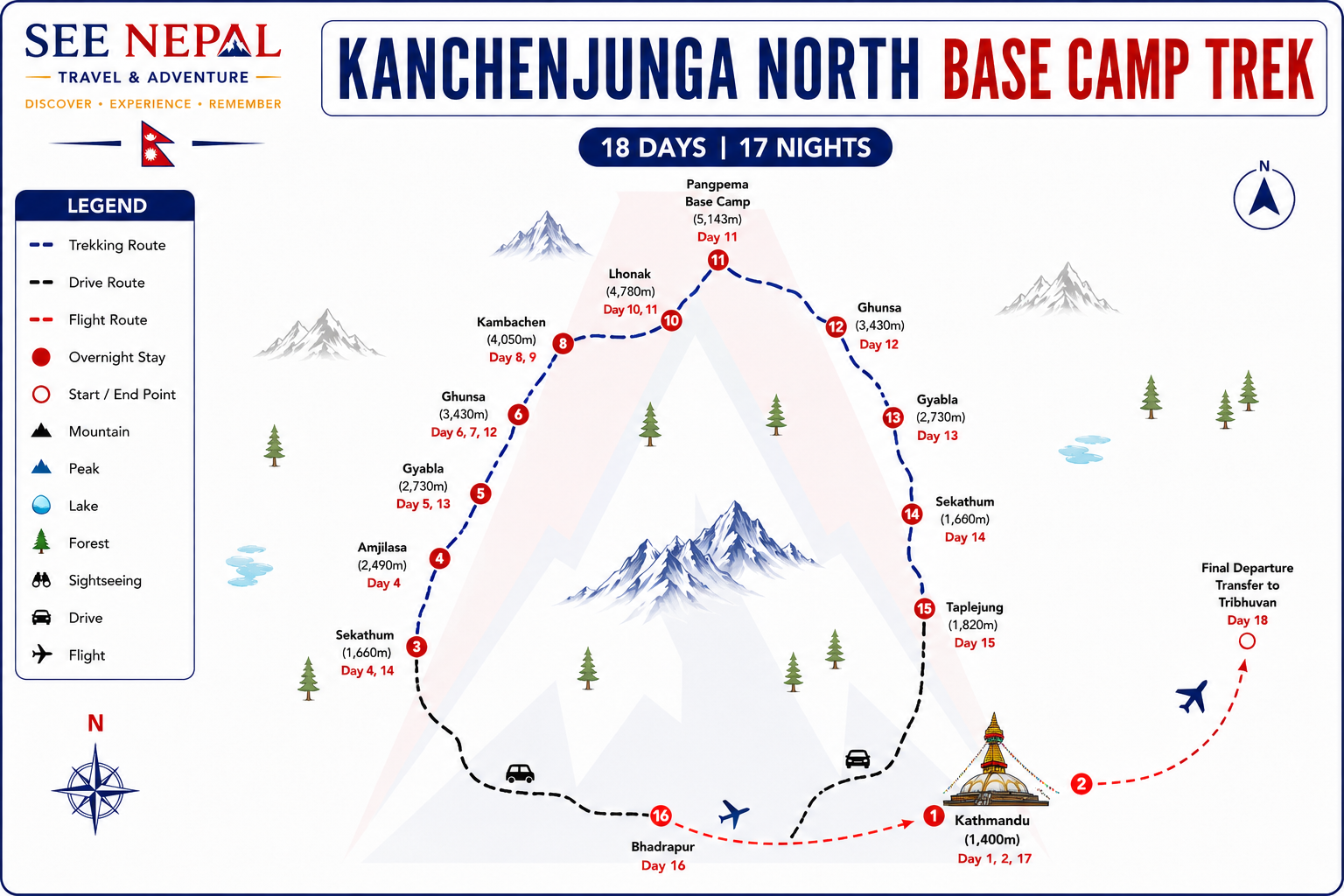
Kanchenjunga Base Camp trek by Mount Mania starts after a flight from Kathmandu to Bhadrapur. From Bhadrapur, you will drive to Taplejung and start your trek from there. Walking past various villages like Chirwa, Sekathum, Amjiolsa, and Gybala, you will get to Ghunsa.
From Ghunsa, you will trek to Kanchenjunga Base Camp. You will also trek past various mountain passes. The most famous of them being the Migrin La pass and the Sele Le pass. As you descend, you will trek through Tortong, Yamphudin, and other beautiful settlements before getting to Bhadrapur airport for your flight back to Kathmandu.
Kanchenjunga Base Camp trek by Mount Mania takes you to some of the best off-the-beaten-path trails in Nepal. This trek takes you to the majestic region of Kanchenjunga. All along the way, the warmth of the friendly locals and their hospitality will greet you.
Highlights
Unparalleled views of Kanchenjunga, the third-highest mountain in the world.
Experience the culture and hospitality of local communities such as the Limbu and Rai people.
Visit ancient monasteries, which provide insight into the local Buddhist practices.
Kanchenjunga Conservation Area, which has diverse flora and fauna
Rhododendron forests and rare wildlife like the snow leopard and red panda.
Traditional and challenging trekking experience, ideal for adventure enthusiasts.
Interactions with local porters and guides can provide deeper insights into the region’s culture and lifestyle.
unique and memorable adventure for those seeking both natural beauty and cultural richness.
Itinerary (18D, 17N)
Your journey begins in Kathmandu. Upon arrival at Tribhuvan International Airport, our representative will meet you and transfer you to your hotel in Thamel. The evening is yours to rest and acclimatise to Nepal's capital. We hold a pre-trek briefing where our team reviews the route, permits, gear, weather forecasts, and emergency procedures. This is also the time to raise any health concerns, adjust equipment lists, and meet your lead guide.
Before starting your trekking journey, we have set aside a day in Kathmandu to help you learn about the unique art, culture, and architecture of Nepal. You will be guided to the UNESCO-listed heritage sites in Kathmandu. First, you will be escorted to Kathmandu Durbar Square, where you can visit the museum, palace, its premises, and the temples built around it. Next, you will be escorted to the monkey temple – Swayambhunath. We walk up the stairs to the stupa. From the height, we can get an excellent view of Kathmandu city. Then, we visit a popular Hindu temple – Pashupatinath temple and head towards the largest stupa in the world – Boudhanath stupa. In the evening, we return to our hotel for an overnight stay
An early morning domestic flight takes you from Kathmandu to Bhadrapur in the eastern Terai — approximately 50 minutes. From Bhadrapur, we drive north through the eastern hills of Nepal toward Taplejung, the gateway district for the Kanchenjunga region. The drive takes 6–7 hours and passes through Ilam's famous tea gardens. Overnight at Taplejung
A short drive brings us to Sekathum at the Tamor River confluence. Here the trail officially begins. We cross suspension bridges over crystal-clear rivers and enter the forest belt of the lower Kanchenjunga valley. The first day's walk to Amjilasa is moderate — a warm-up for the days ahead. The rhododendron and oak canopy begins to define the landscape. Overnight in basic lodge accommodation.
The trail follows the Ghunsa Khola upstream through increasingly dramatic gorges. Waterfalls appear from unseen cliffs above. The path alternates between riverside flat sections and steep climbs through dense forest. Gyabla is a small collection of stone buildings with a magnificent mountain backdrop. The altitude remains gentle enough for most trekkers to feel comfortable. Overnight at Gyabla.
This is a landmark day — your arrival in Ghunsa marks the transition from the lower valley to the high Himalayan zone. The trail passes through some of the finest rhododendron forests in Nepal. In spring, the colour is extraordinary. In autumn, the golden-red leaf cover of the deciduous trees rivals anything in the Alps or New England. Ghunsa itself deserves an unhurried arrival — walk through the monastery courtyard, spin the prayer wheels, and look up at the ridges that will define the next week of your life. Overnight at Ghunsa.
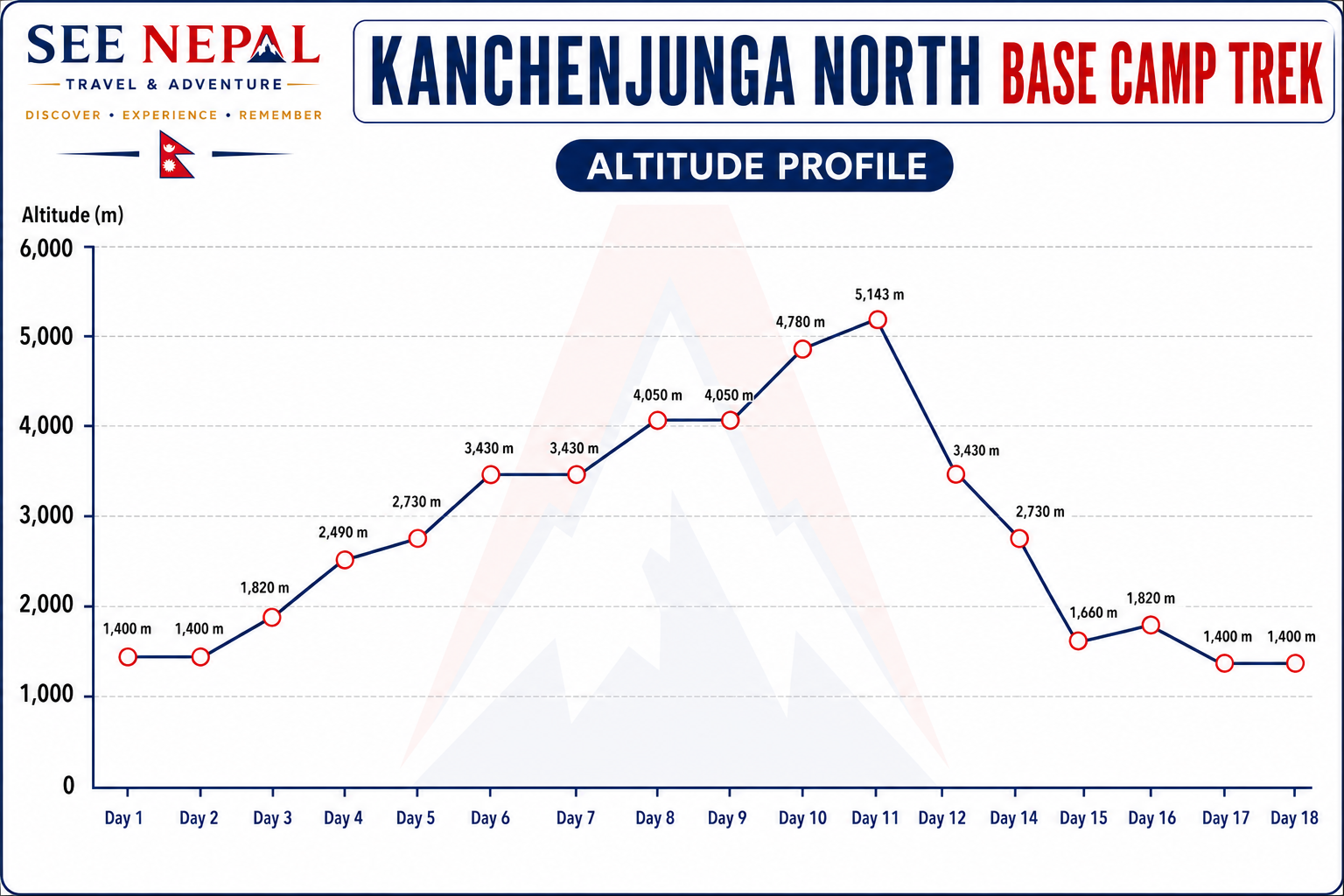
Rest days in trekking itineraries are not optional extras. They are load-bearing structural elements. At 3,430 metres, your body needs 24 hours to begin the physiological adaptation to reduced oxygen — increased red blood cell production, respiratory adjustment, cardiovascular efficiency improvements. We use this day for a short acclimatisation hike to approximately 3,800–4,000 metres before returning to Ghunsa to sleep low. Our team monitors resting oxygen levels and resting heart rates. This is when altitude sickness prevention is most effective.
Acclimatisation at Ghunsa
Rest days in trekking itineraries are not optional extras. They are load-bearing structural elements. At 3,430 metres, your body needs 24 hours to begin the physiological adaptation to reduced oxygen — increased red blood cell production, respiratory adjustment, cardiovascular efficiency improvements. We use this day for a short acclimatisation hike to approximately 3,800–4,000 metres before returning to Ghunsa to sleep low. Our team monitors resting oxygen levels and resting heart rates. This is when altitude sickness prevention is most effective.
Above Ghunsa the terrain opens dramatically. The valley widens and the view ahead begins to include permanent snowfields and glaciated peaks. Kambachen sits at the junction of several glacial tributaries and is one of the most photogenic camp locations on the entire route. The walking is strenuous — approximately 620 metres of net altitude gain over 10 kilometres. Evening temperatures begin to drop seriously. Overnight at Kambachen in tented camp or basic shelter.
A second structured acclimatisation day. We hike to approximately 4,400–4,600 metres on the ridgelines above Kambachen before returning to sleep. This second acclimatisation window is critical for performance at Pangpema. Our guides use pulse oximetry and daily symptom checks. Any trekker showing early signs of acute mountain sickness (AMS) — persistent headache, loss of appetite, vomiting, or ataxia — will be managed with immediate descent. We carry supplemental oxygen, Diamox, and an emergency communication device.
The Lhonak Plateau is one of the great Himalayan landscapes — a vast, flat, glacially-scoured basin surrounded by peaks above 6,000 metres. The Kanchenjunga North Face comes into full view for the first time. The walking here is high and exposed. Wind can be significant. Temperatures at night drop to -10°C or below. Our team sets up camp efficiently and cooks a full hot meal. Lhonak is where the enormity of the expedition becomes visceral. Overnight at Lhonak.
Summit day — in the sense that Pangpema Base Camp at 5,143 metres is the objective. The approach from Lhonak crosses glacial moraine terrain and demands careful footing. At Pangpema, the Kanchenjunga North Face fills the sky. The Yalung Glacier stretches east toward India. On clear mornings, you can hear the occasional ice crack and distant avalanche. We typically spend 1–2 hours at base camp before beginning the return to Lhonak for overnight. This is the highest point of the trek and a moment that trekkers consistently describe as among the most powerful experiences of their lives.
The descent is fast but hard on the knees. From 4,780 metres back to 3,430 metres in a single day is approximately 1,350 metres of descent — significant on moraine and rocky trail. We take it steadily. By afternoon you are back in Ghunsa, where warm food and relative warmth feel like extraordinary luxury. Overnight at Ghunsa.
Continuing the descent. The lower valleys feel almost tropical compared to the high camp. Vegetation returns progressively — mosses, then ferns, then full forest canopy. Bird calls replace the silence of altitude. The body begins its own recovery process. Overnight at Gyabla.
The final long descent back to the Tamor River valley. The trail retraces your approach through forest and over suspension bridges. Sekathum at 1,660 metres is almost sea-level by comparison with where you have been. Warm weather, green fields, and the sound of the river mark the return to the inhabited lower world. Overnight at Sekathum or nearby lodge.
A mix of walking and driving brings you back to Taplejung district headquarters. This is a good day to review your photographs, write journal notes, and simply decompress from seventeen days of high-altitude focus. The town of Taplejung has basic restaurants and shops. Overnight at Taplejung.
Drive from Taplejung back to Bhadrapur (6–7 hours), then an afternoon or evening flight to Kathmandu. Back in the capital, a warm shower and proper restaurant meal mark the return to civilization. We recommend staying in Thamel for easy access to gear shops, massage, and international cuisine. Overnight in Kathmandu.
Kathmandu deserves more than an airport transit. The UNESCO World Heritage Sites — Pashupatinath Temple, Boudhanath Stupa, Swayambhunath, and Patan Durbar Square — are within easy reach. This buffer day also serves as contingency for weather-related flight delays from Bhadrapur, which are not uncommon during monsoon shoulder seasons. Overnight in Kathmandu.
International Airport for your international departure. Your Kanchenjunga trek is complete
Trekking Map
Altitude Profile
Inclusions & Exclusions
What's Included
Necessary trekking and conservation permits.
Lodging during the trek, typically in a Lodge, and hotels in Kathmandu before and after the trek.
Three meals a day (breakfast, lunch, dinner) during the trek.
Professional guide and porters to carry your equipment.
Ground transportation to and from the trailhead.
flights within Nepal (e.g., Kathmandu to Bhadrapur and back).
Essential safety equipment like oxygen cylinders and first aid kits.
packages include airport transfers and welcome/farewell dinners.
Items such as snacks, drinks, personal gear, and souvenirs.
Nepal entry visa.
Extra nights in Kathmandu if required.
Tips for guides and porters.
Any additional costs such as extra porters, additional food and beverages, and other personal expenses.
Equipment List
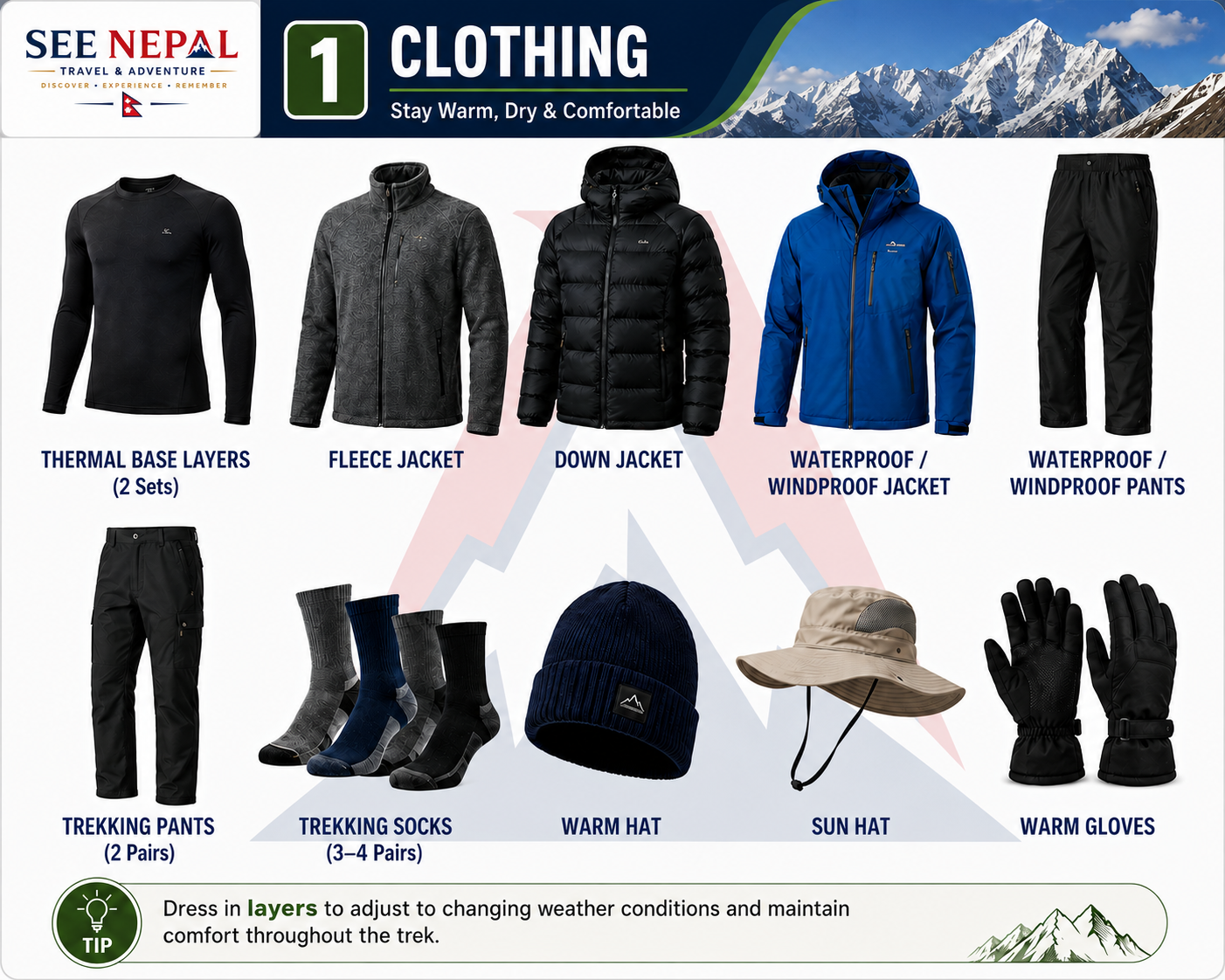
Clothing
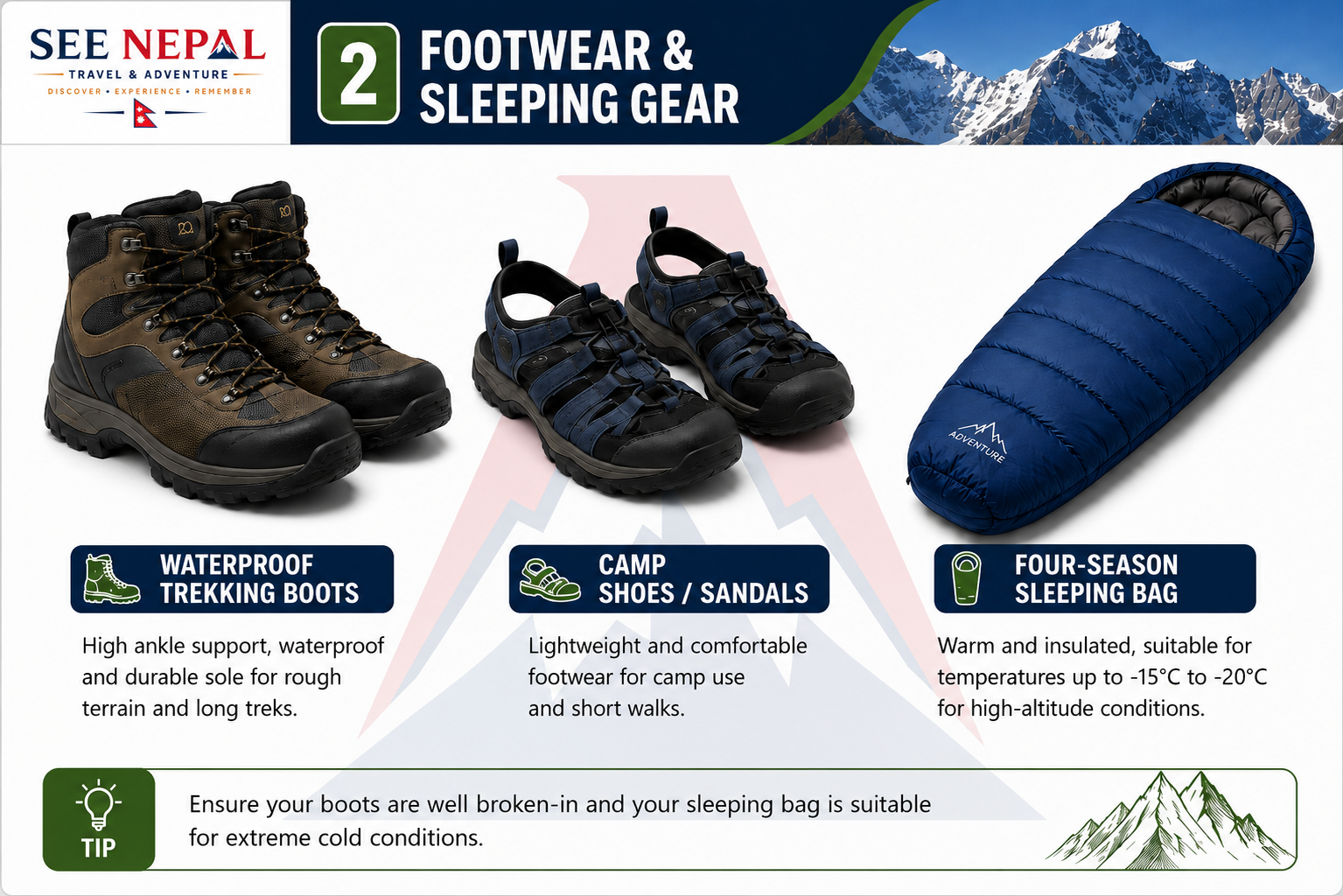
Footwear & Sleeping Gear
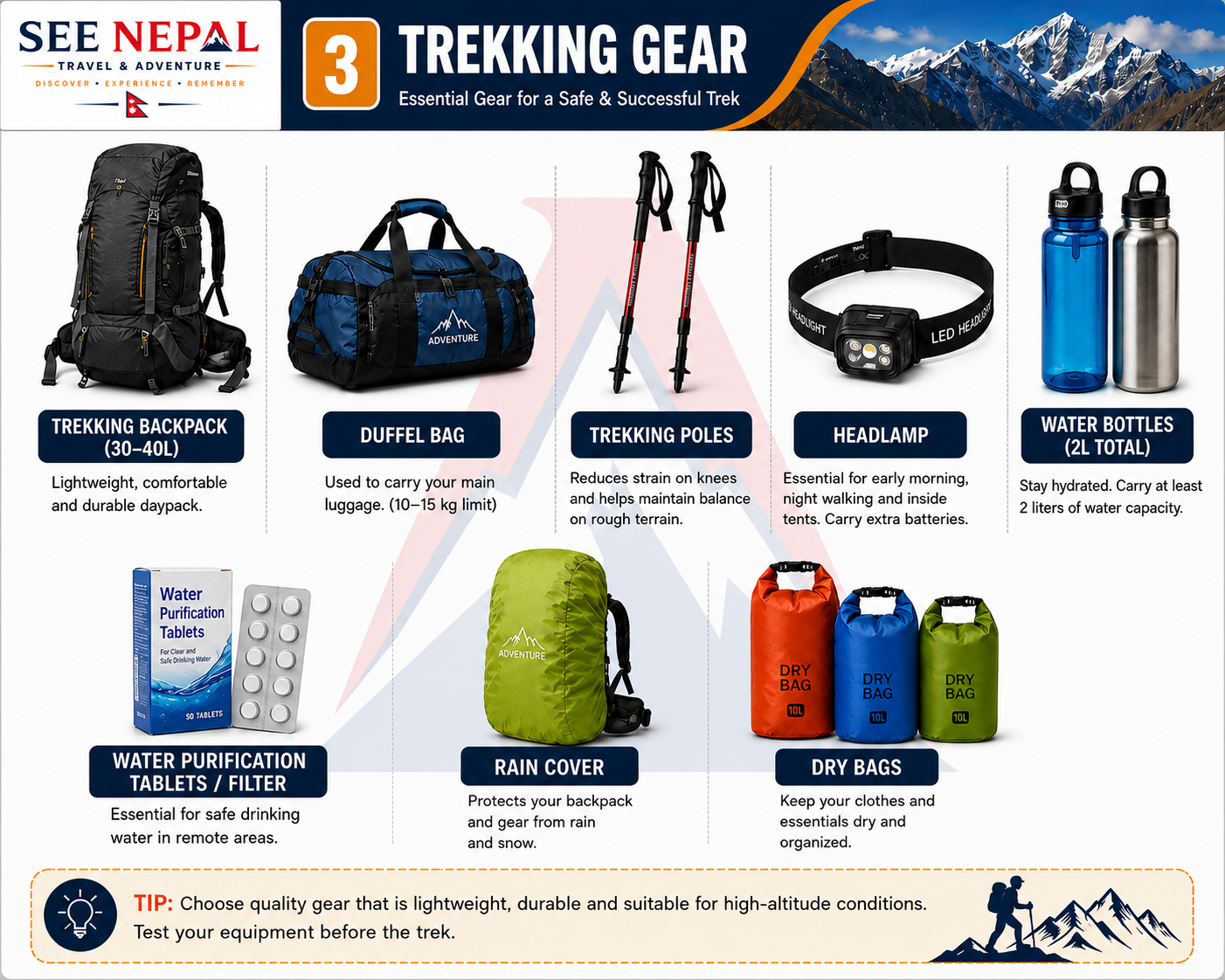
Trekking Gear
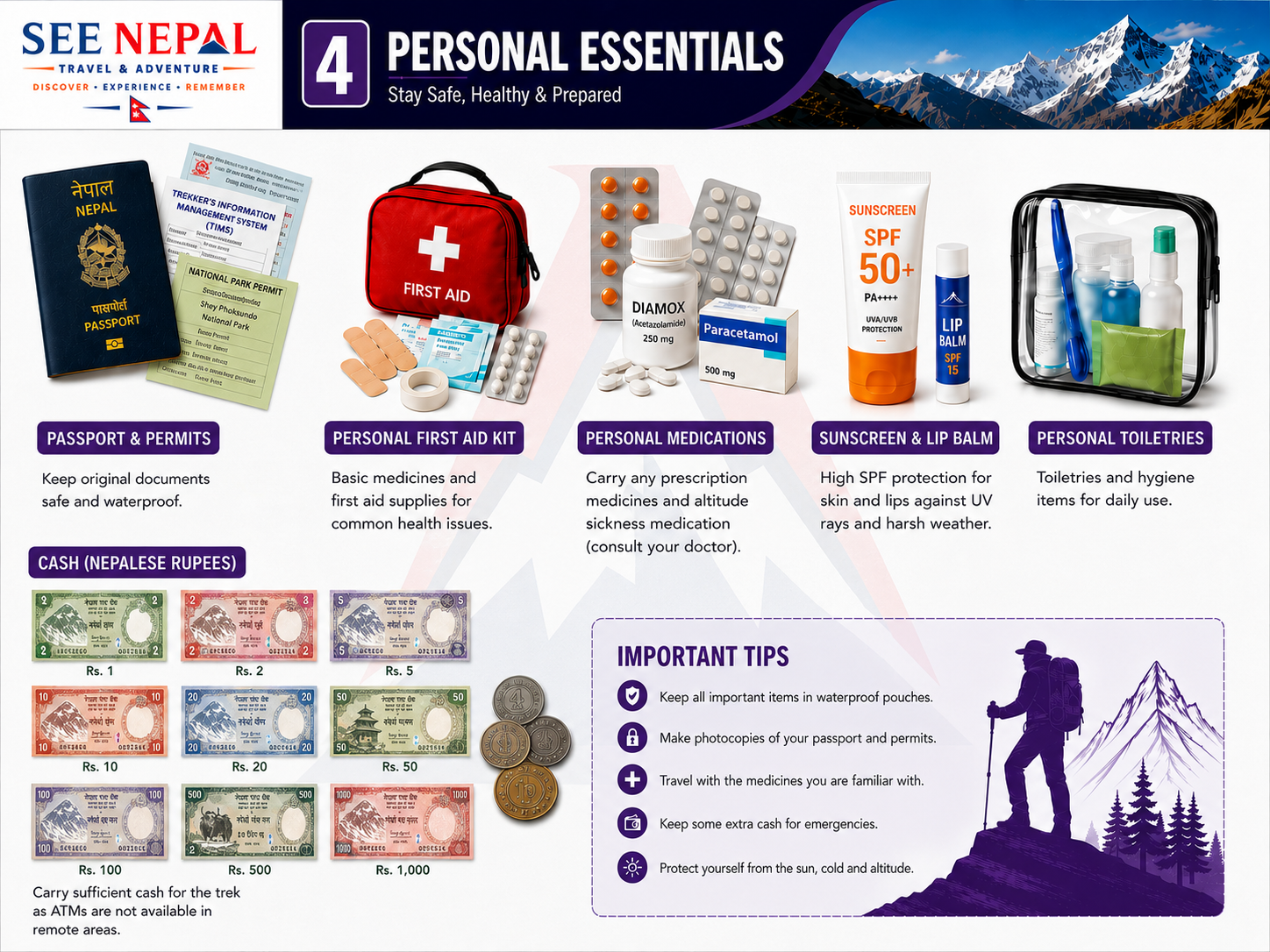
Personal Essentials
Electronics & Food
Frequently Asked Questions
The difficulty level of Kanchenjunga North Base Camp Trek is challenging and requires a good level of physical fitness and experience in high-altitude trekking.
The best time to do the Kanchenjunga North Base Camp Trek is from September to November and from March to May. During these months, the weather is clear and stable, offering good trekking conditions and stunning mountain views.
The Kanchenjunga North Base Camp Trek typically takes around two to three weeks, depending on the itinerary and the trekker's pace.
Essential equipment for the Kanchenjunga North Base Camp Trek includes a good quality backpack, hiking boots, warm clothing, a sleeping bag, a first-aid kit, and other essential items, such as a headlamp, sunglasses, and sunscreen.
While it is possible to do the Kanchenjunga North Base Camp Trek independently, it is recommended to hire a local guide, who can provide local knowledge, help with navigation, and assist with any problems that may arise during the trek.
Altitude sickness can be a concern during the Kanchenjunga North Base Camp Trek, particularly as the trek reaches high altitudes. It is important to acclimatize properly and to seek medical attention if symptoms persist.
Yes, it is highly recommended to have comprehensive travel insurance that covers emergency evacuation and medical expenses for the Kanchenjunga North Base Camp Trek. The remote and high-altitude nature of the trek means that medical facilities may be limited, and evacuation can be expensive.
The cost of the Kanchenjunga North Base Camp Trek can vary depending on the itinerary, the type of accommodation, and the level of support required. On average, the cost ranges from $2,000 to $3,000, including guide and porter fees, food and accommodation, and any necessary permits and fees.
Food and accommodation on the Kanchenjunga North Base Camp Trek are basic, with most meals consisting of simple, hearty meals, such as rice, lentils, and vegetables. Accommodation is usually in simple lodges or tea houses, with basic facilities.
In some areas, it may be possible to charge electronic devices, but this is not guaranteed. It is recommended to bring a portable battery pack and to conserve battery life as much as possible.